

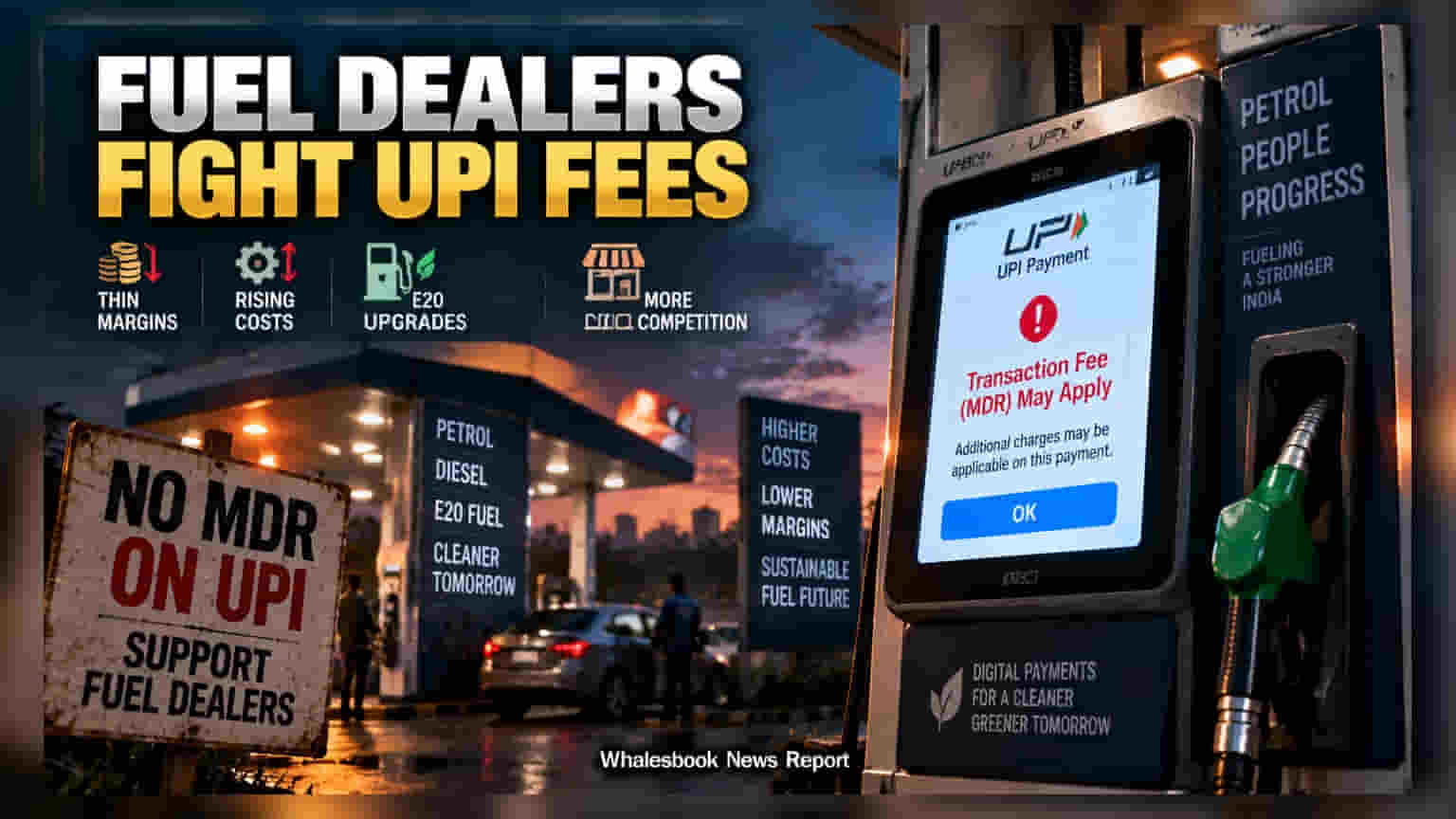
Fuel dealers are protesting against potential processing fees on UPI transactions, citing already thin margins and rising operational costs. They argue that stagnant commissions and the high cost of upgrading pumps for E20 ethanol fuel are threatening the financial viability of their businesses.
The United Petroleum Dealers Association is voicing strong opposition to the potential introduction of Merchant Discount Rate (MDR) charges on UPI transactions at petrol pumps. Dealers state that their profit margins are already under severe pressure, and adding processing fees for digital payments could make running retail outlets financially difficult.
The core issue highlighted by dealers is the widening gap between their income and operating costs. While expenses for labor, electricity, and regulatory compliance have increased significantly over the last nine years, dealer commissions have only risen by about 30 paise per litre. This creates a difficult environment for operators who rely on small margins per litre to sustain their businesses.
Adding to this pressure is the government mandate for E20 fuel, which is a blend of 20% ethanol and 80% petrol. To support this transition, petrol pumps must upgrade their infrastructure, including storage tanks and dispensing equipment to handle the higher ethanol content. Dealers report that the capital spending required for these upgrades is substantial, and with limited financial support, this adds a heavy burden on their cash flow.
Market saturation has also emerged as a significant challenge. In many regions, the number of retail outlets has increased, which has split sales volumes among more players. Dealers argue that this overcrowding, combined with static commission rates, has weakened the business case for many established fuel stations, leading to concerns about potential closures.
For investors, this situation is relevant as it directly affects the retail distribution network of state-run oil marketing companies like Indian Oil Corporation (IOCL), Hindustan Petroleum Corporation (HPCL), and Bharat Petroleum Corporation (BPCL). These companies rely on a vast network of dealers to retail their fuel. If the dealer network faces severe financial stress, it could potentially impact the stability of fuel distribution, though the outcome would depend on whether this leads to widespread closures or necessitates intervention from the oil companies to support their distribution partners.
The next major updates for the industry will be the government's final decision on whether to impose UPI transaction fees for fuel purchases, as well as any future announcements regarding revisions to dealer commission structures or support programs for the E20 infrastructure transition.