

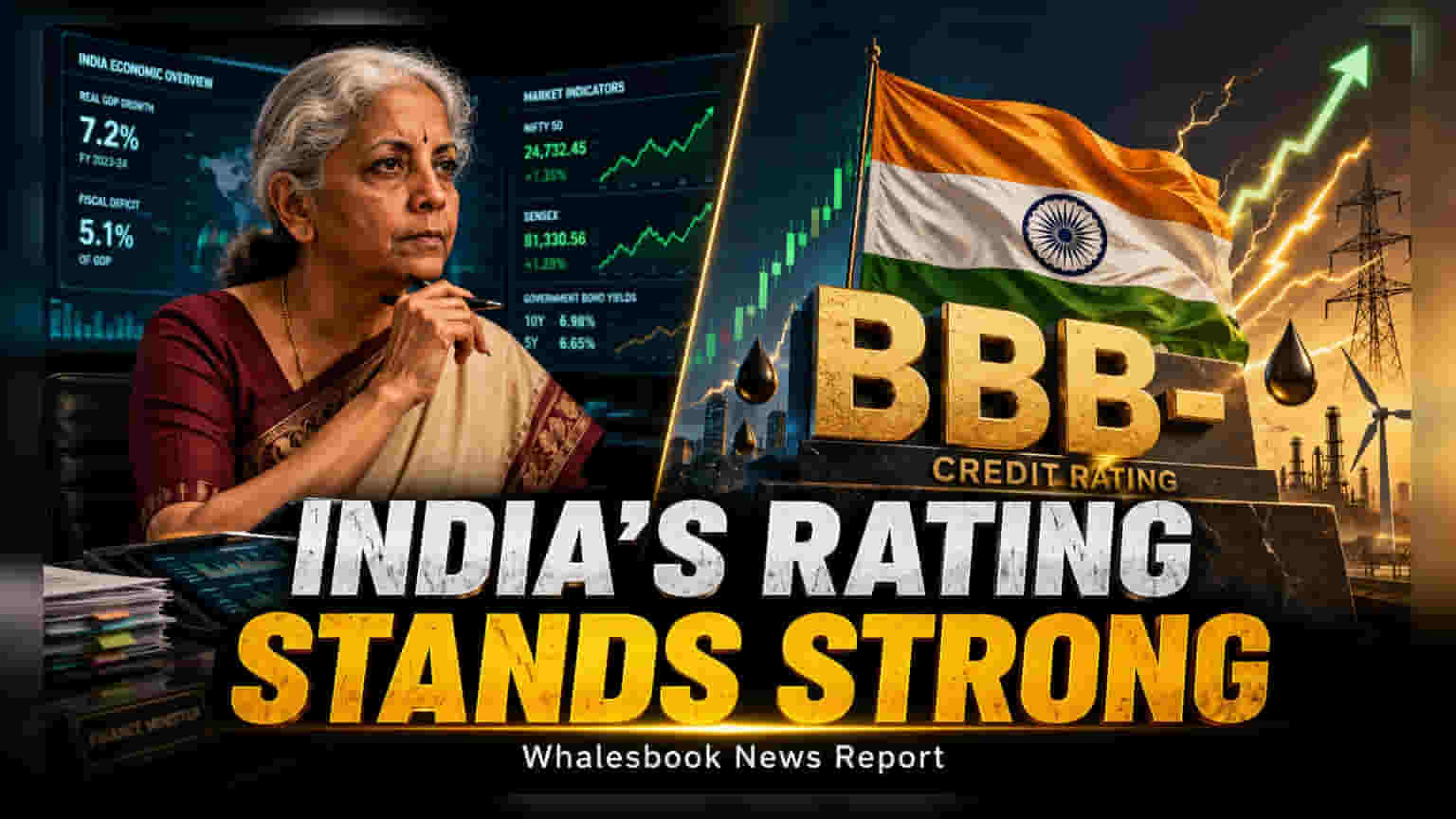
Fitch Ratings has kept India's sovereign credit rating at 'BBB-' with a stable outlook, citing steady economic growth and external financial stability. While the agency projects a 6.4% GDP growth for FY27, it also highlighted concerns regarding India’s high government debt and potential risks from rising energy costs.
Fitch Ratings has reaffirmed India's sovereign credit rating at 'BBB-' with a stable outlook, continuing to signal confidence in the nation's economic stability. This rating is considered the lowest level of investment grade, which means the country is generally viewed as stable but still faces significant fiscal and debt-related challenges compared to higher-rated economies.
The agency's decision is largely driven by India's ability to maintain a strong growth trajectory. Fitch projects the Indian economy to grow by 6.4% in the fiscal year ending March 2027. This expansion is supported by solid external financial fundamentals, which help the country navigate global economic uncertainties. For investors, this affirmation provides a sense of continuity regarding India's creditworthiness in the eyes of international rating agencies.
However, the report also outlines clear risks that keep the rating at the current level. The primary concern is India’s high government debt and fiscal deficit when compared to other countries with similar 'BBB' ratings. While the government aims to lower the deficit to 7.3% of GDP in FY27 from 7.5% in the previous year, this remains a key area that credit agencies monitor closely. These elevated debt levels limit the country's financial flexibility.
Energy costs and geopolitical tensions also remain a point of focus. With ongoing instability in West Asia, India faces potential risks from higher energy prices. As a large importer of energy, any sustained spike in costs could put pressure on inflation and trade balances. Fitch noted that while these factors could complicate the economic landscape, they are not currently expected to derail India's long-term growth story.
Looking ahead, the agency also touched upon monetary policy, noting that the Reserve Bank of India might need to consider a 25-basis-point interest rate hike later in the year. This would likely be a response to the second-round effects of higher energy costs and potential climate-related pressures like El Nino, which could impact food prices and overall inflation. The agency expects inflation to average around 4.1% for FY27, keeping it within the RBI's target range.
For investors and market participants, the next few months will be crucial to observe how these macro-economic variables play out. The key monitorable will be the government's ability to stick to its fiscal consolidation path and reduce debt-to-GDP levels. Additionally, tracking RBI’s policy decisions in light of global energy price trends will be important to understand the broader economic environment in the coming quarters.