

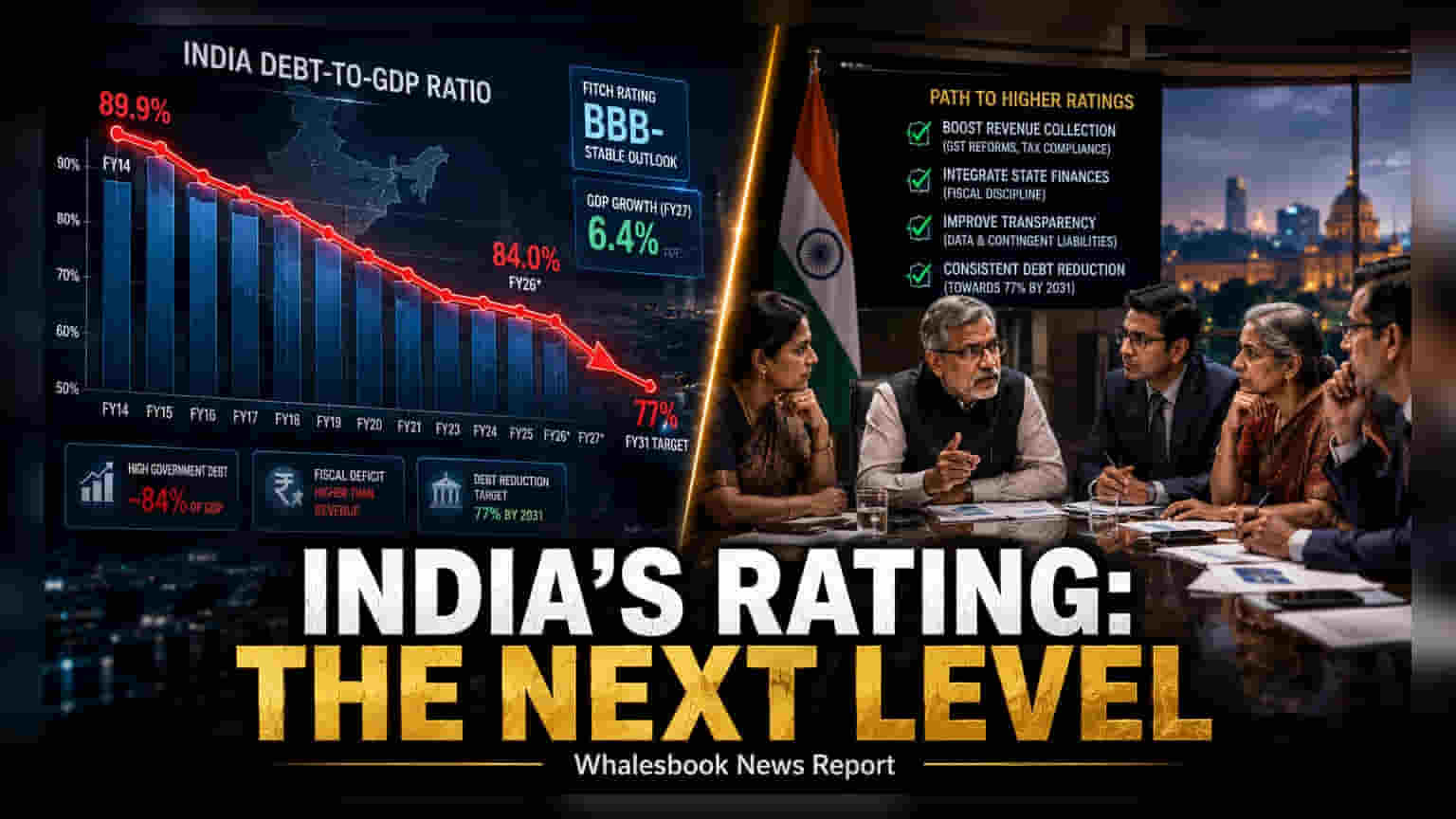
Fitch Ratings has affirmed India’s sovereign credit rating at 'BBB-' with a stable outlook, balancing robust economic growth against concerns over high government debt. This decision highlights the ongoing gap between India's fast-growing economy and its fiscal challenges, which remain a primary focus for global investors monitoring borrowing costs and market stability.
Fitch Ratings has reaffirmed India’s Long-Term Issuer Default Rating at 'BBB-' with a stable outlook, in a decision announced on August 11, 2026. This marks a continuation of the rating the country has held since 2006. While this follows a series of upgrades from agencies like S&P Global, Morningstar DBRS, and R&I during 2025, the latest move from Fitch underscores a cautious global perspective on India's current fiscal health.
The Growth vs. Debt Paradox
For investors, the credit rating debate centers on a clear conflict. On one side, India’s economic growth remains a strong point, with Fitch projecting GDP growth at 6.4% for the fiscal year ending March 2027. This growth is a powerful factor in helping the country manage its financial obligations. On the other side, rating agencies consistently point to high government debt—estimated at around 84% of the country's economic output—and persistent spending that exceeds income (fiscal deficits) as the main factors holding back a higher rating.
Financial experts and recent research note that rating agencies often weigh current debt levels much more heavily than future growth plans. While economic theory suggests that a country growing faster than the cost of its borrowing can naturally reduce its debt burden over time, agencies tend to be more conservative. They prioritize the headline debt number, which for India remains higher than the global average for countries with similar ratings.
A Path to Better Ratings
Recent discussions among economists and policymakers have identified four specific areas that could help India improve its credit profile in the eyes of global agencies. These steps are not just about numbers, but about changing how the government is perceived by lenders:
First, boosting revenue collection is essential. By simplifying the Goods and Services Tax (GST) and improving tax compliance, the government could increase its income without putting more burden on citizens. This would lower the share of revenue spent on just paying interest on debt.
Second, integrating state finances into the central framework is critical. Because rating agencies assess the government as a whole, bringing more discipline to state-level spending and deepening the market for state-issued loans could improve the overall national balance sheet.
Third, transparency is key. Providing clearer and more consolidated data on potential government liabilities, such as guarantees and borrowings by state-run entities, would build greater market confidence.
Finally, moving consistently toward the debt reduction goals set by Parliament in 2017 could provide a reliable roadmap. Accelerated efforts to bring the debt-to-GDP ratio down toward 77% by 2031 would be a strong signal to global markets.
Investor Takeaway
For the Indian market, credit ratings act as a benchmark for the cost of borrowing. A stable rating ensures that the country maintains access to international capital at manageable rates. As India navigates this, the most important monitorable for investors will be how the government manages its fiscal consolidation alongside growth. Future updates from these agencies will likely depend on progress in lowering the debt-to-GDP ratio and demonstrating sustainable fiscal discipline while maintaining the growth momentum.