 Whalesbook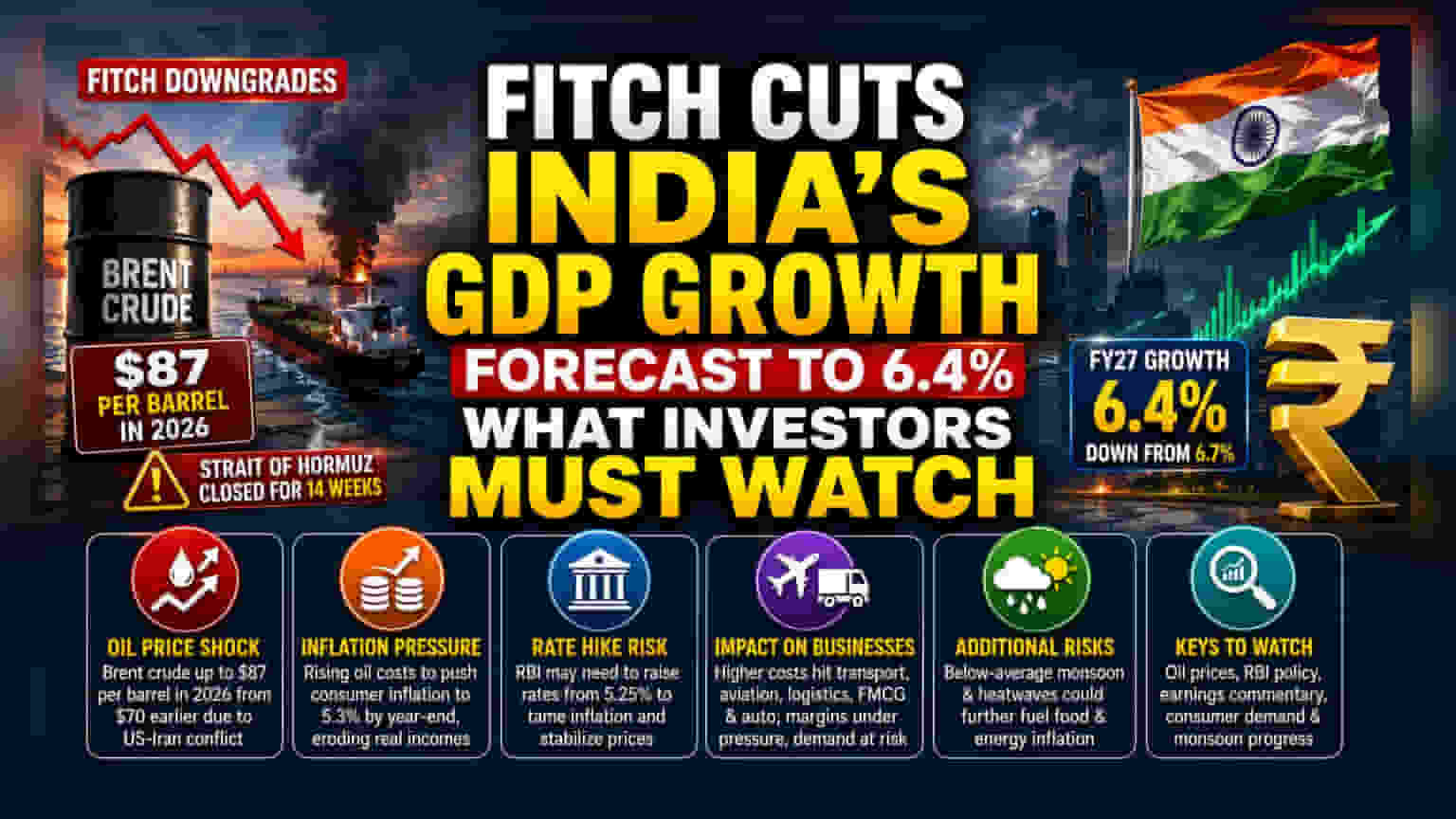


What Happened
Fitch Ratings has reduced its GDP growth forecast for India for the current fiscal year (FY27) to 6.4%, down from its earlier prediction of 6.7%. This change comes as global geopolitical tensions, specifically the conflict between the US and Iran, have disrupted oil supplies. The closure of the Strait of Hormuz for 14 weeks has pushed Brent crude oil price expectations for 2026 up to $87 per barrel, compared to the previously estimated $70.
Why This Matters for the Economy
India imports a large portion of its crude oil requirements. When global oil prices jump, the country faces immediate economic pressure. Higher oil costs generally lead to a rise in transport, logistics, and manufacturing expenses. For regular consumers, this usually results in higher costs for fuel and essential goods, which reduces the money left in their pockets for other spending. Fitch noted that this is expected to slow down consumer spending, which is a major driver of India's growth.
Inflation and Interest Rate Outlook
While India's current inflation figures have remained relatively steady, the supply shock from oil is expected to push consumer prices higher. Fitch projects that inflation could reach 5.3% by the end of the year. This creates a challenging environment for the Reserve Bank of India (RBI). In April, the RBI held its repo rate at 5.25%. However, with inflation rising due to higher energy costs, there is now an expectation that the central bank may need to increase interest rates to control price levels.
Impact on Businesses
Investors may look at how this impacts different sectors. Companies in the transport, logistics, and aviation sectors often face higher operating costs when fuel prices rise. Similarly, consumer-facing companies in the FMCG and auto sectors may see pressure on their profit margins if rising inflation reduces the demand for their products. Companies with high pricing power may pass these costs on to customers, but those in competitive markets may see their profits squeezed.
The Risk of a Slowdown
Fitch’s report highlights a significant shift from the robust 7.4% growth seen in FY26. The combination of lower real incomes and the potential for higher interest rates creates a dual pressure. Additionally, the agency noted risks from weather patterns, such as a potential below-average monsoon and heatwaves, which could further drive up food and energy prices, adding to the inflationary strain.
What Investors Should Track Next
Moving forward, the primary factor for investors will be the movement of global crude oil prices. If the conflict eases and oil prices stabilize, the pressure on the Indian economy may reduce. Investors will also monitor the RBI’s upcoming policy meetings for any change in tone regarding interest rates. Other important factors include quarterly earnings commentary from companies regarding input costs, margin performance, and consumer demand trends. Finally, updates on the monsoon’s progress will be critical, as they directly influence food inflation and rural purchasing power.