

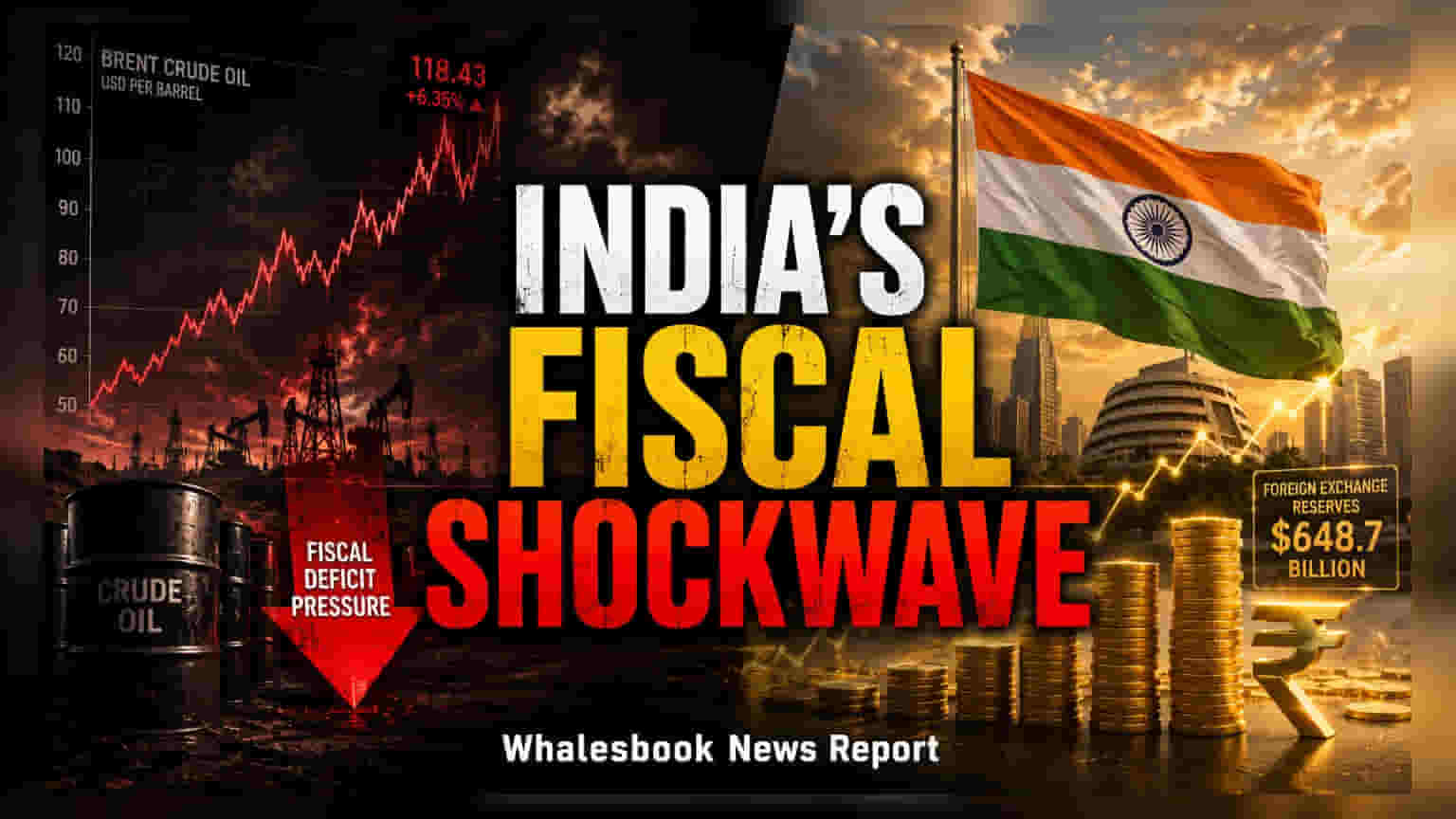
The Ministry of Finance has identified sustained high crude oil prices as a major risk to India's fiscal deficit and trade balance. While ongoing geopolitical tensions in West Asia threaten to increase import costs and inflation, strong foreign exchange reserves and a services trade surplus provide a buffer for the economy.
The Ministry of Finance recently highlighted that rising global crude oil prices represent a significant challenge for India's macroeconomic stability. As a country that imports a substantial portion of its fuel requirements, sustained high energy costs can directly inflate the import bill, which in turn pressures both the government's fiscal deficit and the nation's current account balance.
Geopolitical Tensions and Inflation Risks
The primary concern stems from ongoing geopolitical instability in West Asia, a region critical to global energy supplies. Disruptions to major maritime trade routes, such as the Strait of Hormuz, have contributed to volatility in energy pricing. For Indian investors and the broader economy, this creates a dual pressure point: higher costs for businesses and potential inflationary effects on consumer goods, as transportation and energy expenses filter through the economy. If energy prices remain elevated for an extended period, it may constrain the government's ability to maintain its fiscal targets.
Economic Buffers and Resilience
Despite these energy-related challenges, India's external economic indicators have shown notable improvement compared to previous cycles. The current account, which measures the flow of goods, services, and transfers, recorded a surplus of $2.8 billion during April and May 2026. This is a significant improvement from the $4.1 billion deficit reported in the same period last year. This positive shift has been driven largely by a consistent surplus in the services trade sector and strong remittance inflows from abroad.
Furthermore, India’s foreign exchange reserves reached $675.2 billion as of July 10, 2026. This level of reserves is seen by analysts as a vital safety net, capable of covering approximately 10 months of imports. Such a substantial reserve position provides the country with greater financial flexibility to manage external shocks, such as sudden spikes in global commodity prices.
Key Monitorables for Investors
Investors should keep a close watch on how the government manages these energy-linked risks in the coming months. The primary areas to track include the trend of global crude oil prices, which directly dictates the country's import burden. Additionally, management commentary from companies in sectors heavily dependent on energy, such as transportation, manufacturing, and chemicals, will be useful in understanding how these businesses are passing on or absorbing increased fuel costs. Finally, the sustainability of the services trade surplus and foreign remittance inflows will remain crucial in assessing whether the country can continue to offset energy-related trade imbalances.