

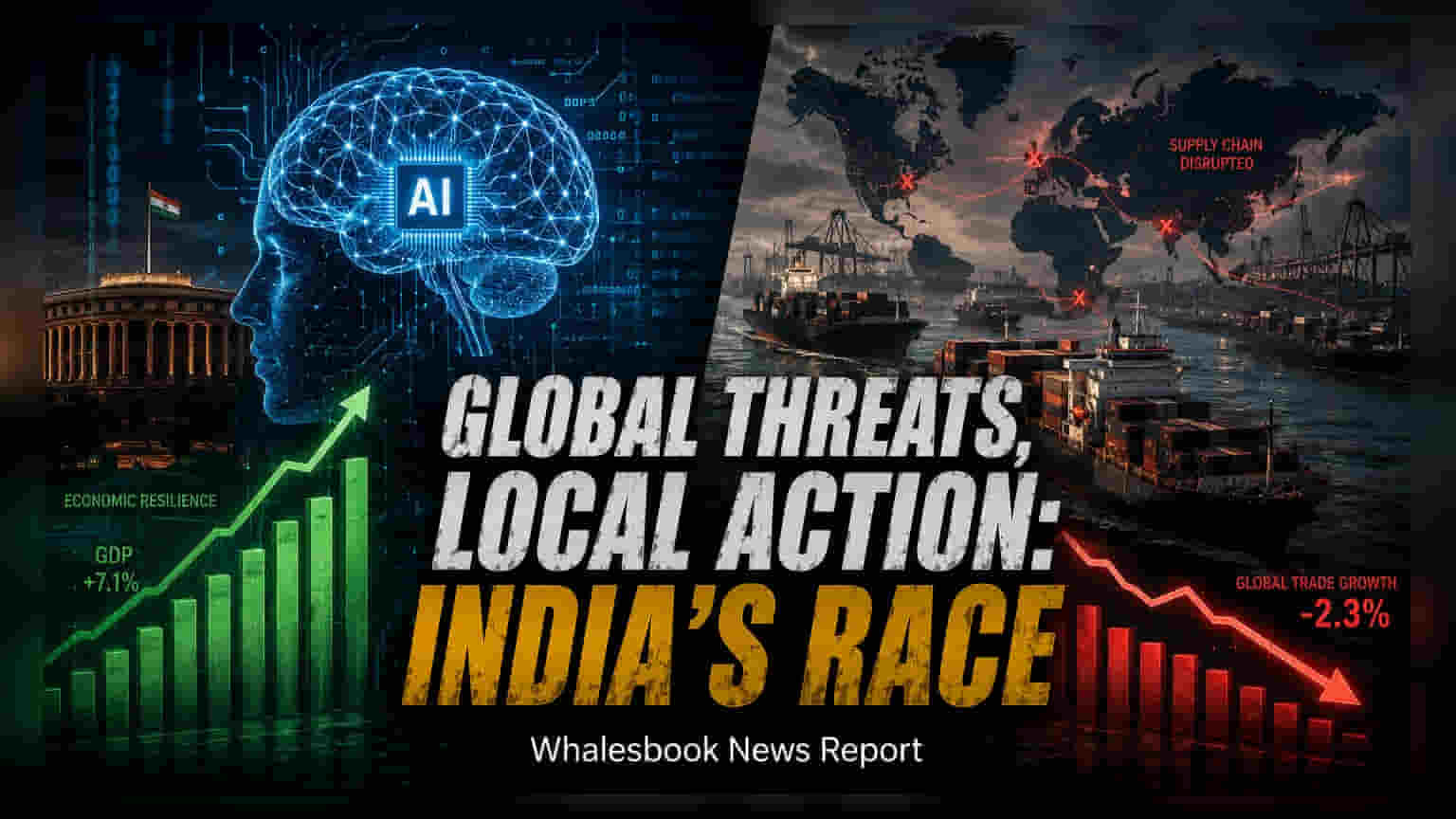
The Finance Ministry’s latest Monthly Economic Review stresses that India must accelerate policy implementation to counter global AI and supply chain risks. Enhancing domestic capabilities in semiconductors, critical minerals, and manufacturing is highlighted as essential to attracting investment and ensuring long-term economic stability.
The Ministry of Finance has issued a fresh assessment regarding the evolving global economic environment, emphasizing the need for India to bolster its long-term resilience. In its latest Monthly Economic Review, the Department of Economic Affairs highlighted that rapid advancements in artificial intelligence and the increasing use of supply chains as strategic tools present significant challenges that require immediate and coordinated policy responses.
Prioritizing Strategic Sectors for Industrial Growth
To strengthen domestic manufacturing and reduce reliance on fragile global networks, the ministry pointed to several critical areas for focus. Programs such as Semicon 2.0, along with initiatives in critical minerals, coal gasification, and shipbuilding, remain at the forefront of the government's strategy. By improving local production capabilities in these areas, the ministry aims to create a more resilient industrial sector capable of maintaining competitiveness despite global uncertainties.
Managing Resource Price Volatility
A notable area of concern for the ministry is the persistent price firmness of industrial metals and rare earth elements. These commodities are essential for modern manufacturing, yet their supply remains vulnerable to global geopolitical shifts. The government suggests that instead of reacting to shortages, the economy needs a proactive approach that includes building substantial buffers for energy resources and critical industrial materials. This strategy is intended to insulate domestic manufacturing from sudden price shocks that can hurt profit margins across energy-intensive and technology-driven sectors.
Broadening Industrial Horizons
Beyond traditional manufacturing, the government is focusing on emerging high-technology sectors to sustain long-term growth. Progress in commercial space exploration and hydrogen-based mobility is seen as evidence of India’s growing technological prowess. However, the ministry maintains that the success of these initiatives depends heavily on the speed of regulatory decision-making. Streamlining the process for business approvals and policy execution is viewed as the primary mechanism for drawing in both domestic and foreign investment, which is essential to finance these capital-intensive projects. For investors, the ability of the government to execute these plans within set timelines will be the key factor determining the actual impact on domestic industrial performance in the coming years.