 Whalesbook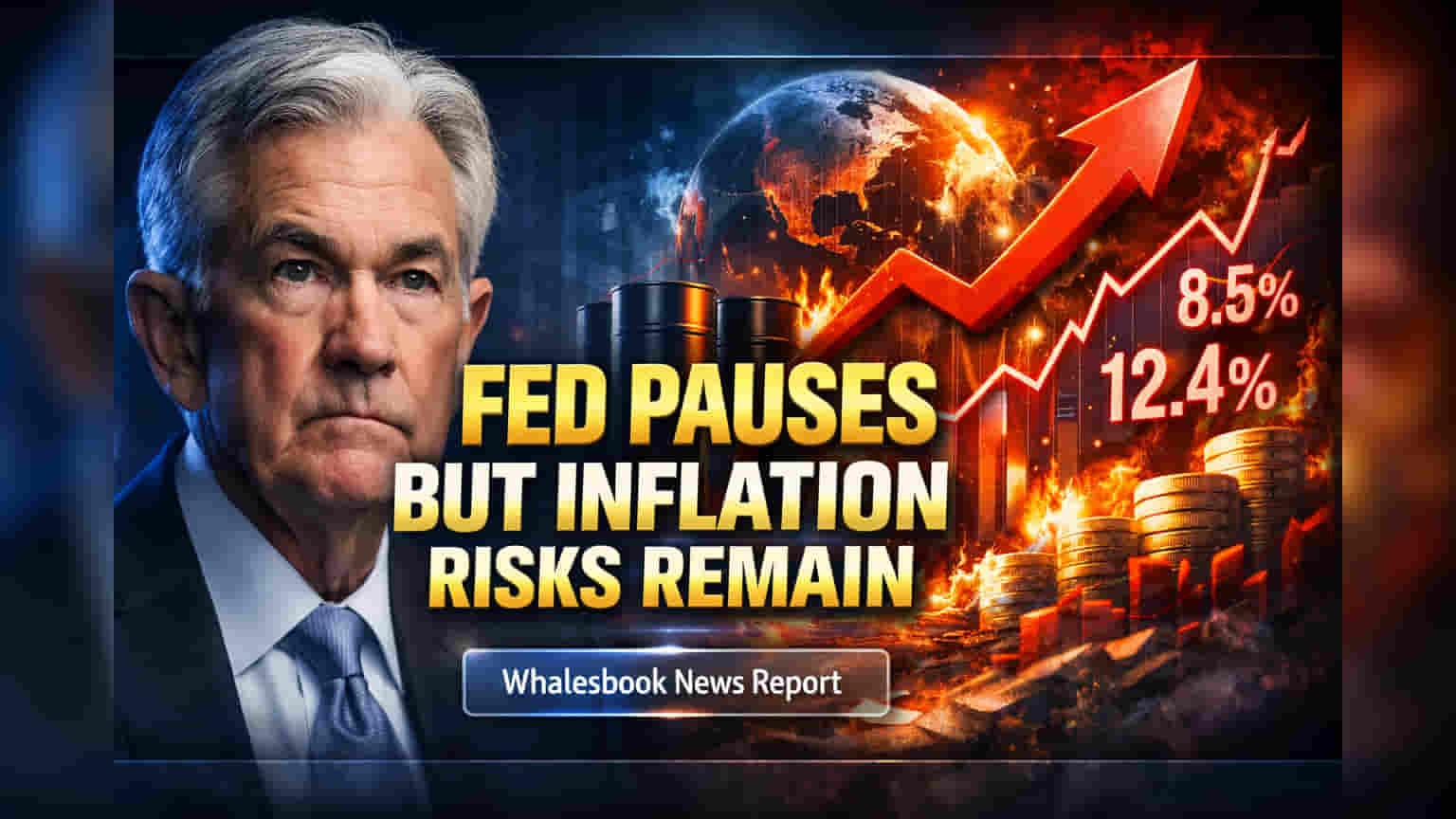
Powell: Fed Walks Policy Tightrope
Federal Reserve Chair Jerome Powell reaffirmed the central bank's commitment to returning inflation to its 2% target, even as global uncertainties grow. Speaking at Harvard University, Powell stated that monetary policy is "in a good place" to patiently monitor economic conditions. However, he issued a key warning: the Fed will act if inflation expectations begin to drift from their current stable state. Powell's remarks signal a difficult balance for the central bank, which must manage potential labor market weakness alongside rising inflation pressures from geopolitical instability. The Fed needs flexibility as it navigates the challenge of supporting growth while ensuring price stability.
Global Energy Shocks Fuel Inflation Concerns
The conflict in West Asia has become a major factor affecting global inflation outlooks. This geopolitical event has driven a sharp rise in oil prices, with crude trading near $100-$120 per barrel. Supply routes have been disrupted, creating upward pressure on energy costs worldwide. This shock means higher gasoline and heating costs for consumers, and increased transport and production expenses for businesses. Consequently, consumer inflation expectations have climbed, with year-ahead expectations rising to 3.8% in March 2026, the largest monthly increase since April 2025. This energy-driven price pressure poses a significant upside risk to inflation forecasts, making the Fed's goal of lower inflation harder and possibly delaying expected rate cuts.
Central Banks Worldwide Grapple with Inflation
Central banks worldwide face similar issues. The European Central Bank (ECB) and the Bank of England (BoE) have also held their benchmark interest rates steady, citing the inflationary effects of the Middle East conflict. The ECB revised its 2026 inflation forecast upward to 2.6%, pointing to higher energy prices, while the BoE expects near-term inflation spikes. Like the Fed, both stress a data-dependent policy approach due to heightened uncertainty. Commentary around March 2025 from the Fed suggested a more optimistic outlook, with markets anticipating rate cuts following a period of reductions and solid economic progress. Today's environment is very different; markets now expect fewer Fed rate cuts in 2026, with some analysts even predicting rate hikes from other major central banks. The US 10-year Treasury yield has reflected this uncertainty, testing levels not seen since mid-2025, as investors worry about inflation and the Fed's policy path.
Risks of Policy Missteps
The Federal Reserve faces a difficult balance. Aggressively raising interest rates to fight inflation could slow economic growth, especially if the energy shock lasts longer and further reduces consumer spending. On the other hand, delaying policy action hoping inflation expectations stay steady could let price pressures take hold, requiring steeper and potentially disruptive rate hikes later. Concerns remain that prolonged geopolitical tensions could cause wider commodity shocks beyond energy, pushing up core inflation. Also, the gap between consumer and professional inflation expectations, which worsened for consumers in 2025, suggests unanchored expectations could become a self-fulfilling cycle, complicating the Fed's job. The Fed's median forecast for one rate cut in 2026 now seems heavily dependent on clear disinflationary progress that might not happen.
Market Sentiment Shifts on Rate Outlook
Markets are expecting a more hawkish stance from the Federal Reserve, driven by rising energy prices and geopolitical uncertainty. Although the Fed's March projections still showed one rate cut expected in 2026, the changing economic picture suggests this outlook could change significantly. Policymakers know the difficult path they're on, aiming to balance full employment with stable prices amid a volatile global situation. The duration of the West Asia conflict and its sustained impact on energy markets will be critical factors in future monetary policy decisions. Market expectations that the Fed will hold rates steady for the rest of Powell's term, with shifts possibly coming under his successor, highlight the current policy uncertainty.