

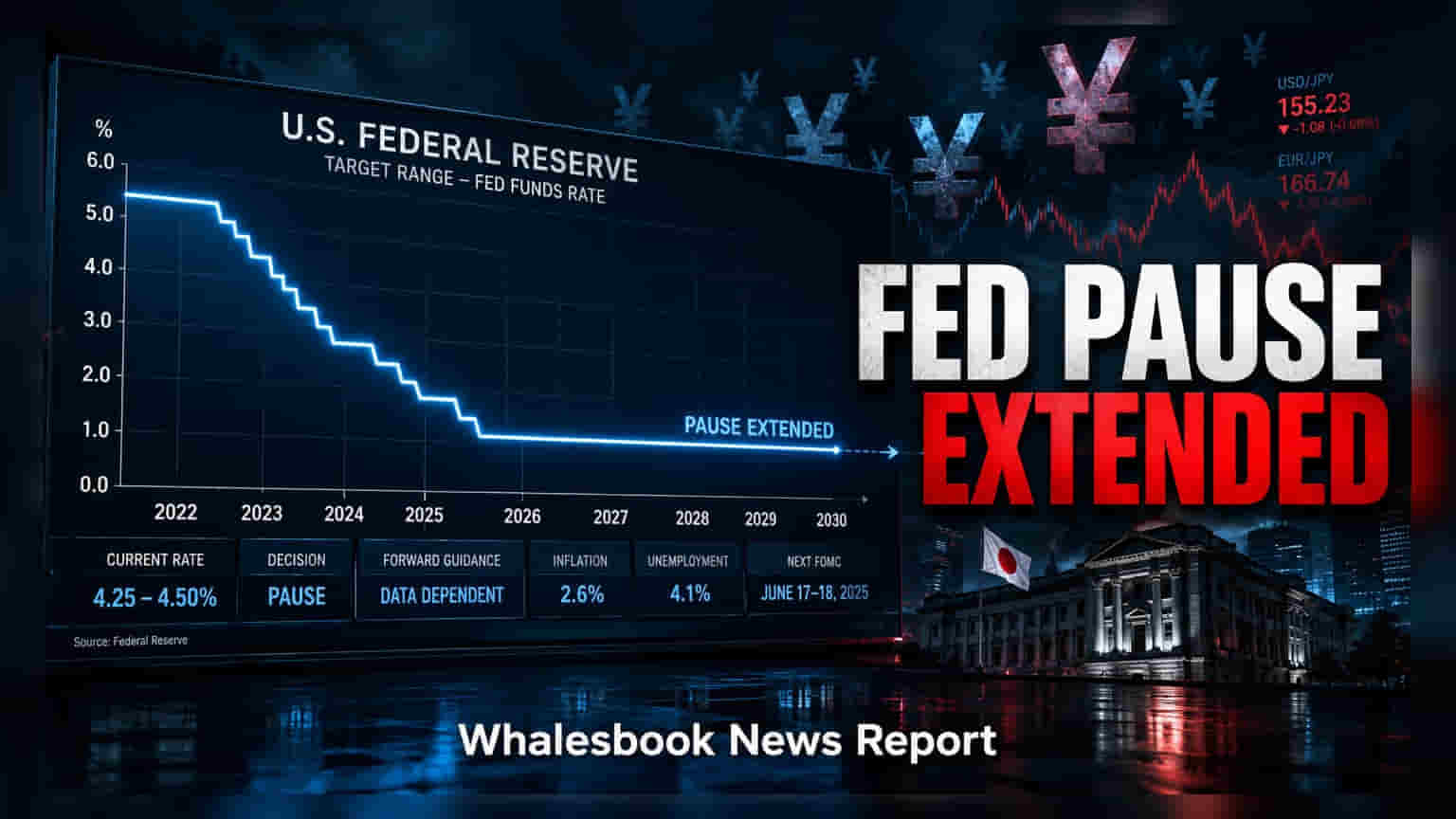
ING economists project the US Federal Reserve will hold rates steady into 2027 amid cooling US job growth. Meanwhile, Japan faces pressure to hike rates in September as wholesale inflation hits 7.2% and the yen remains near 160 per dollar, a move that could disrupt global yen-funded carry trades.
The outlook for global interest rates is shifting as the US Federal Reserve signals a prolonged pause and Japan considers a potential policy pivot. According to ING’s Chief International Economist James Knightley, the US Federal Reserve is expected to keep interest rates unchanged well into 2027. This projection is based on recent weaker-than-anticipated US employment data and consumer price inflation figures that remained in line with expectations, suggesting that further policy tightening is currently unnecessary.
While the US Fed appears to be on a steady path, the Bank of Japan (BOJ) faces increasing pressure to adjust its monetary stance. Bank of Japan Governor Kazuo Ueda has hinted at a potential interest rate increase in September. The urgency for this move stems from stubborn wholesale inflation, which was reported at 7.2% in July, and the persistent weakness of the Japanese yen. Despite recent coordinated currency interventions by authorities in the US and Japan, the yen continues to trade near the 160 per dollar level, raising concerns about the impact of import-driven costs on the Japanese economy.
For investors, these divergent policies create a significant monitorable regarding the 'yen carry trade.' Historically, Japan’s ultra-low interest rates encouraged global investors to borrow in yen to invest in higher-yielding assets elsewhere. A shift toward higher interest rates in Japan could trigger an unwinding of these carry trades. This process involves investors selling other assets to repay their yen-denominated loans, which can lead to sudden liquidity shifts and increased market volatility across global asset classes.
The stability of the yen remains a central concern for global financial flows. If the Bank of Japan follows through with a rate hike, the cost of borrowing yen could rise, fundamentally altering the flow of capital that has long sought higher returns in international markets. Moving forward, market participants are keeping a close eye on upcoming US economic data releases and the details of the September Bank of Japan policy meeting. Investors may track whether US job data continues to signal a slowdown and how the yen reacts to signals from Tokyo, as these factors will determine the direction of global liquidity and currency stability in the coming months.