

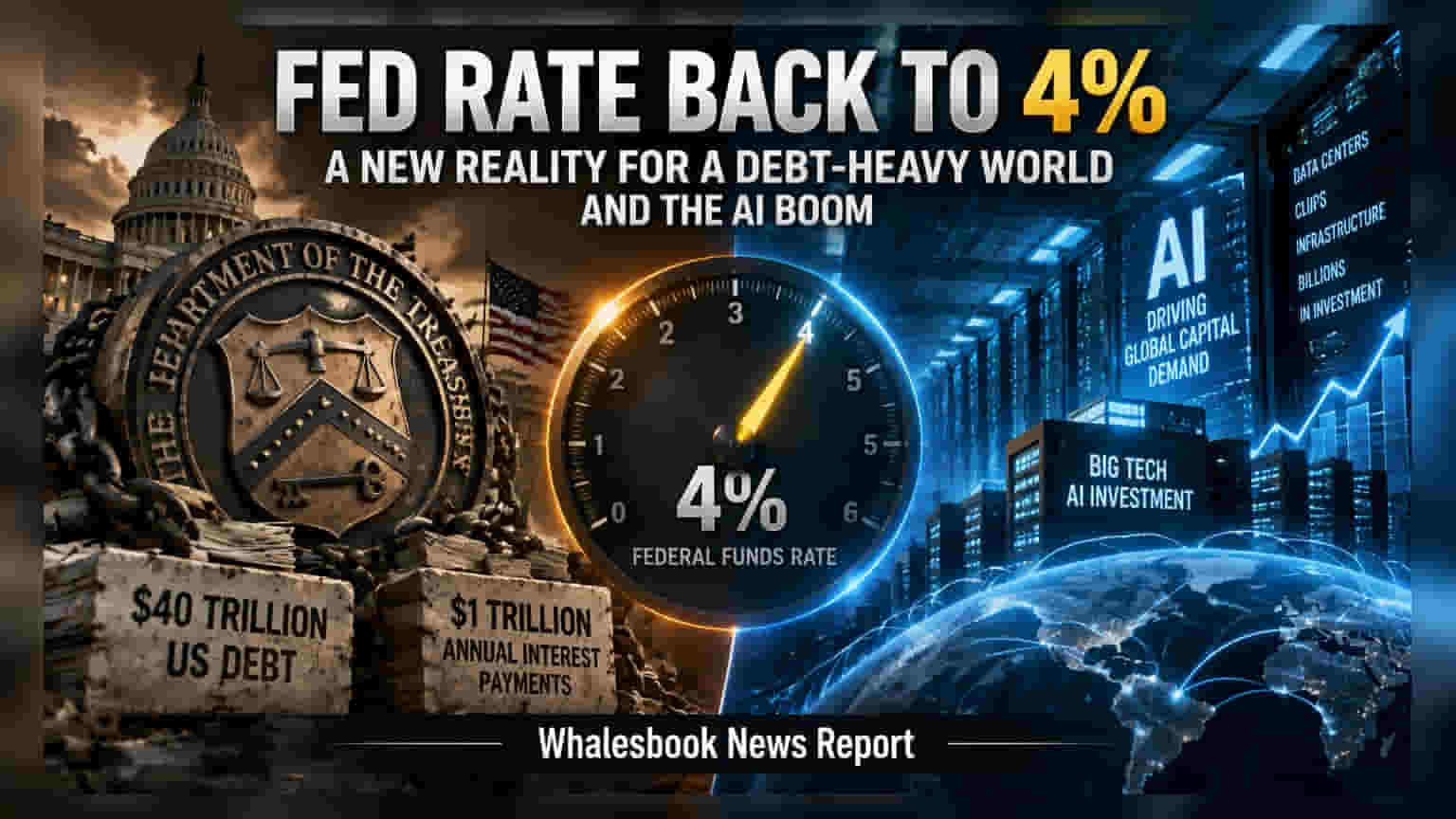
The US Federal Reserve has returned to a 4% policy rate, but the global economic landscape has shifted significantly. With US federal debt exceeding $40 trillion and intense capital demand from the AI sector, Indian firms relying on dollar-denominated loans face a structurally higher cost of borrowing that is likely to persist.
The US Federal Reserve has moved its policy rate back to 4%, a benchmark last seen nearly two decades ago. While this number might feel familiar to long-term market observers, the underlying economic reality is vastly different from 2005. For Indian companies and investors, this shift signals a new era of costlier international financing.
Two decades ago, the fiscal position of the US government was much healthier. Today, total gross US federal debt has surpassed $40 trillion, with annual interest payments now exceeding $1 trillion. This massive fiscal load means the US government is constantly in the market to borrow money, putting it in direct competition with the private sector for global capital.
This competition is made more intense by the current boom in artificial intelligence. Tech companies are aggressively investing in AI infrastructure, spending billions on hardware and software to scale their operations. When both the US government and massive tech corporations are aggressively seeking capital, it drives up the cost of money worldwide. This creates a 'bidding war' for liquidity that keeps base interest rates elevated, regardless of traditional central bank policy tweaks.
For Indian businesses, the impact is direct. Many large Indian firms rely on External Commercial Borrowings (ECBs) or dollar-denominated bonds to fund their expansion projects. Because these loans are typically priced based on US Treasury yields plus a risk premium, a higher base rate in the US translates into a higher interest burden for Indian borrowers. Even though Indian credit profiles remain stable, the floor for what it costs to borrow in dollars has risen substantially.
Recent volatility in US Treasury yields suggests that the market is setting prices based on this high demand for capital rather than just central bank signals. Attempts by the US Treasury to stabilize bond markets through buybacks have provided only temporary relief. This indicates that the cost of international capital is being driven by structural factors—namely, massive government borrowing and private sector tech spending—which are unlikely to disappear soon.
Investors in India should watch how companies manage their foreign currency debt. High interest costs can eat into profit margins, especially for companies that borrowed heavily when rates were near zero. The ability of Indian firms to generate enough cash flow to service this more expensive debt will be a key factor in their financial health. Observing trends in how frequently Indian companies issue new dollar bonds and the interest rates they have to pay will be important for assessing the long-term impact on their profitability.