 Whalesbook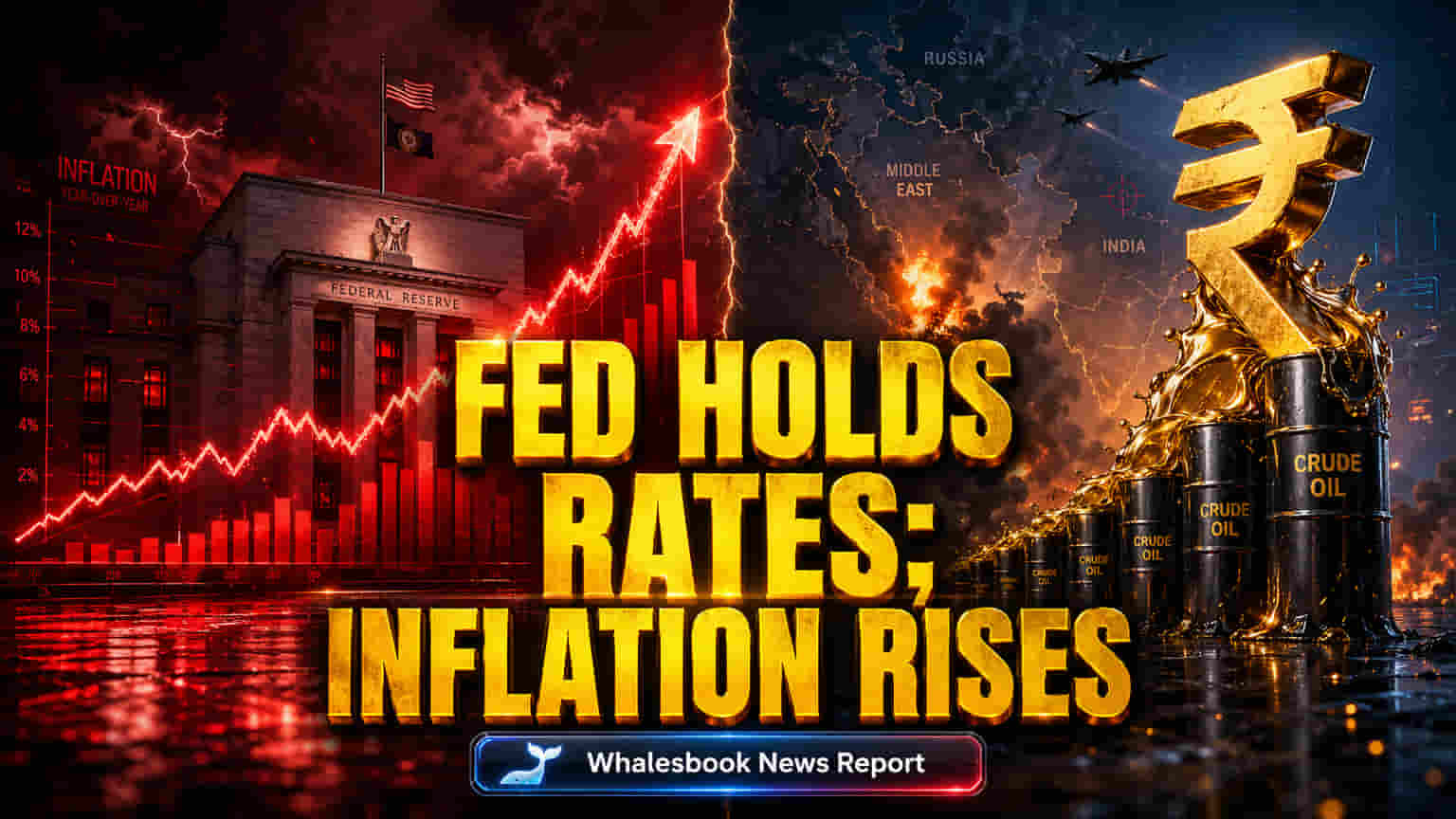


Fed Holds Steady Amid Global Inflation Concerns
The Federal Open Market Committee (FOMC) concluded its April meeting by keeping the target range for the federal funds rate unchanged at 3.50%-3.75%. This marks the third consecutive meeting where the Fed has opted for a hold. The decision comes as geopolitical instability, notably the Iran War, has pushed Brent crude oil prices towards $120 per barrel. The FOMC acknowledged the growing uncertainty from global developments, signaling a cautious approach without immediate policy shifts. Despite March inflation reaching 3.3%, the Fed appears to be grappling with supply-driven price increases that current monetary tools cannot directly fix. Early reactions on India's GIFT Nifty showed markets absorbing the global news while awaiting domestic indicators.
Global Central Banks Navigating Similar Storms
The Fed's decision reflects a wider trend among major central banks. They are staying cautious due to persistent inflation. The European Central Bank is expected to hold its deposit rate at 2.00%, though it is signaling a possible rate hike in June as eurozone inflation is projected to reach 2.9% in April, largely due to energy costs. Meanwhile, the Bank of Japan maintained its policy rate at 0.75% but raised its fiscal 2026 inflation forecast to 2.8%. Three members at the BoJ dissented, advocating for an immediate rate increase due to inflation risks. This situation highlights a global challenge: central banks are facing a prolonged period of higher interest rates, not because demand is overheating, but because of external supply shocks.
India Faces Imported Inflation Risks
In India, Governor Sanjay Malhotra leads the Reserve Bank of India (RBI), which has held its policy repo rate at 5.25% with a neutral stance. The Fed's continued pause, combined with soaring crude oil prices, intensifies the pressure from imported inflation. Ajitabh Bharti, Executive Director and Co-founder of CapitalXB, noted that the Fed's cautious approach validates global energy price volatility as a major threat to price stability. This could compel the RBI to keep rates higher to protect the Rupee against a potentially stronger US dollar. The RBI projects CPI inflation at 4.6% for FY 2026-27, a figure that could be challenged by sustained global commodity price increases.
Fed Leadership Transition Adds Layer of Uncertainty
The Federal Reserve's policy decision saw internal disagreement, with four officials opposing the majority—the largest split since October 1992. This reflects an ongoing discussion about the best path forward for monetary policy. Adding an unusual element, Jerome Powell has indicated he will serve on the Fed's Board of Governors after his term as Chair ends on May 15, 2026. This move, unprecedented since 1948, offers institutional continuity amid potential political shifts. However, it creates a complex dynamic for incoming Chair Kevin Warsh, whose Senate confirmation is pending. Warsh's proposed changes to communication could introduce more policy uncertainty during this critical period.
The Challenge: Fighting Supply-Driven Inflation
The main risk policymakers face is inflation driven by geopolitical supply disruptions, rather than strong consumer demand. Monetary policy tools are less effective against these external shocks. If high energy and commodity prices lead to lasting inflation expectations and ripple effects, central banks might have to maintain restrictive policies for longer, potentially slowing economic growth. The European Central Bank, for example, must balance fighting inflation with avoiding recession in its delicate economy. For India, persistently high oil prices directly threaten domestic price stability and the currency's value, possibly requiring a firmer stance from the RBI, despite projected GDP growth of 6.9% for FY2026-27.
Outlook: Higher Rates Likely to Persist
The near-term outlook points to continued high energy prices and persistent inflation, forcing global central banks to maintain restrictive interest rate policies. The Fed's future moves will depend on incoming economic data, with policymakers closely watching evolving conditions and risks. For India, the RBI is expected to prioritize combating imported inflation and ensuring currency stability. It will likely maintain its current rate policy while monitoring domestic economic momentum. Market participants will be closely watching central bank communications and economic indicators for clarity on how long this restrictive monetary policy era will last.