

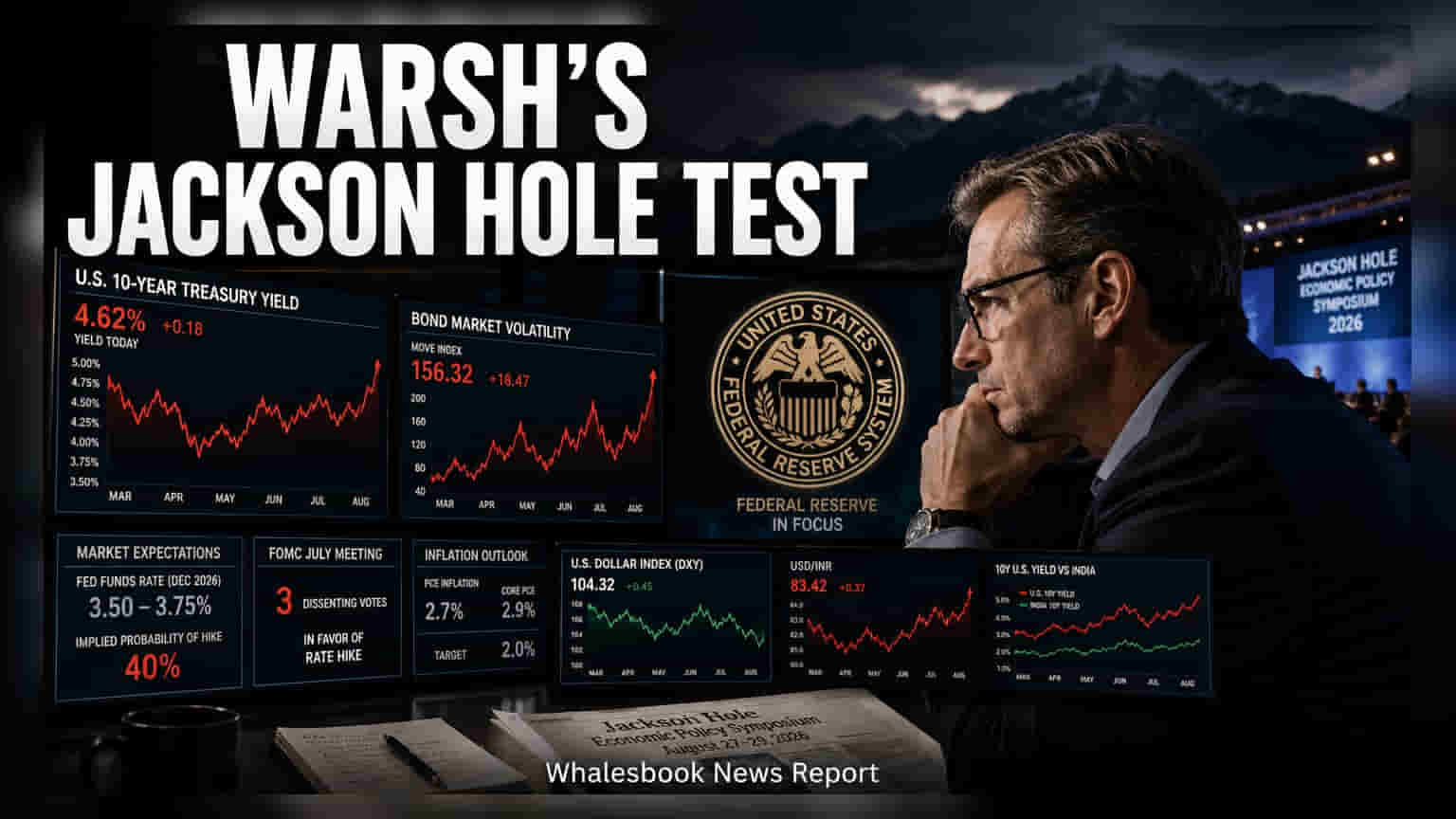
Investors are watching U.S. Federal Reserve Chair Kevin Warsh’s first keynote at the Jackson Hole symposium on August 28, 2026, for clues on future interest rates. With inflation still above the 2% target and market confusion over his policy style, the speech could signal how the U.S. will manage bond yields and economic stability, directly impacting global markets.
The annual Jackson Hole Economic Policy Symposium, held from August 27 to August 29, 2026, is serving as a major focal point for global financial markets. This year, the stakes are higher than usual as U.S. Federal Reserve Chair Kevin Warsh prepares for his debut keynote speech on Friday, August 28. For investors, the event is less about the picturesque setting and more about whether Warsh will break his silence on the future direction of U.S. monetary policy.
Since taking office in May 2026, Chair Warsh has moved away from the traditional practice of 'forward guidance'—the method by which central bankers provide clear signals about where they intend to take interest rates. This change has left many investors guessing. Without a predictable roadmap, markets are struggling to price in risks, leading to heightened volatility across asset classes. Investors are now looking for Warsh to provide a clear commitment to the central bank's 2% inflation target, which currently remains elusive.
One of the biggest pressure points is the bond market. Long-term Treasury yields have been rising, which acts as a form of economic tightening that the Federal Reserve has not explicitly mandated. Some analysts argue this is a natural market correction, while others fear it highlights a policy gap where the Fed is losing control of the narrative. With the federal funds rate currently between 3.5% and 3.75%, the market is on edge, with futures pricing in a 40% probability of a rate hike in the near term. This uncertainty is exacerbated by the fact that three FOMC officials dissented in the July meeting in favor of a rate hike, signaling internal disagreements within the central bank.
For Indian investors, the fallout from this symposium is significant. When U.S. bond yields rise, they often attract capital away from emerging markets, including India. If the U.S. Fed signals that rates may stay higher for longer to combat sticky inflation, it could put pressure on the Indian rupee and limit the appetite of foreign institutional investors (FIIs) for Indian equities. A clearer signal from Warsh could help settle these global currents, while continued ambiguity may keep markets in a state of flux.
The key monitorable for the coming days is the specific tone of the keynote address on August 28. Investors will be watching for any mention of the inflation trajectory, the central bank’s tolerance for current bond yield levels, and whether Warsh intends to restore a clearer framework for future interest rate decisions. Until then, caution remains the prevailing sentiment as the market waits for the Fed to address its credibility gap regarding long-term price stability.