

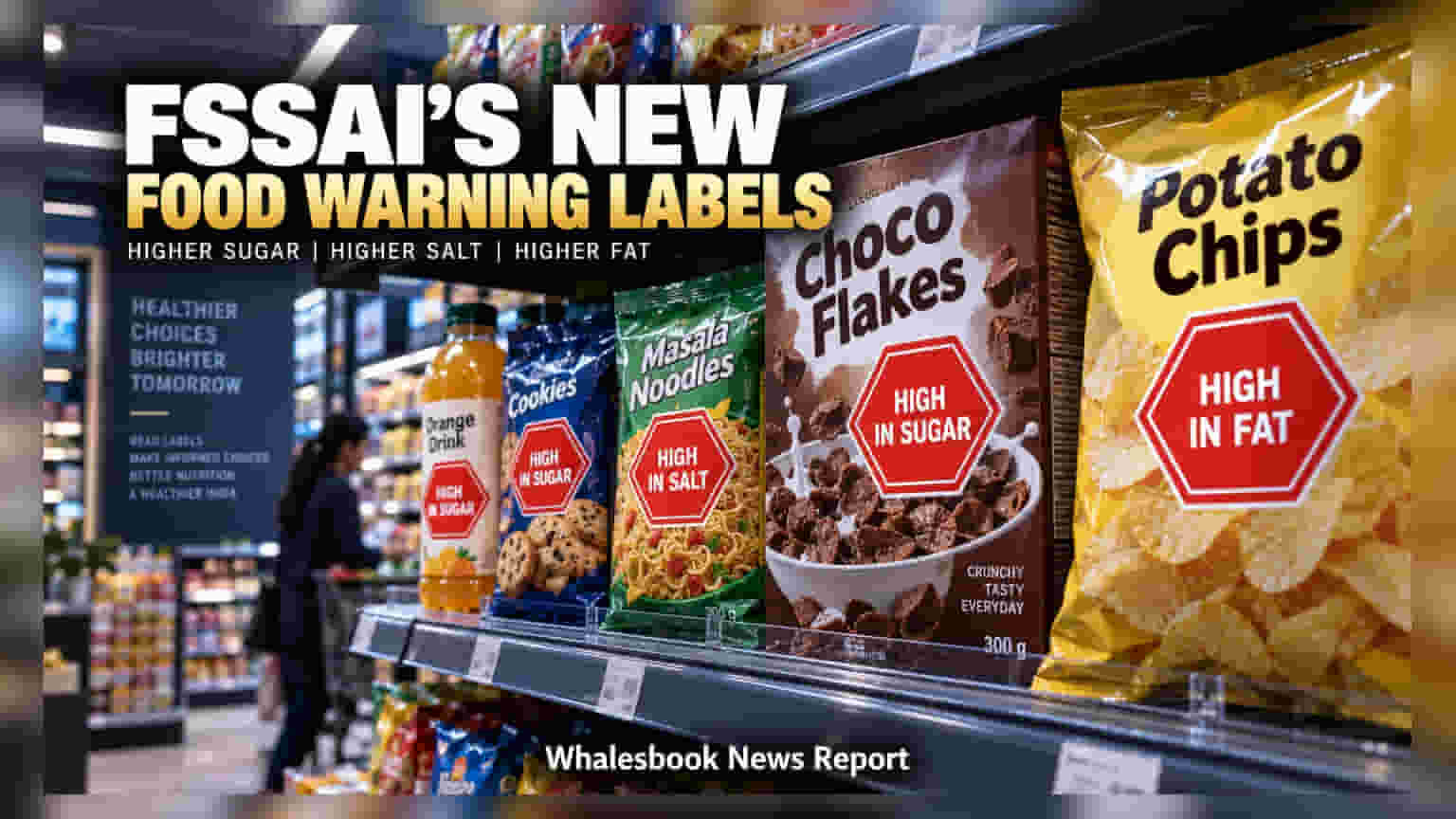
The Food Safety and Standards Authority of India has proposed mandatory red hexagon labels to flag high sugar, salt, or fat content in packaged products. Driven by Supreme Court directives to increase consumer health awareness, the move could impact how Indian FMCG companies formulate and market their products. Investors may monitor the upcoming consultation process and its potential effect on brand perception and consumer demand.
The Food Safety and Standards Authority of India (FSSAI) has moved to introduce a stricter labeling regime for packaged food products. The regulator has proposed a mandatory front-of-pack warning system that utilizes a red hexagon design to signal high levels of sugar, salt, or total fat. This initiative, developed following directives from the Supreme Court, aims to provide shoppers with clear nutritional information at the point of sale. The FSSAI expects to finalize these draft regulations within the next four months, following a mandatory industry consultation process.
Impact on the FMCG Sector
For investors in the Fast-Moving Consumer Goods (FMCG) sector, this regulatory shift could necessitate significant changes in business strategy. Packaged food companies across categories like snacks, beverages, and processed foods may face a need to revisit product formulations to lower nutrient levels and avoid prominent warning labels. There is also the possibility of a shift in consumer behavior, as highly visible warning signs could influence purchasing decisions. Brands that are perceived as healthier or those that successfully reformulate their products to meet the new, lower-threshold standards may have an advantage.
Historically, global precedents in countries like Canada, Chile, and Mexico, which have adopted similar front-of-pack labeling systems, show that such measures can lead to pressure on manufacturers to reduce sugar and sodium content. For Indian companies, the core monitorable will be the transition timeline and the final thresholds set by the regulator during the draft and consultation phase. Companies with a high share of products that currently exceed these potential nutritional limits might incur higher compliance or marketing costs to manage brand perception.
Regulatory Process and Timeline
The FSSAI has confirmed that the rollout will follow established legal procedures under the Food Safety and Standards Act. This requires the draft to undergo public feedback and industry review before it is finalized. The regulator clarified that the labeling requirement will apply if a product exceeds the limit for even a single nutrient, such as sugar, salt, or fat. If a product is high in multiple components, all relevant nutrients will be displayed within the same warning icon.
As the regulator moves through the consultation phase, the primary area for investors to watch is the specific guidance on threshold levels and the implementation timeline for existing inventory. While the proposal aims to eliminate ambiguity for consumers, the success of this move will depend on how effectively the industry adapts its product portfolios and how consumers react to the new warning labels once they appear on store shelves.