

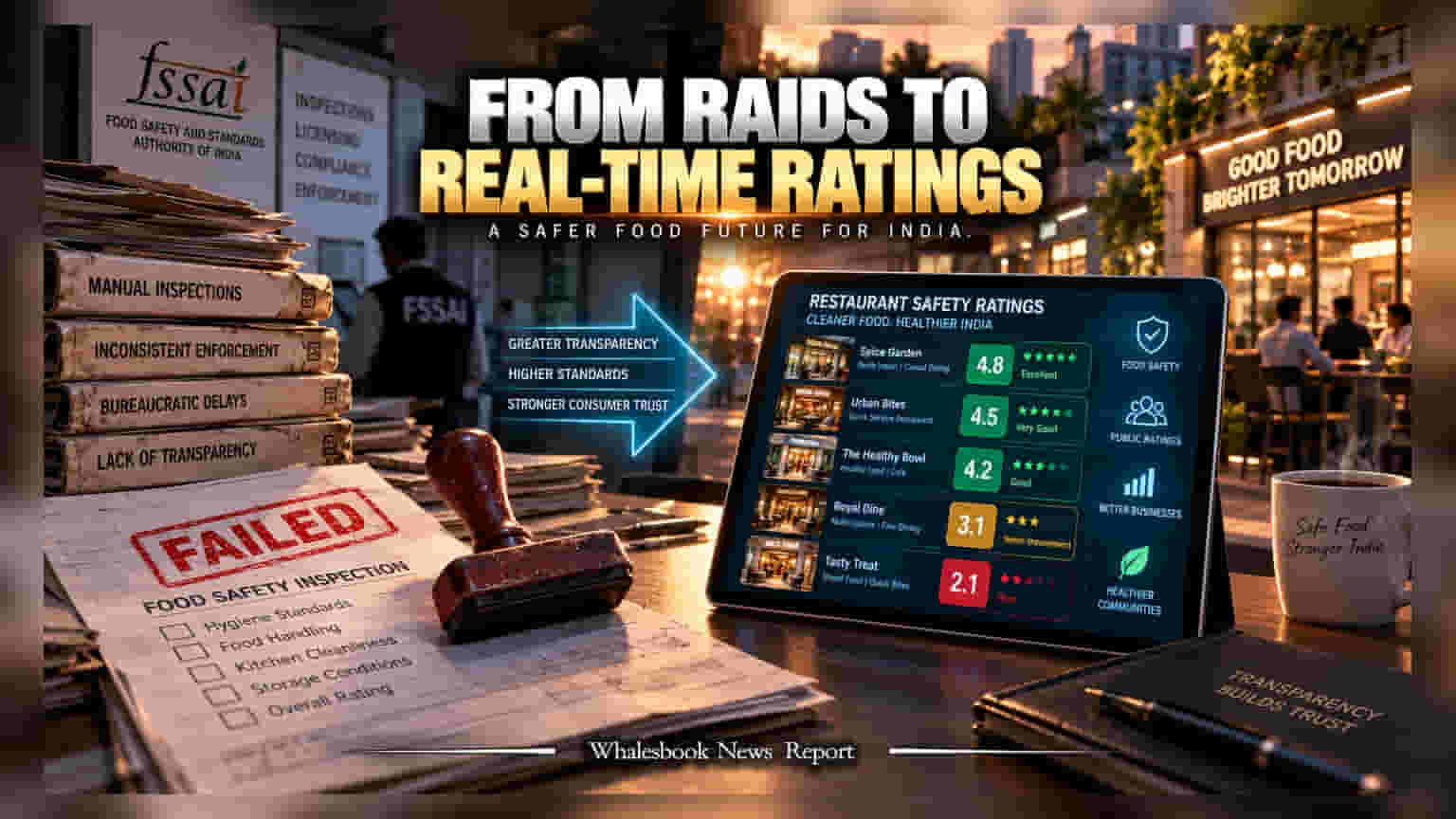
Industry experts are advocating for a shift in India's food safety enforcement, moving from manual inspections to a model based on public data disclosure. For investors, this potential transition could create significant operational distinctions between food and retail companies that maintain high hygiene standards and those that do not.
The regulatory framework for food safety in India is facing calls for a major strategic shift, moving away from manual, inspector-led enforcement toward a model of real-time digital transparency. While the Food Safety and Standards Authority of India (FSSAI) currently operates the FoSCoS platform, which digitizes licensing and inspection records, analysts suggest that the system is currently underutilized as a tool for public accountability.
The Shift to Market-Driven Compliance
Currently, food safety enforcement often relies on the actions of individual bureaucrats. Critics of this approach argue that relying on high-profile raids creates systemic inconsistency. The proposed alternative, modeled after successful frameworks in Singapore and Denmark, involves mandating the public disclosure of inspection ratings.
In these international models, health and hygiene scores are prominently displayed on storefronts and integrated into digital consumer platforms. This shift places the burden of quality control on the market rather than solely on government agencies. If a restaurant or food business receives a low safety rating, the immediate impact is a decline in customer trust and revenue, creating a direct financial incentive for companies to maintain rigorous compliance standards at all times.
Investor Implications for the Food and Retail Sector
For investors monitoring the Indian quick-service restaurant (QSR), food manufacturing, and retail sectors, this potential policy shift carries several implications.
First, compliance costs and operational quality would become clearer competitive differentiators. If food safety data becomes public, listed companies with robust, standardized operating procedures (SOPs) may gain a significant advantage over unorganized or smaller players that struggle with hygiene consistency. For established brands, maintaining high safety scores would be essential for protecting brand equity, as any public record of non-compliance would directly affect consumer behavior.
Second, the focus for risk assessment in the food sector would evolve. Currently, regulatory risk is often viewed through the lens of sudden, unpredictable inspections. A transparency-first model would make regulatory compliance a constant, measurable operational metric. Investors would need to monitor how companies manage hygiene and safety as a core part of their ESG (Environmental, Social, and Governance) performance, as these metrics would become transparent to the public.
What Investors Should Monitor
Market participants may want to track future updates from the FSSAI regarding the potential integration of violation data into consumer-facing platforms. Any move toward real-time public disclosure of inspection records would be a structural change for the industry. While such a policy would increase the administrative burden of ensuring constant compliance, it would also likely favor companies that have already invested in strong hygiene and quality management systems, potentially leading to market share consolidation as stricter standards become the norm.