

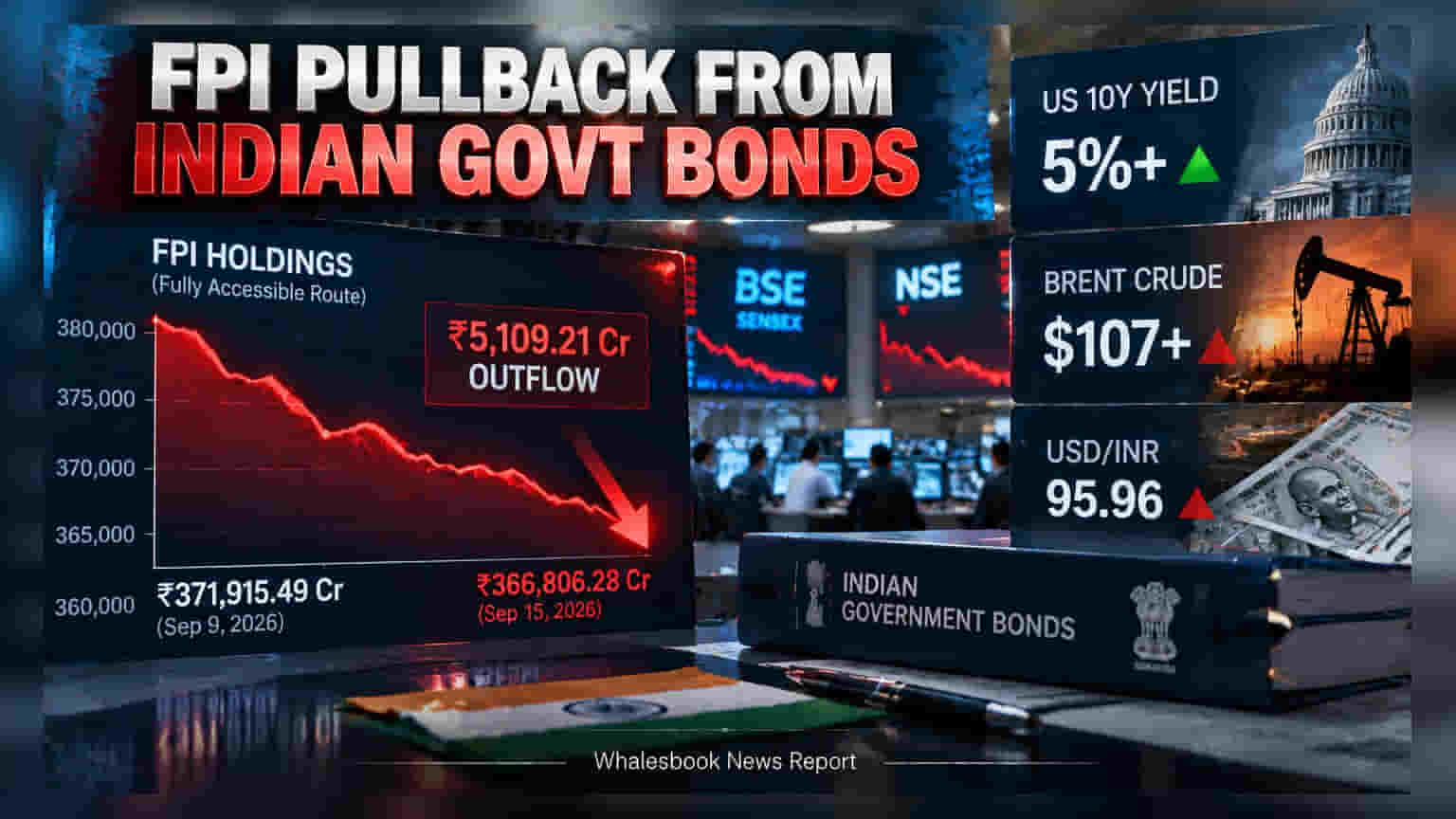
Foreign investors withdrew ₹5,109.21 crore from Indian government securities between September 9 and September 15, 2026. This exit is driven by higher US bond yields and rising oil prices, which have put pressure on the Indian rupee and increased global market uncertainty.
Foreign portfolio investors (FPIs) reduced their exposure to Indian government debt, withdrawing ₹5,109.21 crore from the 'Fully Accessible Route' (FAR) securities during the week ended September 15, 2026. Data from the Clearing Corporation of India shows that total FPI holdings in these specific bonds dropped to ₹366,806.28 crore, down from ₹371,915.49 crore on September 9. This decline signals a shift in investor sentiment as global financial conditions become more challenging.
Why Investors Are Moving Out
The primary reason for this outflow is a shift in the global risk environment. Investors often move money toward safer or higher-yielding assets during times of instability. Currently, the 10-year US Treasury yield has crossed the 5% mark. When US government bonds offer higher interest rates, they become more attractive to international investors compared to emerging market debt, which carries higher risk.
Adding to this is the sharp rise in Brent crude oil prices, which have sustained levels above $107 per barrel. Since India is a major importer of oil, higher energy prices can lead to increased inflation and a wider trade deficit. This environment often creates 'risk-off' sentiment, where international investors prefer to sell assets in developing nations and hold dollars instead.
Impact on the Rupee and Bond Markets
The Indian rupee has also faced significant pressure, trading at 95.96 against the US dollar. When the rupee weakens, foreign investors see the value of their Indian asset holdings decline in dollar terms. This often triggers further selling to mitigate currency losses.
For the Indian bond market, consistent outflows can lead to volatility. When large volumes of bonds are sold, bond prices typically fall. Because bond prices and yields move in opposite directions, this selling pressure can lead to higher bond yields, which effectively means higher borrowing costs for the government and businesses in the economy.
What Investors Should Monitor
The situation remains sensitive to external factors. Investors may track the 10-year US Treasury yield and global crude oil prices, as these remain the two biggest indicators of whether this trend will continue or reverse. Additionally, the stability of the rupee will be critical, as further depreciation may continue to deter foreign flows into domestic debt. While this movement reflects global portfolio adjustments rather than a specific issue with Indian sovereign bonds, the trend highlights how closely the Indian debt market is now linked to global interest rate cycles and energy prices.