

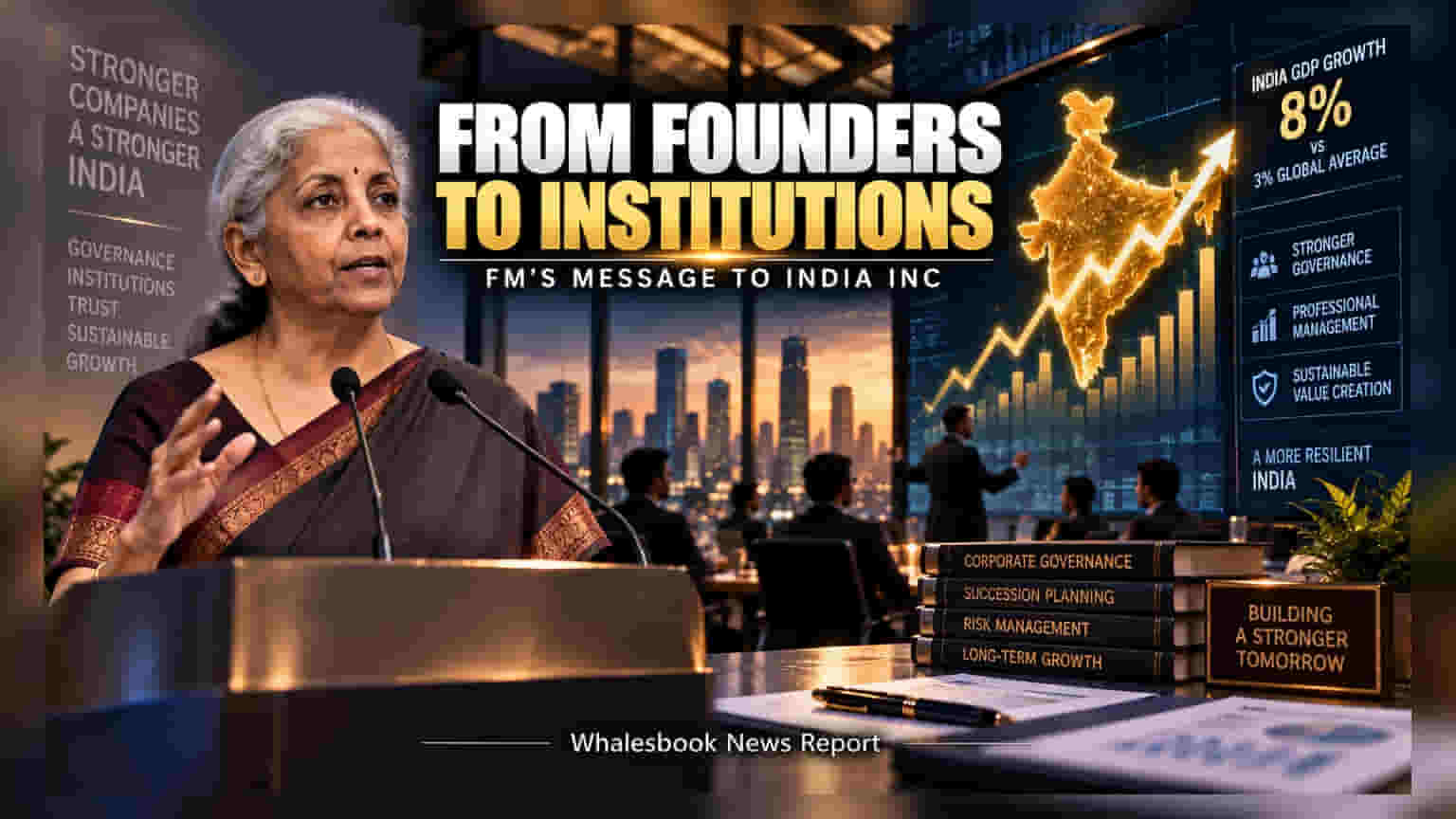
Finance Minister Nirmala Sitharaman has called for Indian enterprises to shift from founder-led models to professional institutions to ensure long-term competitiveness. Amid India’s 8% GDP growth, the government is emphasizing the need for better governance and succession planning. This push is significant for investors, as transition from family-run management to professional oversight can reduce key-man risks and improve corporate transparency.
Finance Minister Nirmala Sitharaman has highlighted a key need for the Indian private sector: the shift from founder-led management to professional institutions. Speaking at an industry event, the Minister noted that while India is sustaining an economic growth rate near 8%—significantly higher than the global average of 3%—maintaining this momentum requires a change in how companies operate internally. This call comes at a time when global investors are re-evaluating India's growth story, creating a potential opportunity for domestic firms to scale up sustainably.
Why Professionalization Matters for Investors
For investors, the management structure of a company is a major factor in assessing risk. Many family-owned businesses in India have deep customer loyalty and quality products, but they often struggle with what is known as 'key-man risk.' This risk arises when a company's success, strategy, and decision-making depend entirely on a single founder or family. If that person faces a health issue, a legal problem, or a succession dispute, the company’s performance can suffer significantly.
Professionalization aims to replace this reliance with systems, processes, and a board of directors that can guide the company even if the founder is not involved in daily operations. Companies that successfully transition to professional management often see improved capital allocation, better succession planning, and higher transparency, which can boost long-term shareholder trust.
Reducing Regulatory and Legal Risks
The Finance Minister also addressed how companies interact with regulators. She advised that businesses should avoid using litigation as a default response to regulatory disagreements. In the Indian market, long-drawn-out legal battles can be detrimental to a company's stock performance. Legal uncertainty often leads to volatility, higher legal costs, and a loss of management focus on core operations.
Adopting early-stage consultation and evidence-based collaboration, as suggested by the Minister, is a signal of a more mature corporate culture. For investors, companies that proactively resolve regulatory issues through dialogue rather than courts are generally seen as more stable, as it reduces the risk of sudden operational disruptions or financial penalties.
What Investors Should Monitor
As the push for institutionalization continues, investors can track several signs of professionalization within the companies they monitor. This includes the presence of independent directors on the board who actively participate in decision-making, clear and publicly stated succession plans for the leadership team, and a history of resolving disputes without lengthy court battles. While the founder’s entrepreneurial spirit is often the engine of growth in the early stages, the transition to professional management is what helps large corporations endure over the long term. Tracking these governance standards is increasingly important for managing risk in mid-sized and family-led enterprises.