 Whalesbook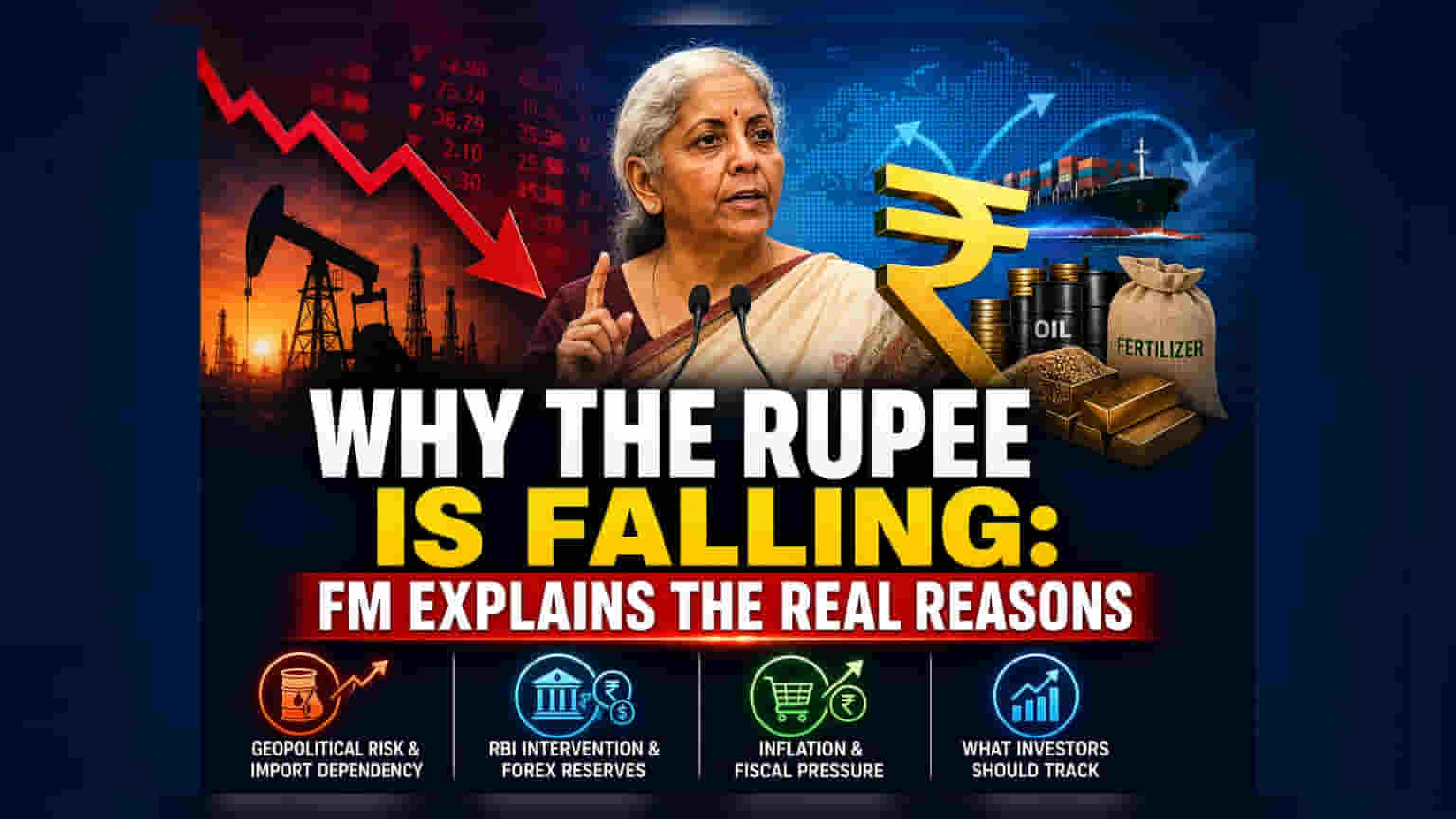


Finance Minister Nirmala Sitharaman has attributed the rupee's recent weakness to ongoing geopolitical tensions in West Asia and a heavy reliance on imports like crude oil, gas, and gold. While the Reserve Bank of India is actively intervening to steady the currency, the minister noted that global headwinds and foreign investor profit-taking are affecting currencies across Asia. Investors are closely monitoring how these factors could influence domestic inflation and corporate profit margins.
What Happened
Finance Minister Nirmala Sitharaman has pointed to geopolitical instability in West Asia and the country's high dependency on imported energy and commodities as the primary drivers behind the rupee's recent depreciation against the U.S. dollar. During a recent address, the Finance Minister explained that the nation’s heavy reliance on external sources for crude oil, natural gas, fertilizers, and gold significantly increases the demand for foreign currency. She noted that the Reserve Bank of India (RBI) is actively intervening in the forex market to manage volatility and prevent excessive currency movement. This, combined with foreign institutional investors booking profits and moving capital, has led to a noticeable drawdown in India's foreign exchange reserves.
Why This Matters For Investors
For investors, currency movement is a key indicator of broader economic health and corporate performance. A weaker rupee typically has a split impact on the stock market. Sectors that are import-dependent—such as oil refining, paints, consumer electronics, and civil aviation—often face margin pressure because their raw material costs rise when the rupee falls. Conversely, export-heavy sectors like IT services and pharmaceuticals may see a benefit, as their revenues earned in foreign currency translate into higher rupee values.
However, the broader concern is "imported inflation." Since essential items like crude oil and gas are priced in dollars, a weaker rupee makes these imports costlier. This raises the cost of logistics, manufacturing, and energy, which can ultimately feed into domestic retail inflation. If inflation remains elevated, it often limits the room for central banks to reduce interest rates, which can weigh on equity valuations.
The Fertilizer Subsidy Pressure
The Finance Minister highlighted the government's significant fiscal commitment to agriculture. She explained that India currently imports a bag of fertilizer at approximately ₹3,000, which is then sold to farmers for ₹300. This creates a subsidy burden of roughly ₹2,700 to ₹2,800 per bag. This structural reliance on imports for essential agricultural inputs underscores the fiscal challenge the government faces when global commodity prices rise, as it increases the government's own dollar expenditure.
Peer and Sector Context
The pressure on the rupee is not occurring in isolation. The Finance Minister noted that other major Asian currencies, including the Japanese Yen and the Korean Won, have also faced sharp declines against the dollar. This reflects a broader trend of dollar strength influencing regional economies, driven by global financial conditions. While the RBI's intervention aims to ensure orderly market conditions, central banks generally do not attempt to fix an exchange rate, focusing instead on curbing extreme volatility.
What Investors Should Track
Investors may monitor several key indicators in the coming months. First, the movement of global Brent crude oil prices remains a critical monitorable, as it directly impacts India's trade deficit and import bill. Second, updates on the Reserve Bank of India’s monetary policy and forex management strategy will be important, as they influence domestic liquidity and interest rate expectations. Finally, trade balance data and foreign investor flows will continue to provide insights into how the economy is managing its external account pressures.