 Whalesbook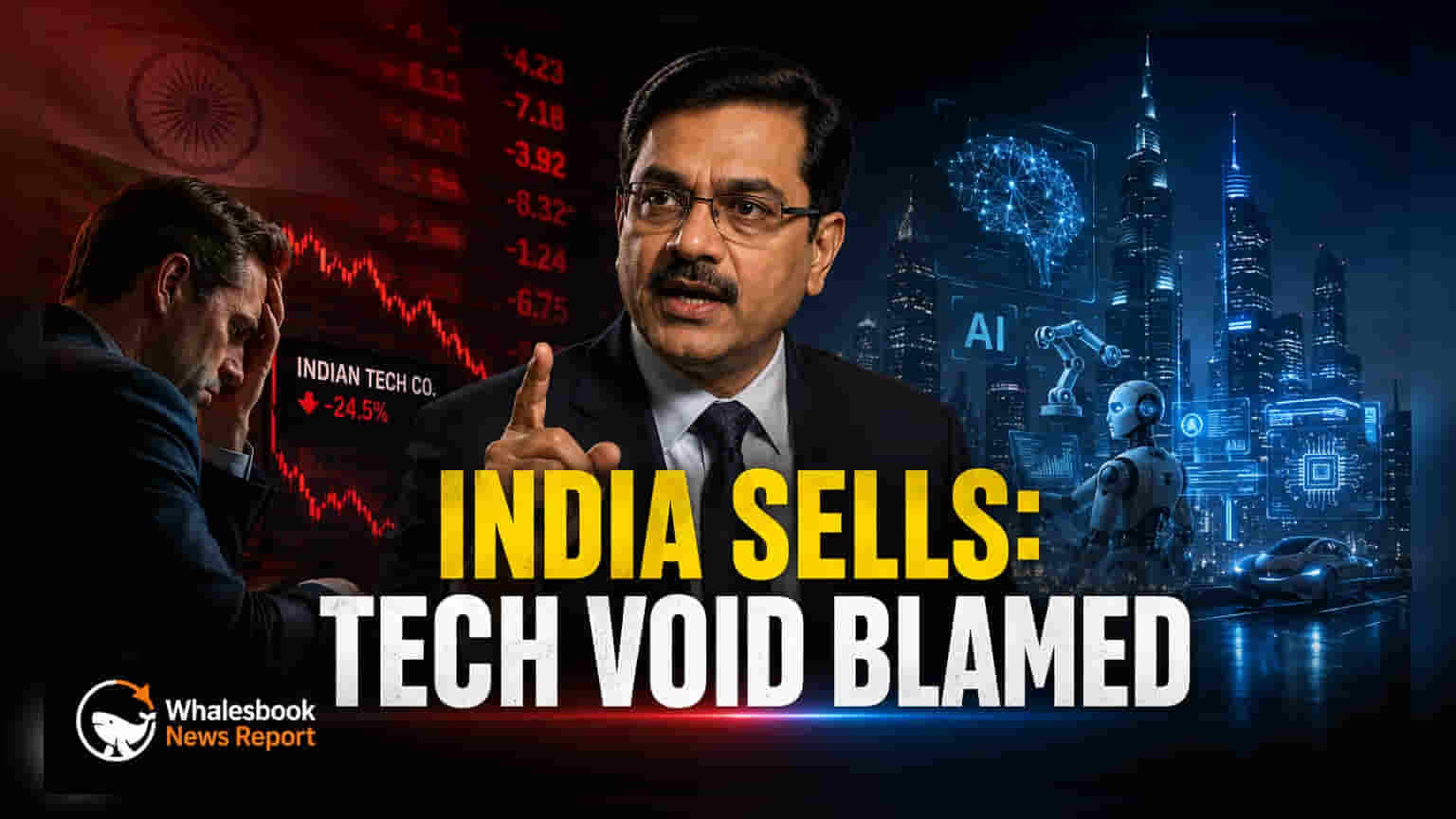


The Valuation Gap and Capital Flight
The historic withdrawal of foreign portfolio capital from India throughout 2026 represents a fundamental recalibration rather than a temporary market correction. With cumulative outflows reaching ₹2.25 trillion—surpassing the entirety of the 2025 exit—the selling is fueled by a confluence of rising crude oil prices, a hawkish US Federal Reserve, and a 6% depreciation of the rupee against the dollar. These outflows have not merely impacted index performance; they have exposed a structural mismatch between India’s established corporate listings and the evolving investment mandates of global asset allocators.
The Missing Tech Premium
Global funds are increasingly pivoting toward artificial intelligence, quantum computing, and advanced robotics—sectors where India’s public market presence remains negligible. While domestic benchmarks are heavy on traditional mainstays like automobiles, legacy IT services, and pharmaceuticals, these sectors face existential pressure. Global institutional interest in Indian IT, historically a cornerstone of the Nifty 50, has cratered as investors fear the disruptive potential of 'AI deflation'—where automation and generative tools erode the high-margin service models that previously defined the sector’s valuation premiums. The absence of homegrown, liquid, and listed AI-native giants has forced foreign capital to seek alpha in markets like South Korea and Taiwan, which offer a more direct play on the global technology cycle.
The Forensic Bear Case: Structural Vulnerabilities
The current market environment highlights several structural risks that domestic institutional support may struggle to mitigate in the long term. First, the 'AI threat' to legacy IT services is not merely a narrative but a trend already visible in institutional portfolio rebalancing, with FII holdings in major IT firms dropping to historic lows. Second, the reliance on domestic inflows—though resilient—creates a self-contained market cycle that may lack the liquidity to support significant premium valuations if external confidence continues to wane. Furthermore, the persistent depreciation of the rupee introduces a vicious cycle: falling dollar-denominated returns trigger further selling, which in turn exacerbates currency volatility and deepens the risk-aversion of global mandates. While recent months have shown a moderation in the pace of selling, the persistent trade deficit and sensitivity to oil price shocks remain critical vulnerabilities for a market that is increasingly priced for growth it is currently struggling to deliver in the eyes of foreign capital.
The Path Forward
Market participants are shifting their focus toward a potential decoupling. While FIIs continue to trim exposure to large-cap blue chips, there is evidence of selective accumulation in mid-cap and small-cap segments tied to manufacturing, defense, and capital goods. The long-term outlook depends heavily on whether India can translate its FDI success—which has remained more stable than volatile portfolio flows—into a deeper, more diverse public market ecosystem. Until such infrastructure and new-age tech depth materialize, India risks remaining a tactical 'sell' for global funds favoring markets with clearer exposure to the next industrial revolution.