

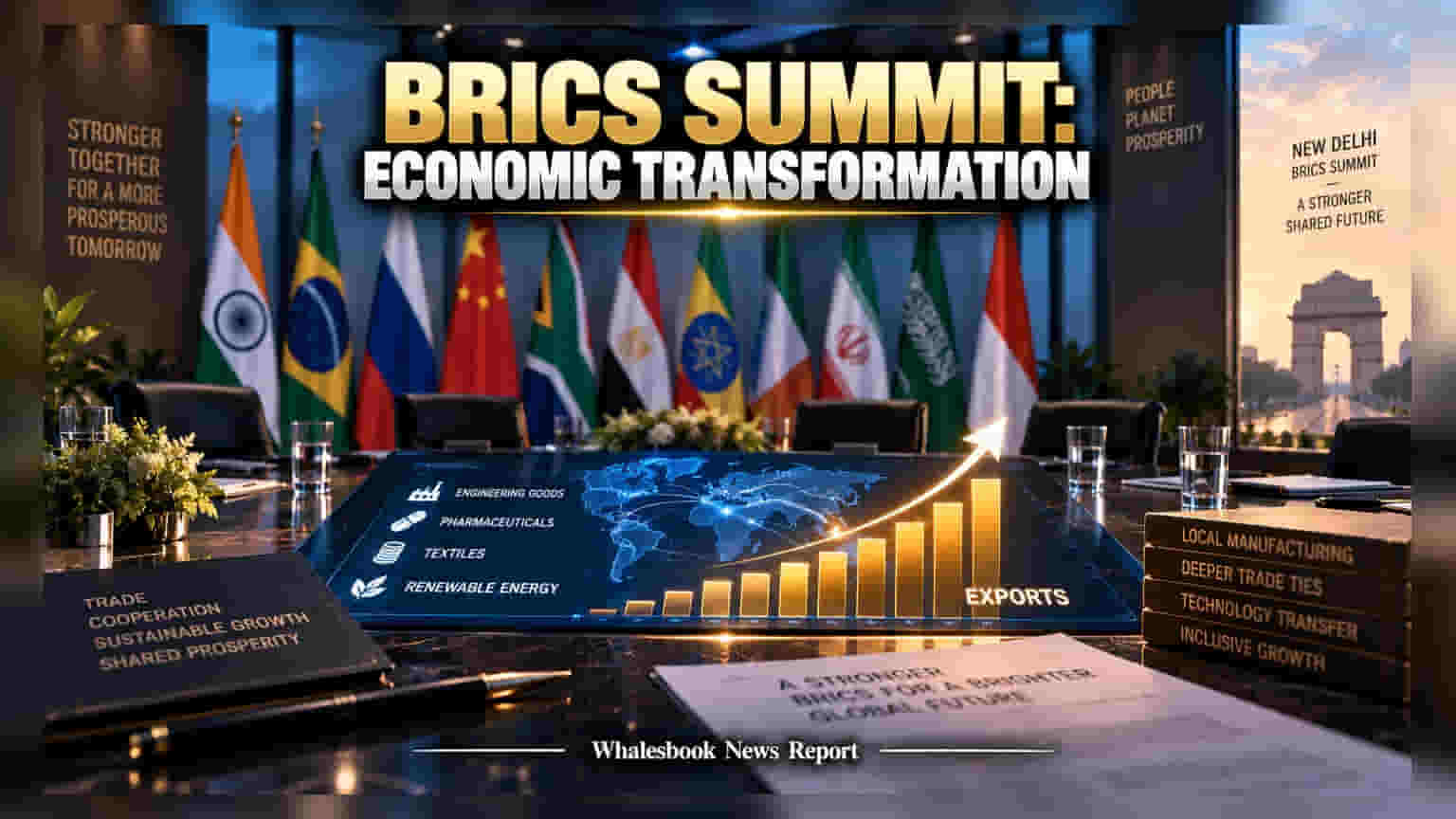
Ahead of the 18th BRICS Summit in New Delhi on September 12–13, the Federation of Indian Export Organisations is calling for measurable trade improvements. The body wants the expanded 11-member bloc to focus on easing customs, simplifying cross-border payments, and reducing non-tariff barriers to boost Indian exports across sectors like engineering and pharmaceuticals.
India is set to host the 18th BRICS Summit in New Delhi on September 12 and 13, 2026. The Federation of Indian Export Organisations (FIEO) is urging member nations to shift the focus from broad strategic talks to specific trade outcomes. The goal is to ensure the expanded 11-member alliance—which now includes Indonesia—delivers real economic benefits for Indian manufacturers and exporters.
FIEO argues that despite the bloc's large share of global trade, Indian companies face persistent operational hurdles. The trade body is pushing for concrete actions, such as the harmonization of customs procedures and a significant reduction in non-tariff barriers. For many micro, small, and medium enterprises (MSMEs), the biggest roadblock is the lack of a standardized, transparent cross-border payment system. FIEO maintains that addressing these structural inefficiencies is critical to effectively integrating Indian firms into global supply chains.
Targeting Key Growth Sectors
The proposed push for stronger trade architecture targets sectors where India has a clear competitive advantage, including engineering goods, pharmaceuticals, textiles, and renewable energy. The objective is to position India as a central node in the production networks of BRICS economies rather than acting merely as an exporter of raw materials. This shift would ideally involve moving beyond basic trade toward collaborative manufacturing ventures and deeper technology transfer.
Operational and Geopolitical Risks
While the goal is to drive growth, the path ahead faces challenges. Geopolitical differences among the 11 member nations could complicate efforts to reach a consensus on trade facilitation. Furthermore, operational bottlenecks, such as persistent infrastructure gaps and varying regulatory standards across borders, remain significant hurdles for exporters. The success of this summit for Indian businesses will depend on whether member states can align their diverse regulatory environments to create a more seamless digital trade infrastructure.
For investors and industry participants, the key monitorables from the summit will be any formal agreements on digital trade documentation, simplified payment frameworks, or new investment matchmaking forums. These outcomes would signal whether the bloc is successfully moving beyond diplomatic dialogue toward building a more functional economic partnership that can support export-led growth.