

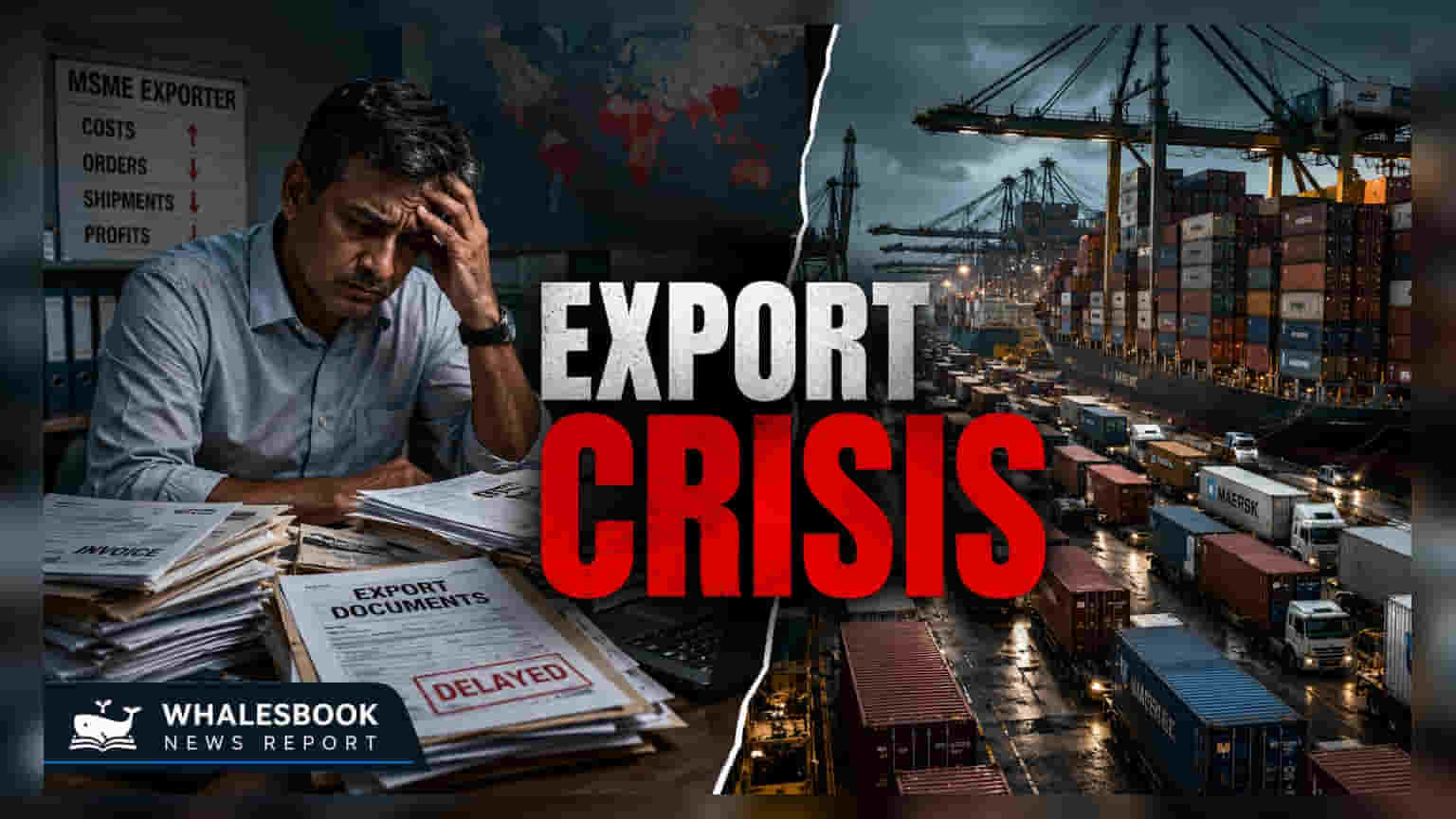
The Federation of Indian Export Organisations has urged the government to improve access to low-cost export credit following a 14% decline in financing. This drop has severely impacted MSME exporters, who face liquidity shortages that hinder order fulfillment and global competitiveness.
What Happened
The Federation of Indian Export Organisations (FIEO) has formally requested the Indian government to prioritize export credit availability and improve logistics infrastructure. At a recent Board of Trade meeting, industry representatives highlighted that a 14% reduction in export financing is creating severe liquidity pressure for businesses, particularly Micro, Small, and Medium Enterprises (MSMEs). The apex body is pushing for collaboration between the Ministry of Commerce, the Reserve Bank of India, and commercial banks to ensure credit is provided at competitive interest rates and in a timely manner.
Why Export Credit Matters for Business
For exporters, credit is the lifeblood of operations. It is required both before shipment—to purchase raw materials and manufacture goods—and after shipment, while waiting for payment from international buyers. When this funding contracts or becomes too expensive, smaller companies often struggle to accept new orders or scale their operations to meet global demand. This creates a risk where Indian manufacturers may lose market share to international competitors simply due to a lack of working capital, rather than a lack of product demand or quality.
Logistics and Freight Cost Challenges
Beyond financing, FIEO has flagged that high and non-transparent freight charges are hurting the ability of Indian exporters to compete globally. The organization has called for closer engagement with the Ministry of Ports, Shipping & Waterways to monitor freight costs more effectively. The goal is to ensure better availability of containers and vessels, which have historically faced shortages that lead to delays and cost increases. For listed logistics and shipping-dependent companies, these inefficiencies often result in squeezed operating margins and increased inventory holding times.
Supporting the Green Transition
As global markets move toward stricter environmental regulations, FIEO is also advocating for a 'green transition fund.' This proposed initiative aims to help exporters invest in cleaner technologies and energy-efficient processes. For investors, this signals a long-term shift in the sector where companies that fail to adopt sustainable practices may face future trade barriers in key export markets like the European Union and the United States.
What Investors Should Track
Investors in the export-oriented sectors, such as textiles, engineering, and chemicals, should watch for official government or RBI circulars regarding export credit guidelines. Key monitorables include any potential interest rate subvention schemes for exporters, improvements in the GST refund process at major airports, and any institutional mechanisms established to monitor freight charges. Additionally, tracking the export performance data of MSME-heavy sectors can provide early signals on whether liquidity constraints are easing or continuing to weigh on output.