 Whalesbook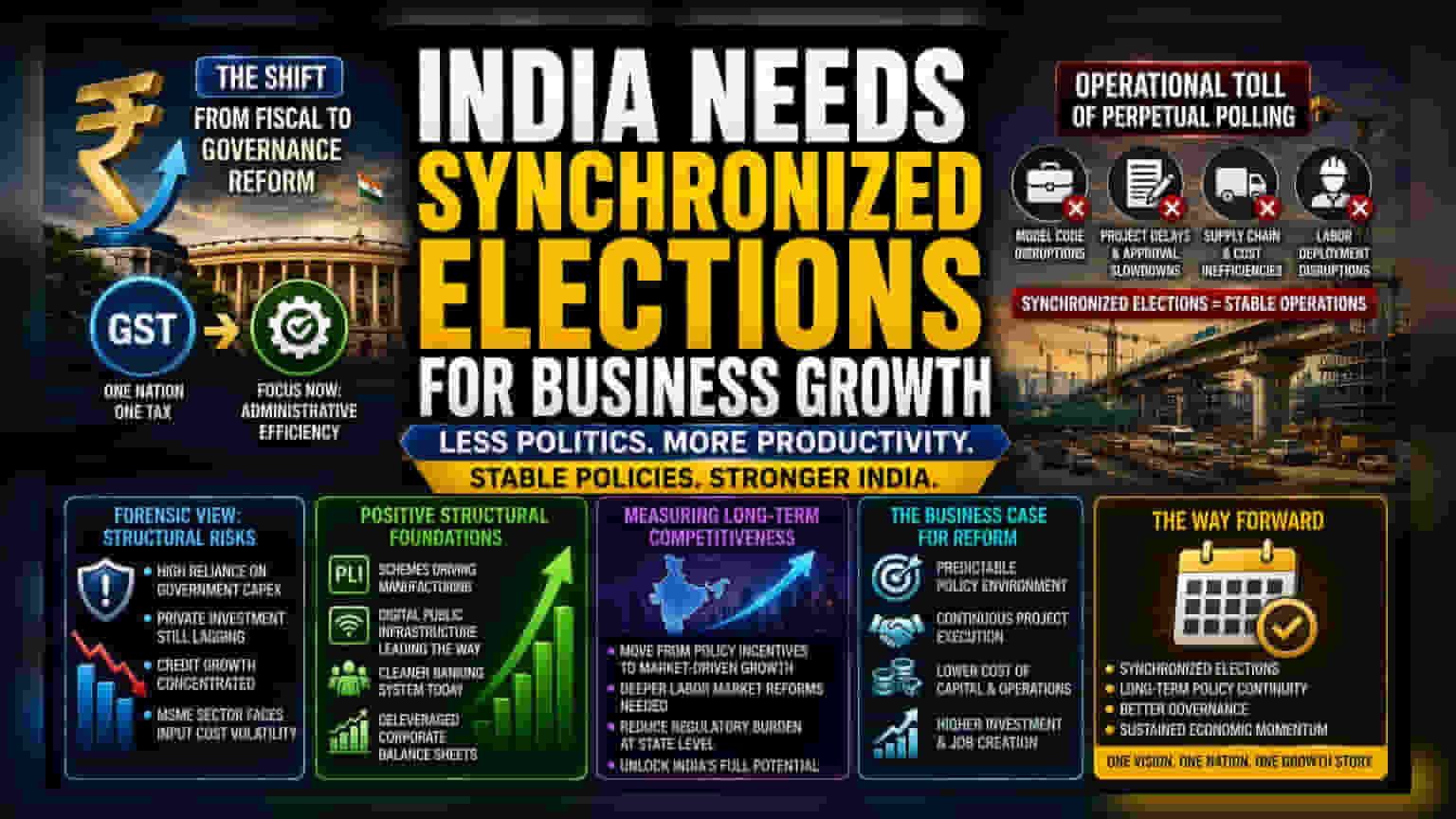


FICCI President Anant Goenka identifies synchronized elections as the essential follow-up to GST-driven fiscal reform. While GST has improved logistics efficiency and formalization, the private sector argues that permanent election cycles now hinder long-term policy execution and capital expenditure planning.
The Shift from Fiscal to Governance Reform
The narrative surrounding India's economic maturation is shifting from tax infrastructure to administrative efficiency. While the Goods and Services Tax (GST) successfully consolidated a fragmented indirect tax system, reducing inter-state friction, the focus has now pivoted toward the opportunity cost of the electoral calendar. The argument posited by industry leaders is that the current perpetual election cycle necessitates populist, short-term budget cycles that often clash with the long-term capital intensity required for industrial scaling.
The Operational Toll of Perpetual Polling
Synchronized elections are framed not merely as a political maneuver but as an operational necessity for the private sector. Frequent state and municipal polls often trigger the implementation of the Model Code of Conduct, which effectively halts government procurement and project approvals for weeks at a time. For companies heavily reliant on public-sector infrastructure contracts or state-level regulatory clearances, this uncertainty creates a stop-start cycle that complicates supply chain management and labor deployment. Reducing these disruptions is intended to allow for a more stable environment for fixed-asset investment.
The Forensic View on Structural Risks
Despite the optimism surrounding structural reforms like the Production-Linked Incentive (PLI) schemes and digital public infrastructure, structural risks remain embedded in the current economic model. Critics and cautious institutional investors frequently point to the continued reliance on government-led capital expenditure to drive GDP growth. While corporate balance sheets have deleveraged significantly over the last decade, private sector investment—excluding a few key conglomerates—has remained hesitant to match the pace of public spending. Furthermore, while the banking sector is undoubtedly cleaner than it was a decade ago, the transmission of monetary policy remains uneven, with credit growth often concentrated in specific sectors while manufacturing MSMEs continue to struggle with fluctuating input costs.
Measuring Long-Term Competitiveness
India’s global competitiveness hinges on transitioning from a growth strategy predicated on policy incentives to one driven by organic market demand. The success of digital public infrastructure, particularly UPI and the integration of Jan Dhan accounts, has been instrumental in formalizing the economy. However, the next phase of growth requires deeper labor market reforms and a reduction in the regulatory burden at the state level, where implementation of federal policy often stalls. Industry sentiment suggests that without further administrative streamlining, the gains realized from past reforms may hit a ceiling, making the call for synchronized governance more of a strategic necessity than a political preference.