

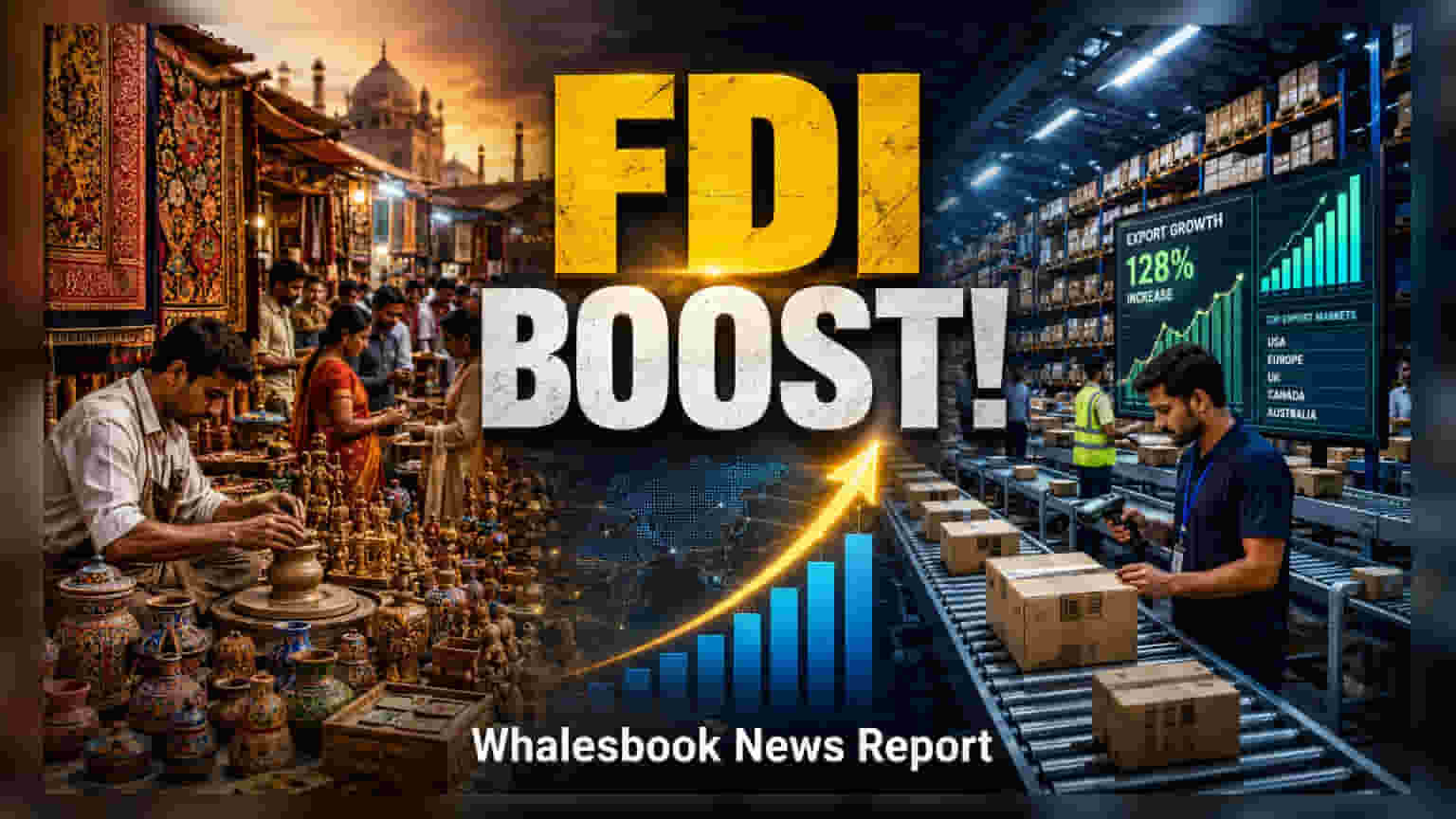
India has updated its FDI policy to permit inventory-based e-commerce models exclusively for export-oriented businesses. This shift aims to help MSMEs and handicraft artisans reach global customers more easily. The policy change is designed to grow India's e-commerce exports, which currently lag significantly behind global leaders like China.
The Indian government has officially liberalized its Foreign Direct Investment (FDI) policy to allow inventory-based e-commerce models, provided these operations are used solely for exports. Under previous rules, the regulatory framework for inventory-based e-commerce was restrictive, creating uncertainty for companies attempting to hold domestic stock for international online sales. This amendment removes those barriers, allowing businesses to store domestically manufactured goods in inventory before exporting them through e-commerce channels.
Impact on MSMEs and Handicraft Exports
This policy change is specifically aimed at micro, small, and medium enterprises (MSMEs) and artisans involved in the One District One Product (ODOP) initiative. By allowing companies to manage their own inventory, businesses can potentially offer faster shipping and better logistics for international customers. Government officials have indicated that this change is intended to provide these smaller producers with direct access to global markets, reducing their reliance on complex third-party supply chains.
Scaling India’s E-commerce Export Potential
India currently generates approximately $2 billion in e-commerce exports. While this is a growing segment, it remains a fraction of the scale seen in other manufacturing-heavy economies. For example, China reports e-commerce exports reaching roughly $350 billion. With the global e-commerce export market projected to reach $2 trillion by 2030, this policy shift is a strategic effort to capture a larger share of that demand.
To support this growth, the Directorate General of Foreign Trade (DGFT) is expected to follow up with detailed operational guidelines. The government is also considering the creation of dedicated e-commerce export hubs to further streamline customs and logistics, which have historically been pain points for smaller exporters dealing with high shipping costs and complex return processes.
Investor Monitorables and Risks
For investors, the primary monitorable will be how quickly e-commerce platforms and logistics providers can scale their infrastructure to meet this new demand. While the policy provides a clear framework, successful implementation will depend on how efficiently the DGFT guidelines resolve existing challenges, such as the handling of returns, payment collection across different currencies, and customs clearance for small-parcel exports. Investors should also track whether this change leads to increased capital spending by logistics and e-commerce companies as they build out the necessary inventory hubs to support these export-focused operations.