

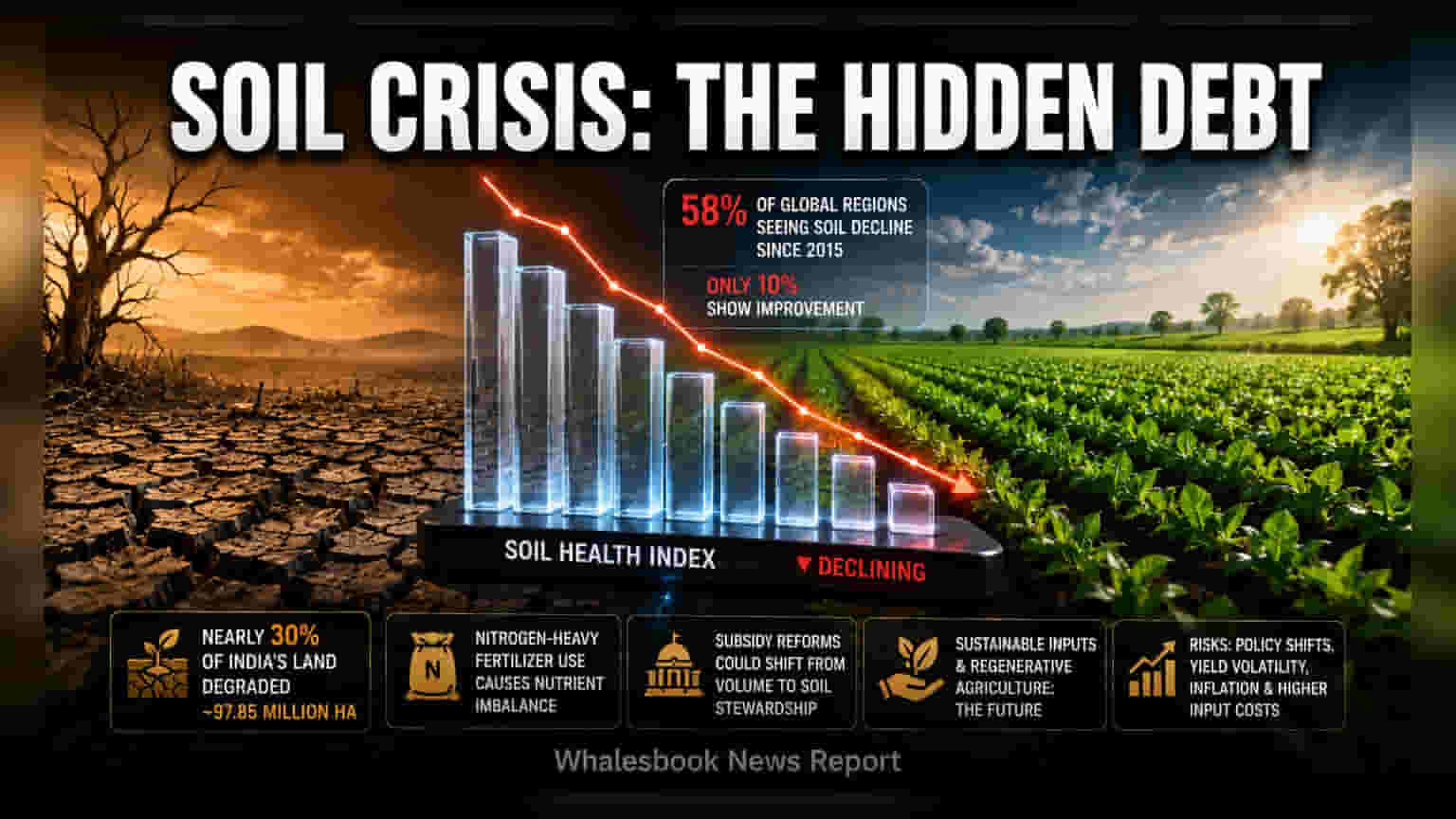
A new 2026 FAO report shows that 58% of global regions have seen soil quality decline since 2015, with 30% of India’s land now degraded. This trend poses long-term risks for agricultural output and could force a shift in government subsidy policies that impact traditional fertilizer manufacturers.
Soil Health and Global Agriculture
A new 2026 report from the Food and Agriculture Organization (FAO) has highlighted a major challenge for global food security: the rapid decline of soil quality. Data shows that 58% of assessed regions worldwide have seen soil conditions deteriorate since 2015, with only 10% showing improvement. This trend poses significant long-term risks for agricultural productivity and, by extension, the economic stability of nations heavily reliant on farming.
The Challenge for India
India is facing a significant challenge, with nearly 30% of its land—approximately 97.85 million hectares—currently classified as degraded. This is not just an environmental issue; it is a structural concern for the country's agrarian economy. The current agricultural model relies heavily on nitrogen-heavy fertilizers, often supported by significant government subsidies. While these policies have historically helped maintain production levels, they have led to nutrient imbalances and long-term decline in soil health.
Policy Risks and Market Impact
For investors, the critical issue lies in the alignment of government policy with soil sustainability. Currently, subsidy structures often prioritize urea and other intensive fertilizers, which can discourage more balanced nutrient management. Experts warn that this creates a policy risk for traditional agro-input companies. If government policy begins to shift—moving funds from volume-based fertilizer subsidies toward soil stewardship or regenerative agriculture—it could alter the growth trajectory and profit margins for firms that do not adapt their product portfolios.
The Shift Toward Sustainable Practices
There is a growing global push, supported by organizations like the UNCCD and the FAO, to mobilize private capital for large-scale land management projects. This transition seeks to integrate soil health into broader national agricultural and climate planning. For companies within the agricultural value chain, this environment creates both uncertainty and opportunity. Firms that can innovate or shift toward sustainable inputs may find themselves better positioned to benefit from future policy incentives, while those tied strictly to high-subsidy, low-efficiency models may face increased pressure.
Risks to Monitor
Investors should be aware that the risks are multifaceted. Beyond the threat of policy changes, ongoing soil degradation impacts yield stability, which can drive food inflation and reduce rural consumer demand. Companies that rely on raw materials sourced directly from rural markets may face higher operational costs if land productivity continues to fall. Additionally, any sudden regulatory shift in fertilizer subsidy allocations could impact the earnings visibility of major sector players. The key monitorable for the coming quarters will be any government announcements regarding subsidy reforms or initiatives linked to soil health parameters, as these will signal the direction of India's agricultural policy.