

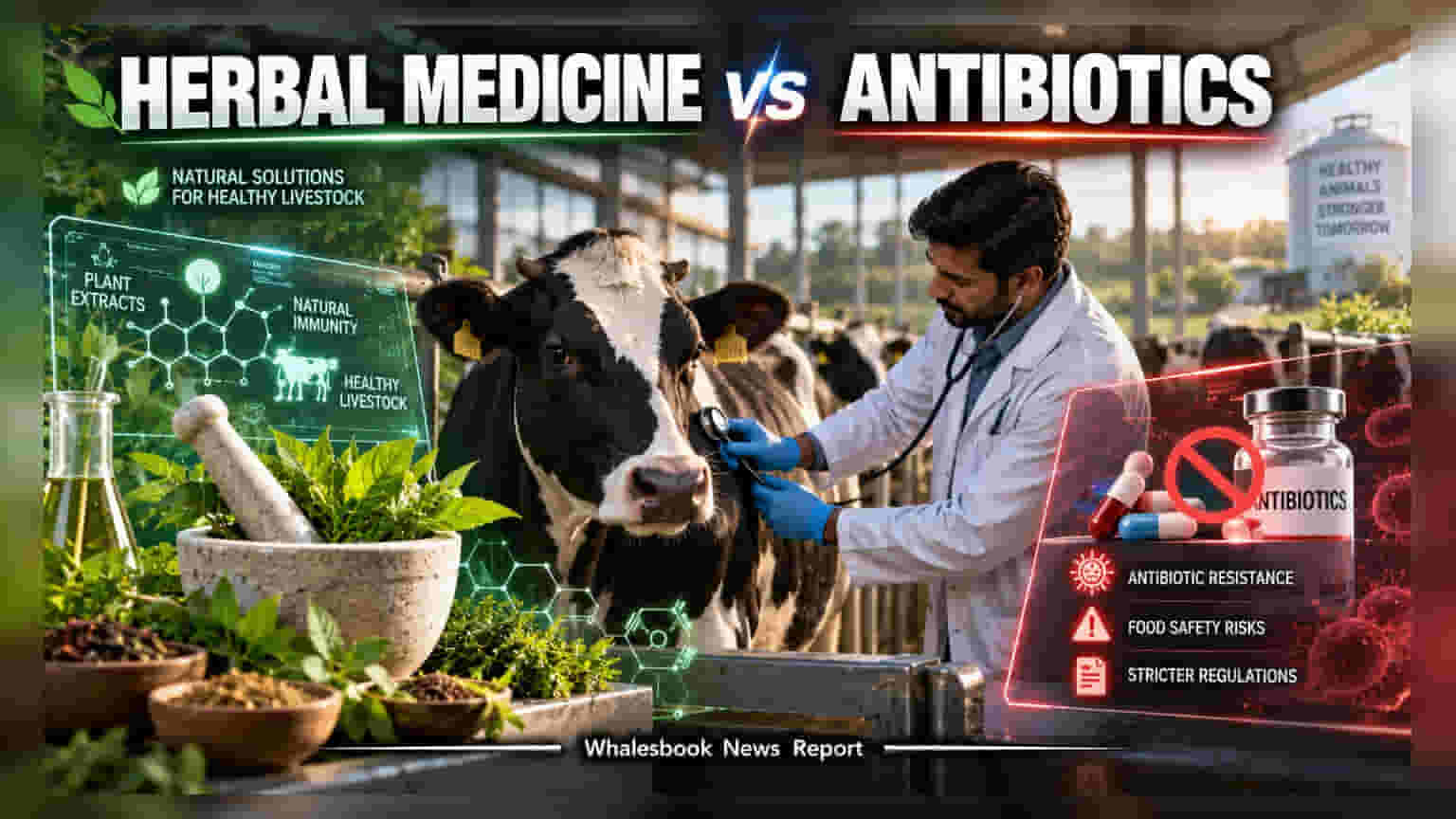
The Food and Agriculture Organization warns that inconsistent quality and lack of global regulations prevent the scaling of herbal medicines for livestock. While global adoption faces barriers, India’s National Dairy Development Board has successfully integrated these practices in over 1 million cases, highlighting the potential for standardized animal health products.
The Food and Agriculture Organization of the United Nations has cautioned that while traditional herbal medicines present a promising alternative to antibiotics in livestock, significant hurdles block their widespread use. The primary challenge identified is the lack of standardized production and scientific validation. Because natural plant extracts can vary in strength depending on their geographic origin and the season they are harvested, it is difficult to create a consistent, reliable product that global regulators can approve for cross-border trade.
For the broader animal health industry, this regulatory uncertainty is the main bottleneck. Companies looking to develop and market herbal-based veterinary solutions face a complex environment where traditional knowledge must meet modern safety and efficacy standards. Without a unified international framework, scaling these products remains a difficult task, even though the demand for alternatives to antibiotics is rising as livestock producers look to reduce their chemical footprint.
India’s Experience with Ethnoveterinary Medicine
Despite these global challenges, India has emerged as a practical case study for how to bridge the gap between traditional knowledge and modern livestock management. The National Dairy Development Board, in collaboration with the Department of Animal Husbandry and Dairying, has actively promoted the use of ethnoveterinary medicine to streamline the use of antibiotics. The model focuses on using herbal remedies as a first-line treatment for common animal ailments, provided they are supported by necessary medical intervention when required.
Data from these initiatives shows that by March 2025, over 1.1 million interventions were recorded across eight states. These programs reported a success rate exceeding 80 percent, demonstrating that when herbal treatments are applied in a structured, evidence-based manner, they can be highly effective in a commercial dairy setting. This success suggests that the path to commercializing herbal veterinary products lies in rigorous scientific testing rather than relying solely on traditional practices.
Commercial and Regulatory Outlook
For investors and stakeholders in the animal health sector, the key takeaway is the tension between potential and execution. The herbal veterinary market has a clear value proposition: lower costs for farmers and reduced antibiotic usage in the food chain. However, turning this into a standardized industry requires massive investment in research to ensure that the active ingredients in these herbal preparations are consistent batch after batch.
Regulatory bodies are currently caught in a dilemma: they must decide whether to regulate the raw plant material, the final extract, or the entire manufacturing process. Until this is resolved, the market for these products will likely remain localized rather than global. Future growth in this segment will depend on the ability of companies to provide scientific validation that global health authorities can accept. Investors should watch for developments in regulatory policies and new research findings that might pave the way for a more standardized, scalable market for herbal veterinary health products.