

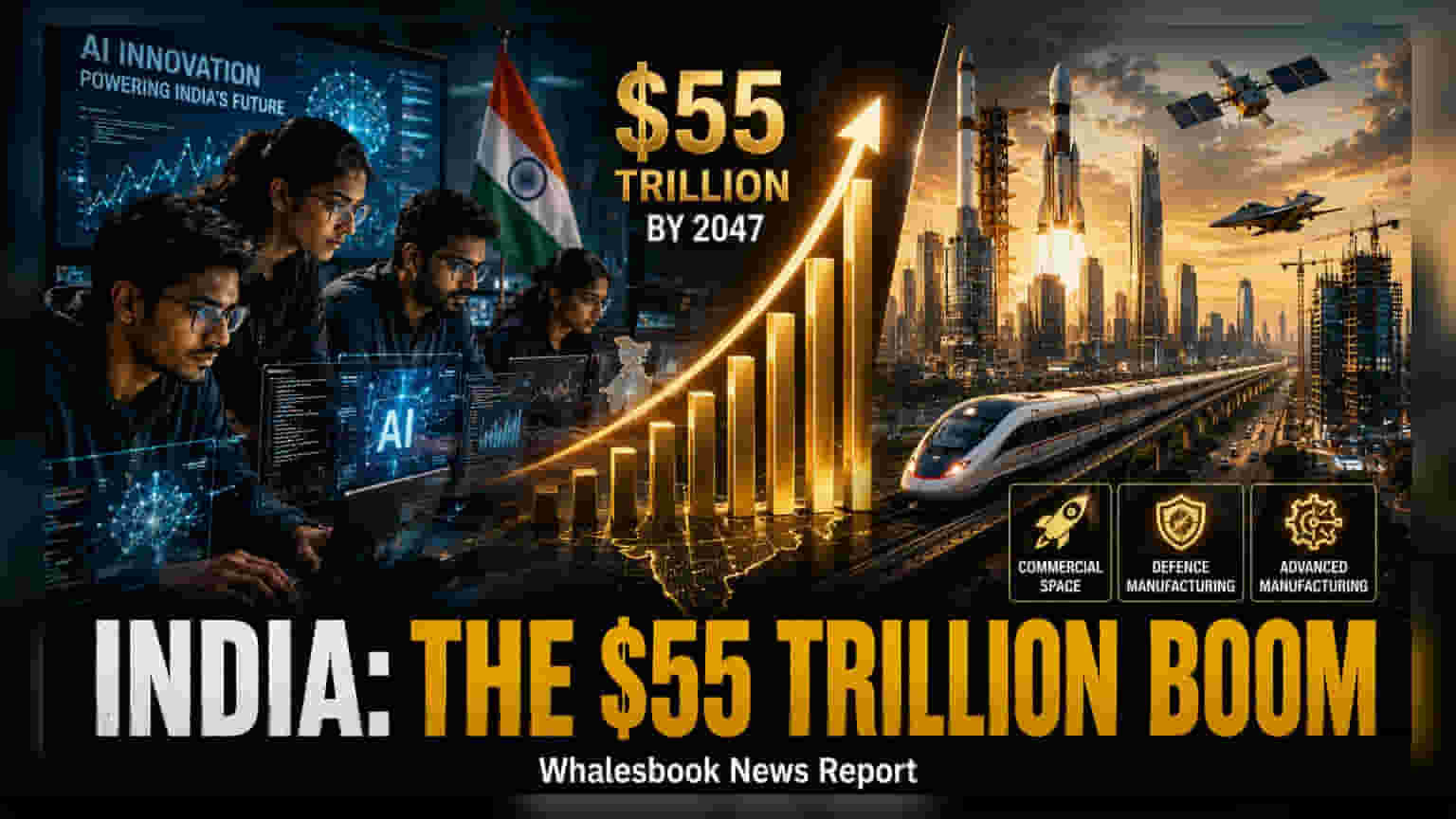
Former Chief Economic Adviser Krishnamurthy V. Subramanian has projected that India’s economy could reach $55 trillion by 2047. This growth model relies on a sustained 8% annual GDP growth rate, fueled by AI, defense, and space sectors. While the goal is ambitious, experts point to significant structural and global challenges in maintaining such rapid expansion for over two decades.
Former Chief Economic Adviser and current IMF Executive Director Krishnamurthy V. Subramanian has presented a long-term economic outlook for India, targeting a $55 trillion economy by 2047. This projection is based on a structured model that assumes a sustained 8% real annual GDP growth, an average inflation rate of 5%, and a modest annual rupee depreciation of roughly 1% against the US dollar.
The Path to 2047
Subramanian’s model identifies several core pillars for this expansion. At the center is the integration of artificial intelligence across various industries to drive productivity. The plan also emphasizes the need for India to capture market share in 'sunrise sectors'—specifically commercial space technology and high-end defense manufacturing. The strategy relies on attracting high-quality foreign direct investment and deepening the country’s integration into global manufacturing value chains.
Economic Reality Check
While the goal is a bold vision for the future, current data highlights the scale of the climb. As of April 2026, the International Monetary Fund projected India’s nominal GDP at approximately $3.92 trillion for the 2025-26 fiscal year. Reaching the $55 trillion milestone requires consistent, high-speed growth that remains rare in major economies over such a long timeline. The Reserve Bank of India currently forecasts growth in the mid-single digits, reflecting the complexities of domestic demand and global economic uncertainty.
Structural Risks and Challenges
Economic analysts note that maintaining an 8% real GDP growth rate for more than two decades is a significant challenge. Several structural hurdles could impact this path. A primary concern is the need for a 'hyper-skilled' young workforce, which requires bridging major gaps in the existing education and vocational training systems. Additionally, infrastructure bottlenecks and the potential for volatile global trade conditions pose risks to long-term stability.
Investors tracking the long-term potential of the Indian economy may watch indicators related to these 'sunrise' sectors. The effectiveness of policies in promoting AI adoption, building manufacturing capacity, and upgrading infrastructure will be key to determining whether the economy aligns with these high-growth projections. Ultimately, while the $55 trillion target serves as a conceptual roadmap, actual results will depend on the successful execution of complex policy reforms and the ability of the economy to adapt to changing global demands.