

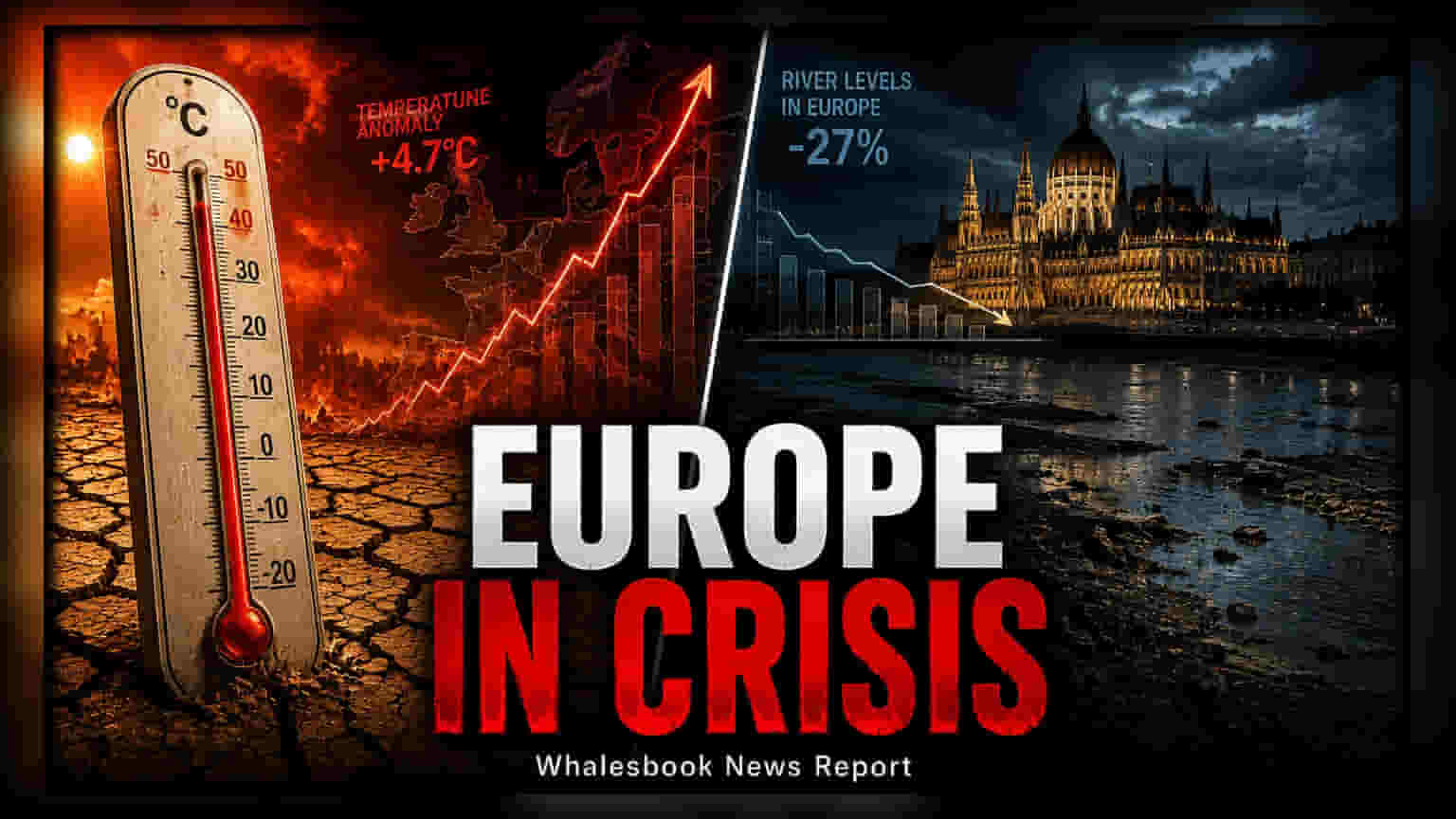
Europe is battling a severe heatwave, forcing Italy to issue red health alerts and Hungary to mandate energy conservation. Low water levels in the Danube and Rhine rivers are restricting nuclear power generation and cargo transport, creating operational hurdles for major manufacturers across the region.
A record-breaking heatwave across Europe has pushed temperatures to extreme levels, with Austria recording a peak of 41.2 degrees Celsius this week. The intense heat is now causing direct operational disruptions for businesses and infrastructure. Italy has placed all major cities under the highest level of health (red) alert, focusing on public safety and managing the strain on healthcare systems.
In Hungary, the situation has escalated into an industrial challenge. The Paks nuclear power plant, a critical source of electricity for the country, is facing output restrictions. The plant relies on water from the Danube River for cooling, and record-low water levels have forced the facility to operate at reduced capacity to maintain safety. To manage the resulting energy shortage, the Hungarian government has implemented mandatory conservation measures, including turning off decorative lighting at public landmarks and government buildings.
The energy and logistics constraints are beginning to impact large-scale industrial operations. Companies including Mercedes-Benz, Audi, BMW, Suzuki, Mol, and Gedeon Richter have reportedly been preparing for, or implementing, measures to curb electricity usage in response to the tightening power supply. For these manufacturers, the combination of potential production limits and increased energy costs presents a tangible operational risk.
Beyond power generation, the heatwave is also creating a logistical bottleneck. The Rhine River in Germany, a crucial artery for shipping raw materials and finished goods, is experiencing falling water levels. This reduces the capacity of vessels that can safely traverse the river, forcing logistics companies to carry lighter loads or switch to more expensive road and rail transport. This disruption could lead to supply chain delays for industries relying on river-based freight.
For investors, the immediate concern is how these disruptions might affect quarterly production output and operational costs in the European manufacturing sector. While the current situation is driven by environmental conditions, the reliance on river water for both industrial cooling and transport highlights the vulnerability of regional supply chains to extreme weather. The key monitorable for the coming weeks will be temperature trends and water levels, as these factors determine whether energy and logistics constraints persist or begin to ease.