

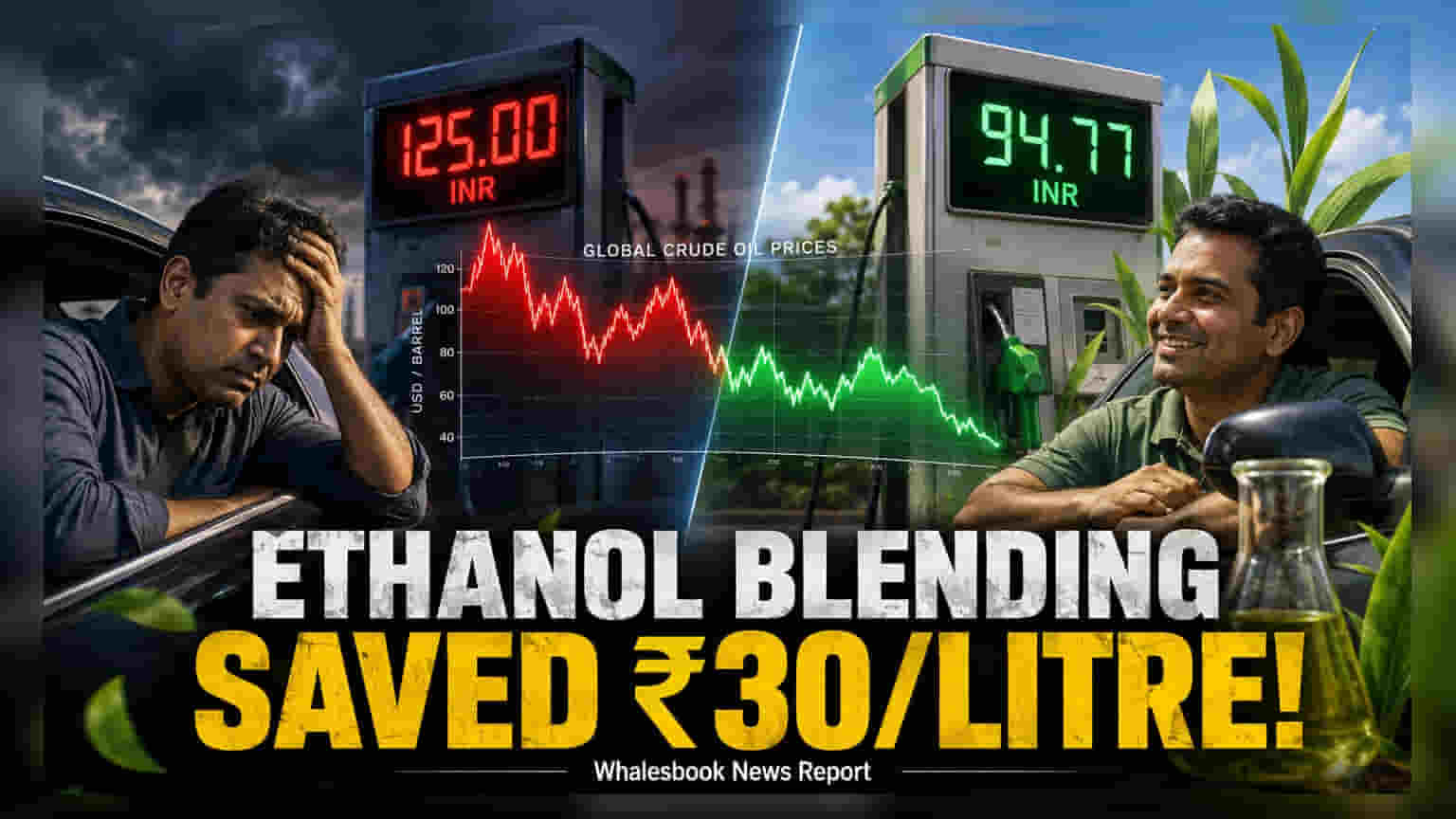
The Ministry of Petroleum and Natural Gas reports that ethanol blending in petrol saved Delhi consumers roughly ₹30 per litre during peak oil price volatility. This initiative strengthens energy security by reducing dependence on expensive crude oil imports and supporting domestic agricultural income. Investors may track how this fuel policy influences the long-term margins and capital investment plans of major Indian oil marketing companies.
The Ministry of Petroleum and Natural Gas has released data defending the Ethanol Blended Petrol (EBP) Programme, highlighting its role in insulating Indian retail fuel prices from extreme global market fluctuations. According to official figures, retail petrol prices in Delhi were effectively capped at ₹94.77 per litre during global crude oil peaks, whereas they could have reached ₹125 per litre without the cost-stabilizing effect of domestic ethanol integration.
Strategic Shift Toward Domestic Energy
At the core of this policy is the use of domestically produced ethanol, which now accounts for a significant portion of the fuel mix. Because this ethanol is procured at stable, pre-agreed prices, it provides a buffer against the volatility of the global crude oil basket, which has seen peaks as high as USD 135 per barrel. The government clarified that this is not a traditional taxpayer subsidy but rather a form of energy insurance that keeps domestic fuel costs more predictable.
Beyond individual savings at the pump, the program has substantial macro-economic implications. The government reports that the initiative has generated over ₹1.97 lakh crore in foreign exchange savings while facilitating the substitution of more than 316 lakh metric tonnes of crude oil. By reducing the nation's 88% dependence on crude oil imports, the policy aims to keep a larger portion of national fuel expenditure within the Indian economy.
Impact on Agriculture and Industry
This shift has also had a direct effect on the domestic agricultural sector, with the program channeling more than ₹1.66 lakh crore to farmers and distillers since its inception. For investors, this creates a sustained demand cycle for agricultural commodities, which benefits the distillery and sugar sectors.
However, the long-term success of the EBP program depends on consistent feedstock availability and the capacity of oil marketing companies to manage the necessary infrastructure upgrades at fuel retail outlets. While the program currently delivers tangible economic benefits, market participants often track whether the procurement costs for ethanol remain stable and how the blending mandates affect the operational margins of public sector oil firms.
Future updates that investors may monitor include the government’s progress on blending targets, the impact of varying rainfall on sugarcane and grain production—which serves as raw material for ethanol—and any changes in the procurement pricing structure that could influence the profitability of both the oil marketing companies and the domestic distillery industry.