 Whalesbook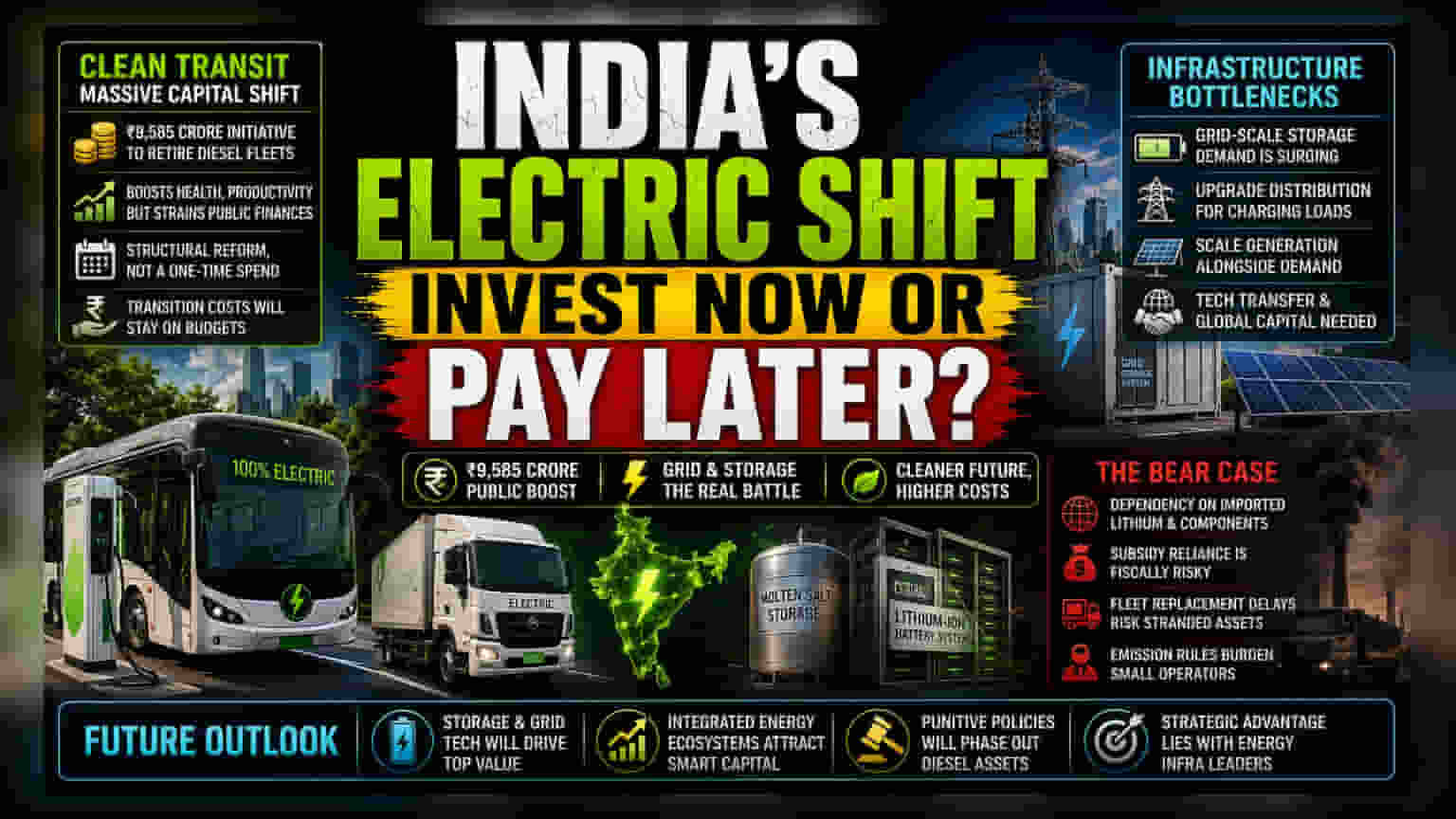


The Capital Intensity of Clean Transit
The push for a wholesale shift toward electric mobility represents more than just an environmental directive; it is a massive reallocation of capital toward grid infrastructure. While the transition promises reduced healthcare costs and increased labor productivity, the underlying financial burden of retiring legacy commercial fleets cannot be ignored. The recent Rs 9,585-crore initiative in the Delhi-NCR region illustrates the scale of public funding required to incentivize the move from diesel to BS-VI or electric alternatives. This fiscal injection acts as a bridge, yet it underscores the reality that structural environmental reform is becoming a permanent fixture in national budgets rather than a one-time expenditure.
Infrastructure Bottlenecks and Energy Storage
Beyond vehicle sales figures, the true hurdle for emerging markets lies in the stability of the energy grid. As battery-powered transport scales, the demand for grid-scale storage—specifically molten salt and advanced lithium-ion technologies—will create a new industrial front. Current market valuations for renewable energy firms often fluctuate based on their ability to secure concessional financing for these high-demand infrastructure projects. Unlike mature Western markets, regions like India face the dual challenge of scaling generation capacity while simultaneously upgrading distribution networks to handle the surge in charging-related load. The focus on technology transfer, as championed by the United Nations Environment Programme, is effectively a call for global capital to derisk these local infrastructure plays.
The Forensic Bear Case
The rush toward electrification carries systemic risks that are often obscured by the narrative of green growth. First, the dependency on imported lithium and specialized battery components leaves domestic manufacturers vulnerable to volatile global commodity cycles and supply chain geopolitics. Second, the reliance on public subsidies creates a precarious dependency; should fiscal priorities shift due to inflationary pressure or wider economic contractions, the replacement of heavy commercial fleets could stall, leaving firms with stranded, non-compliant assets. Furthermore, the push for mandatory emission testing for older vehicles places a regressive financial burden on small-scale logistics operators who may lack the liquidity to upgrade to newer, cleaner standards, potentially triggering localized economic disruption in the transport sector.
Future Outlook and Capital Allocation
Looking forward, the sector’s trajectory will likely be determined by the availability of private capital for storage solutions. Institutional investors are shifting their focus toward companies that demonstrate not just hardware sales, but the ability to manage integrated energy ecosystems. The next decade will see a transition where those who control the storage and grid-balancing technologies hold significant strategic advantages over pure-play vehicle manufacturers. Policy alignment suggests that the regulatory framework will remain increasingly punitive toward legacy diesel assets, effectively forcing a structural shift regardless of individual firm profitability.