

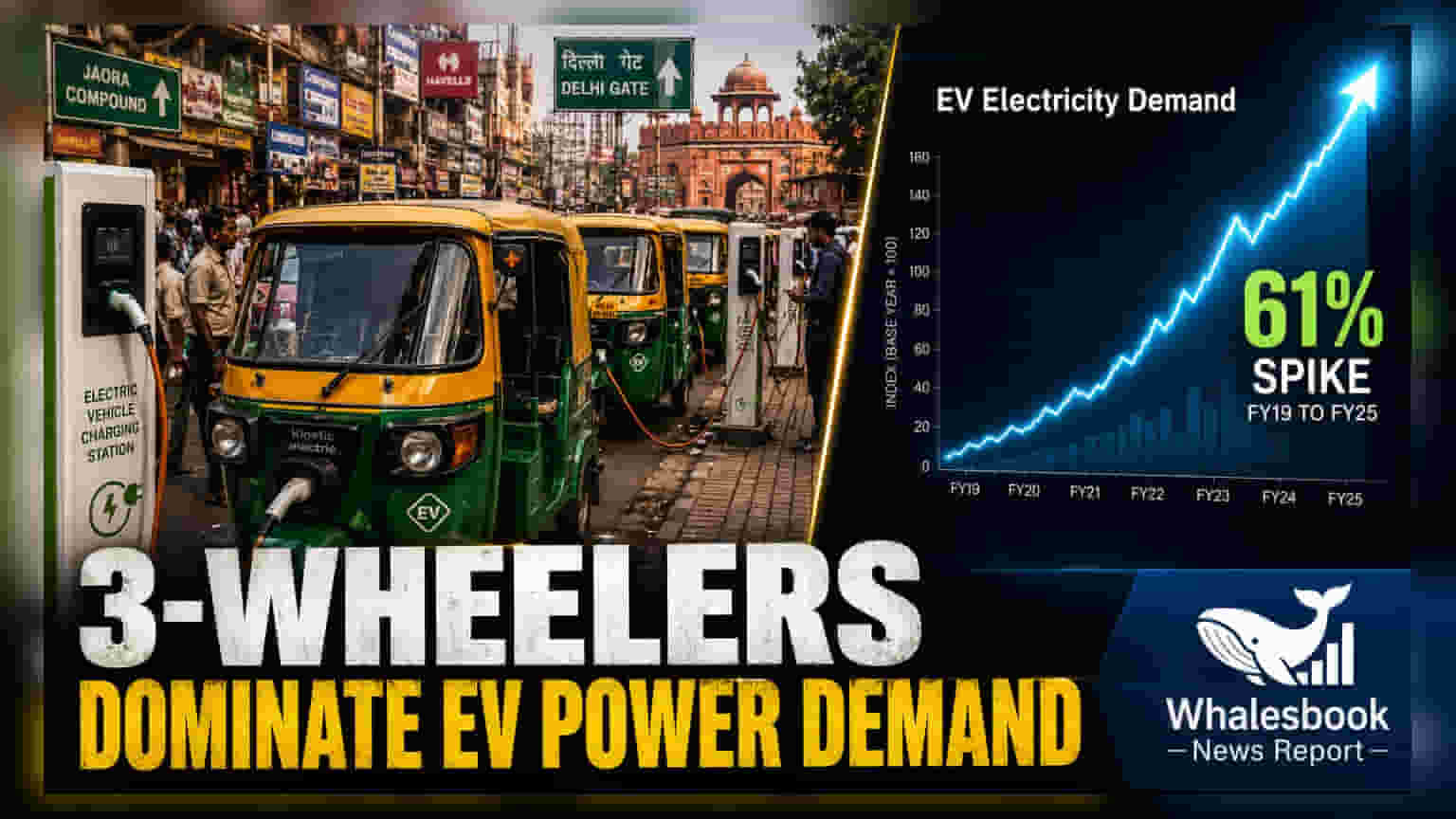
A new MoSPI report reveals that electric three-wheelers drive the majority of India's EV electricity demand. This shift highlights a critical need for focused charging infrastructure development to support commercial vehicle usage. While the national power grid currently handles this load efficiently, future growth projections suggest that strategic power planning for commercial fleets will become essential for energy stability.
A newly released report from the Ministry of Statistics and Programme Implementation (MoSPI) has shed light on the unique energy consumption patterns of India's electric vehicle fleet. The study reveals that electric three-wheelers are the primary drivers of electricity demand within the sector, accounting for 61% of total power usage. This is particularly notable given that three-wheelers represent approximately 4.14 million units out of the total 8.97 million EVs currently on Indian roads.
Charging Infrastructure Focus
While electric two-wheelers make up a larger portion of the total EV count, their impact on electricity demand is proportionally lower due to shorter daily travel distances and higher energy efficiency. In contrast, the high usage and constant operation of electric three-wheelers—often used in last-mile connectivity and commercial logistics—create a more intense energy requirement. To address this, the committee behind the report suggests that urban planners and power companies prioritize the creation of dedicated charging corridors specifically designed for these commercial three-wheelers. This approach aims to streamline energy distribution and reduce grid strain during peak charging hours.
Grid Impact and Future Capacity
The current electricity demand from all EVs stands at roughly 20.07 Terawatt-hours (TWh) per year. This accounts for approximately 1.1% of India's total annual electricity generation, a figure that experts view as well within the existing capacity of the national power grid. However, the outlook for the next few years shows a rapid expansion. Forecasts by NITI Aayog indicate that as EV adoption scales up, the electricity demand from this sector could surge to between 100 TWh and 640 TWh annually by 2030. Managing this growth will require more than just power generation; it will require precise data on how different categories of vehicles, such as heavy motor vehicles and commercial fleets, utilize the grid.
Policy Shifts and Data Needs
The findings provide crucial context for state-level policies, such as the mandate in Delhi requiring that all new two- and three-wheeler registrations be electric by April 2028. As cities shift away from internal combustion engines, the pressure on local charging infrastructure will increase. Beyond EVs, the Expert Committee on Energy Statistics has emphasized the need for more granular data across the broader energy sector. The committee noted gaps in tracking energy usage for industrial sub-sectors and imported non-coking coal, which are currently limiting a full understanding of national energy flows. Investors tracking the green energy and logistics sectors may watch for future updates on grid investment and the roll-out of commercial charging infrastructure as these policy mandates begin to influence national fleet compositions.