 Whalesbook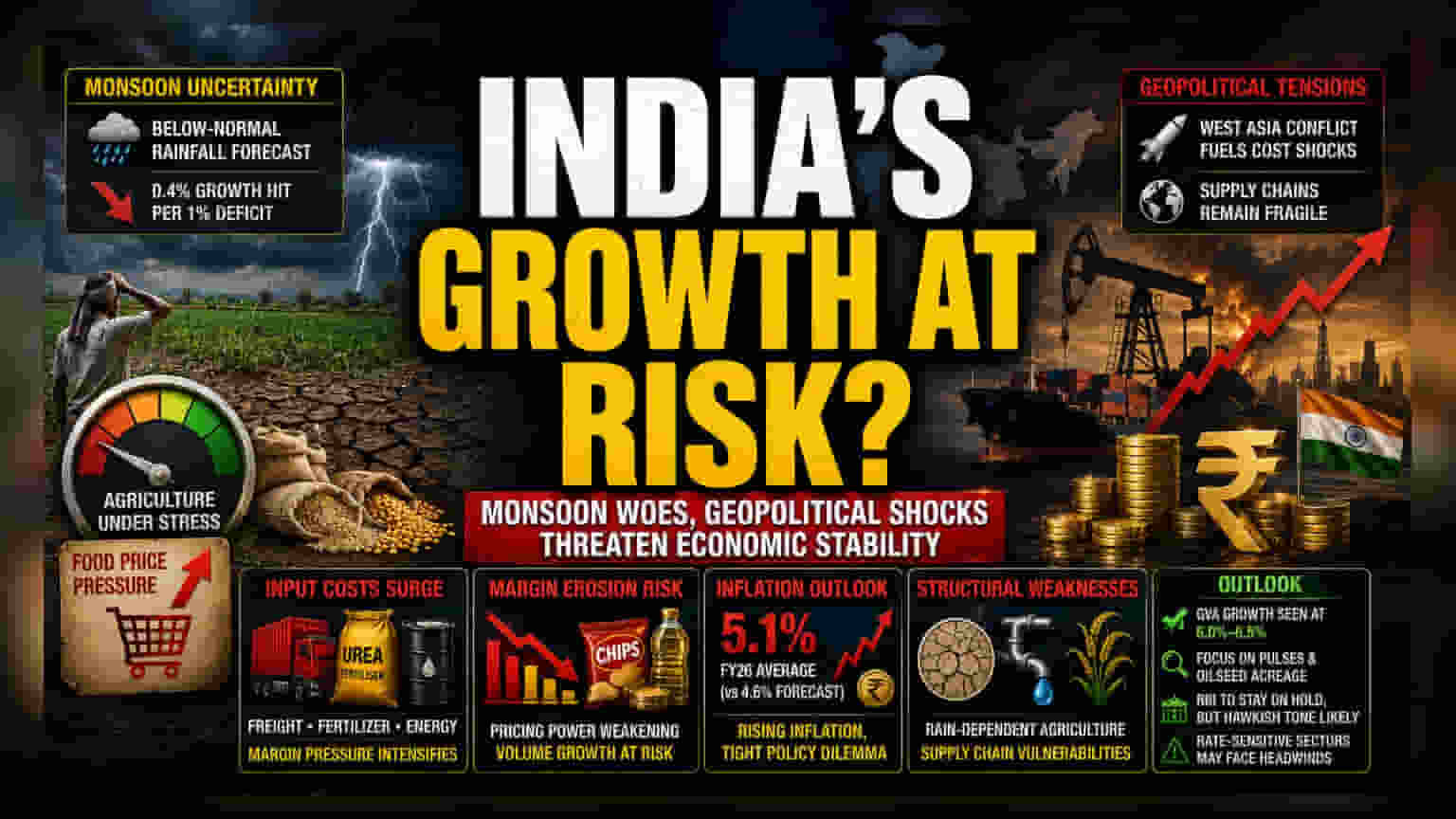


The Macroeconomic Squeeze
The convergence of meteorological uncertainty and regional geopolitical instability is forcing a fundamental reassessment of India's growth trajectory for the current fiscal year. While the broader narrative remains centered on resilient domestic demand, the underlying data indicates significant friction. Agricultural volatility, exacerbated by expected rainfall deficits during the critical kharif sowing window, serves as the primary transmission mechanism for price instability. When regional precipitation patterns deviate even slightly from historical averages, the direct correlation with output loss—approximately 0.4% per percentage point of deficit—creates immediate pressure on the Consumer Price Index. This is no longer merely a weather event; it is an emerging fiscal constraint that threatens to dampen the momentum of the broader industrial sector.
Input Cost Inflation and Margin Erosion
Corporate profit margins remain the most vulnerable point in this cycle. Rising freight, fertilizer, and energy costs, largely driven by ongoing instability in West Asia, are creating a dual-threat environment where companies face both diminished consumer spending power and elevated operational expenditures. Firms within the consumer staples and food processing sectors are particularly exposed to these cost shocks. Unlike the previous fiscal period where many entities successfully passed on price increases to consumers, current demand elasticity suggests that further price hikes could lead to significant volume losses. Analysts are now closely monitoring quarterly reporting for signs of sustained margin compression, as the ability to absorb these inflationary pressures without sacrificing market share reaches a critical inflection point.
The Forensic Bear Case
The central bank faces a difficult policy trade-off as the projected average inflation rate drifts toward 5.1%, significantly higher than the initial 4.6% forecast. This environment complicates the Reserve Bank of India’s stance, as a premature shift in monetary policy could stifle growth, yet inaction risks de-anchoring inflation expectations. From a structural perspective, the reliance on rainfall during the June-July period remains a perennial weakness, with limited progress in diversifying water-intensive crop dependencies. Furthermore, persistent geopolitical risks in supply chains suggest that the current input cost inflation is not merely transient. Investors should remain wary of companies with high debt-to-equity ratios that may lack the liquidity to navigate an extended period of high interest rates combined with soft consumer demand.
Forward Outlook
Market participants are recalibrating their expectations for the first half of the fiscal year, with gross value added growth estimates now narrowing toward a 6% to 6.5% range. As the monsoon progresses, the focus will shift to real-time data on pulse and oilseed acreage, which serve as leading indicators for food price volatility. While the Reserve Bank of India is expected to maintain current policy settings in the immediate term, the widening gap between projected and actual inflation will likely necessitate more hawkish rhetoric in subsequent quarters, potentially weighing on equity valuations in interest-rate-sensitive sectors.