

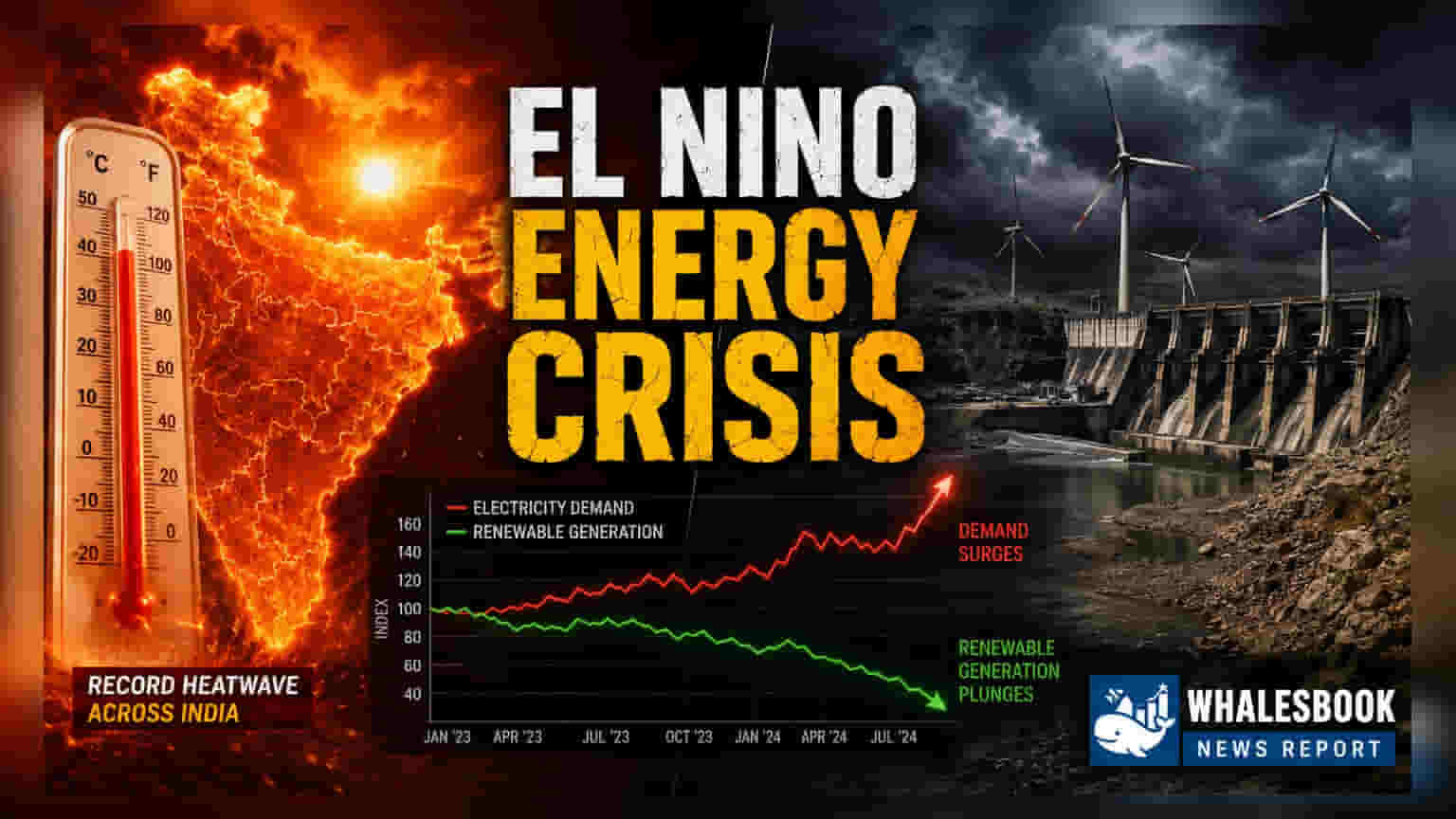
A new CREA report warns that El Nino could trigger an 18 TWh power deficit in India by mid-2027. Lower renewable output and higher cooling demand may increase reliance on coal-fired electricity. Investors should monitor how this weather pattern impacts grid stability and the pace of clean energy infrastructure expansion.
India’s power sector faces potential strain as the transition from La Nina to El Nino is expected to impact energy supply and demand between July 2026 and June 2027. According to a recent analysis by the Centre for Research on Energy and Clean Air, the country may encounter a power generation shortfall of approximately 18 TWh. This scenario arises from a combination of reduced wind and hydropower production alongside a sharp rise in electricity consumption driven by hotter temperatures and higher air conditioning use.
The cooling demand alone is estimated to increase by 10 TWh annually. To bridge this potential gap, the grid may see a heavier reliance on coal-fired power plants, which could lead to an estimated 17 million tonnes of additional carbon dioxide emissions. In more extreme weather scenarios, coal generation could see an even higher jump, potentially rising by 24 TWh. This trend highlights the challenges of maintaining grid stability during periods of extreme weather, as India recently saw power demand reach a record high of 270 GW.
From an investor perspective, this situation underscores the importance of India’s push toward its 500 GW non-fossil fuel capacity target by 2030. While coal remains a primary baseload source, the report points out that existing coal plants often lack the flexibility needed to handle dynamic grid requirements. Grid operators have previously had to curtail solar and wind power to accommodate coal plant operations, a practice that may face increased scrutiny as the country seeks to balance reliability with sustainability.
Solar energy is identified as a more resilient component of the energy mix, currently meeting nearly a quarter of daytime demand and being less affected by the specific meteorological shifts associated with El Nino. Consequently, the focus for the energy sector is likely to remain on accelerating investments in battery storage solutions and grid modernization. These improvements are essential for managing intermittent renewable supply during weather-related fluctuations.
Investors may monitor the progress of solar capacity additions and energy storage projects as key indicators for the sector. Furthermore, the financial impact on power distribution companies and the operational challenges faced by thermal power producers in managing increased demand and fuel requirements will be important areas to track in upcoming quarters.