Economist: RBI Should Let Rupee Weaken Amid Oil Woes, Cites 2013

ECONOMY
Whalesbook Logo
AuthorAarav Shah|Published at:
Economist: RBI Should Let Rupee Weaken Amid Oil Woes, Cites 2013
Overview

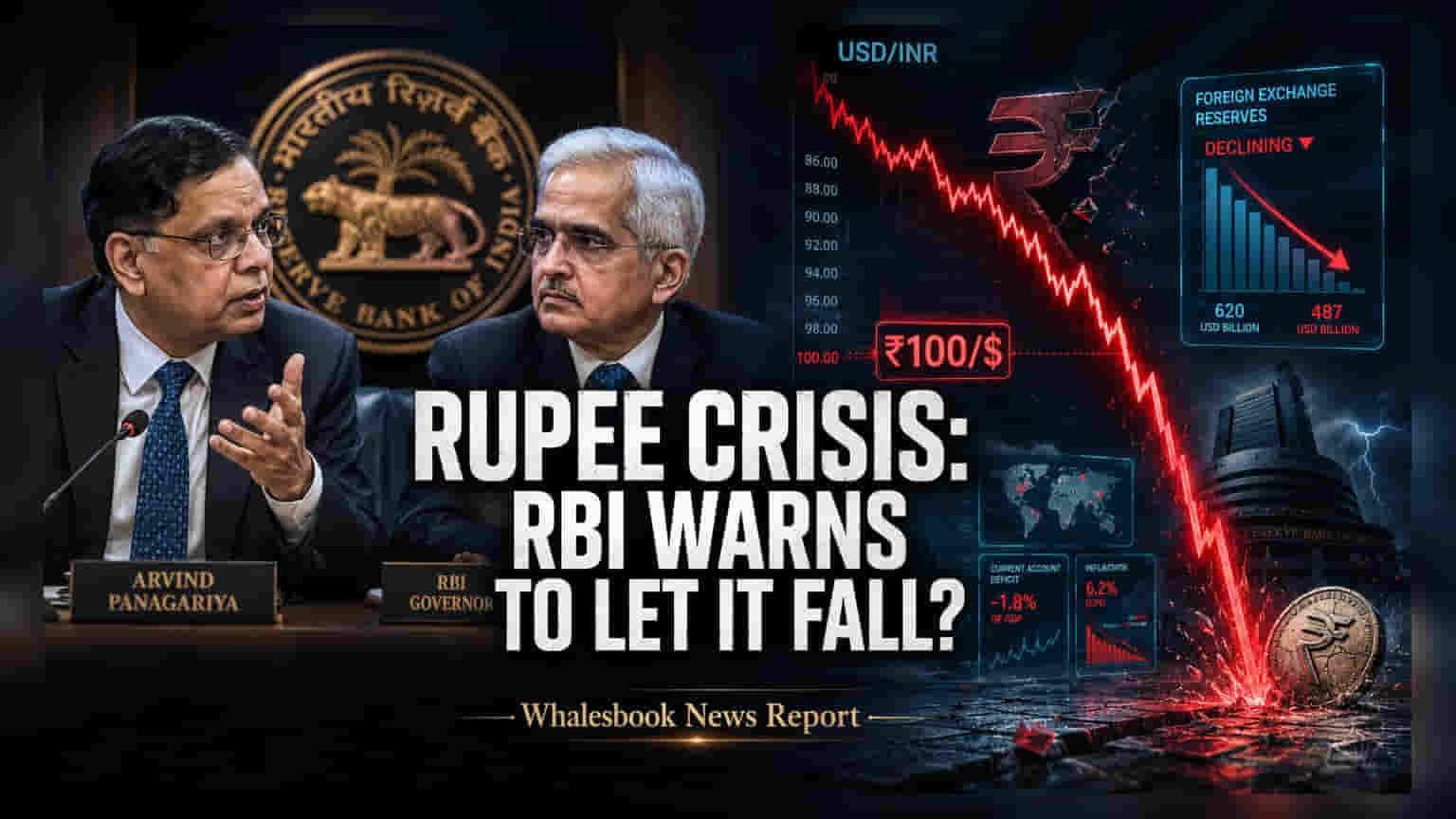
Economist Arvind Panagariya advises the Reserve Bank of India against defending the ₹100 per dollar mark. He argues that allowing rupee depreciation is a more appropriate response to oil shortages than aggressive intervention, which could deplete reserves. Panagariya contrasts India's current economic resilience with the situation in 2013, suggesting the nation is better equipped to handle external shocks and manage inflationary pressures.

Instant Stock Alerts on WhatsApp

Used by 10,000+ active investors

1

Add Stocks

Select the stocks you want to track in real time.

2

Get Alerts on WhatsApp

Receive instant updates directly to WhatsApp.

  • Quarterly Results
  • Concall Announcements
  • New Orders & Big Deals
  • Capex Announcements
  • Bulk Deals
  • And much more

Currency Strategy Shift Advocated

The current economic strategy discussion suggests a move away from rigidly defending currency values toward a more flexible approach when facing external pressures like oil shortages.

Rupee Depreciation as a Policy Tool

Economist Arvind Panagariya has advised the Reserve Bank of India (RBI) against defending the ₹100 per dollar level. He believes allowing the rupee to weaken is a better response to oil supply disruptions than costly interventions. Panagariya argues India's current economy is strong enough to handle a weaker currency, unlike in 2013. The USD/INR exchange rate was around 96.36 on May 22, 2026, nearing that psychological level. The rupee has weakened about 6% since the Middle East conflict began, reaching a record high of 96.8650 on May 20, 2026.

Resilience and Reserve Management

Panagariya's argument for letting the rupee depreciate is based on India's improved ability to manage external shocks compared to 2013. He suggests a short-term weakening would be followed by recovery as import costs fall and capital flows in. A prolonged oil shortage, however, would make defending the currency difficult and drain foreign exchange reserves. India's reserves stood at about $696.99 billion as of May 8, 2026, recently at all-time highs but decreasing due to interventions. The RBI has reportedly sold about $1 billion daily, reducing reserves to a three-year low, covering 8.7 months of imports. Inflation in April 2026 was 3.48%, much lower than in 2013, indicating a better capacity to manage currency depreciation's inflationary effects alongside stable growth.

Get stock alerts instantly on WhatsApp

Quarterly results, bulk deals, concall updates and major announcements delivered in real time.

Disclaimer:This content is for educational and informational purposes only and does not constitute investment, financial, or trading advice, nor a recommendation to buy or sell any securities. Readers should consult a SEBI-registered advisor before making investment decisions, as markets involve risk and past performance does not guarantee future results. The publisher and authors accept no liability for any losses. Some content may be AI-generated and may contain errors; accuracy and completeness are not guaranteed. Views expressed do not reflect the publication’s editorial stance.