 Whalesbook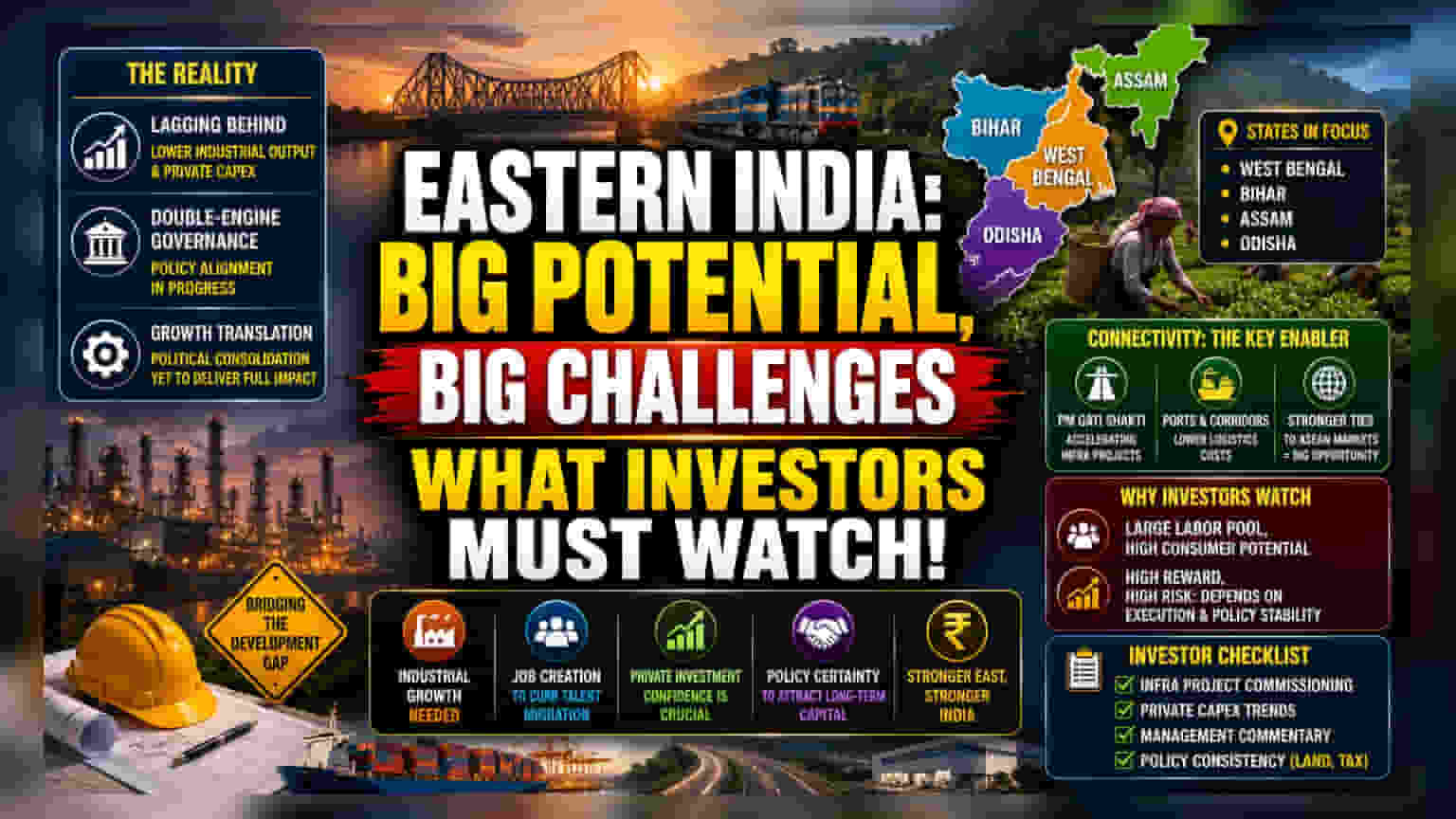


Despite political shifts, Eastern India faces a complex road to economic transformation. Investors are closely watching how infrastructure, connectivity, and policy stability influence regional business growth.
What Happened
Eastern India, comprising states like West Bengal, Bihar, Assam, and Odisha, continues to navigate significant developmental hurdles. While political changes have occurred, the region's economic trajectory remains a subject of intense analysis. Historically, this belt has lagged behind the national average in industrial output and private capital expenditure. The concept of 'double-engine' governance—where the same political party holds power at both the central and state levels—has been a major talking point. Investors often monitor this for potential policy alignment and faster project execution, yet the translation of political consolidation into tangible economic growth remains a work in progress.
The Investment Climate Challenge
For businesses and institutional investors, the region presents a mix of opportunities and structural challenges. The primary concern for capital allocators is the consistency of the 'ease of doing business' environment. While policy frameworks are designed to attract investment, regional political stability and clear regulatory guidelines are often cited as critical determinants. The private sector, which seeks predictability, tends to watch for signs of sustained industrial policy that can overcome long-standing bottlenecks. Recent efforts, such as state-level business initiatives, aim to rejuvenate the industrial landscape, but attracting significant foreign and domestic capital requires a sustained environment of policy certainty.
Connectivity and Economic Potential
Connectivity remains the backbone of any economic turnaround for Eastern India. Historical models have shown that connecting to Southeast Asian markets and enhancing domestic logistics are vital for industrial acceleration. Projects under initiatives like PM Gati Shakti are essential to bridge the logistics gap, reducing costs for manufacturers. Strengthening ties with neighboring countries is also a strategic economic lever. For listed companies in sectors like logistics, infrastructure, and FMCG, improved connectivity means better supply chain efficiency and access to a massive consumer market, which could significantly alter the profit potential for businesses operating in this zone.
Why Investors Watch the Region
The economic health of Eastern India has a direct impact on national growth metrics. The region is a significant source of labor, and the migration of skilled talent to other parts of the country highlights a critical need for local job creation. For investors, this creates two distinct angles. First, there is a long-term potential in consumer demand if industrialization picks up. Second, there is a risk of stagnant growth if infrastructure and regulatory hurdles are not cleared. Understanding the nuances of this market is vital for companies that have significant exposure to the Eastern corridor, as regional demand and operational costs can fluctuate based on local policy and infrastructure development.
What Investors Should Track
Investors monitoring this region should focus on several key indicators. The first is the actual commissioning of large-scale infrastructure projects, such as highways, ports, and industrial corridors, which signal government commitment to development. Second, private capital expenditure data for the region provides a clear picture of corporate confidence. Third, monitoring management commentary from companies with large exposure to Eastern India can reveal insights into demand trends and local operational challenges. Finally, policy consistency regarding land acquisition and state-level tax incentives remains a crucial factor that can influence long-term business performance.