

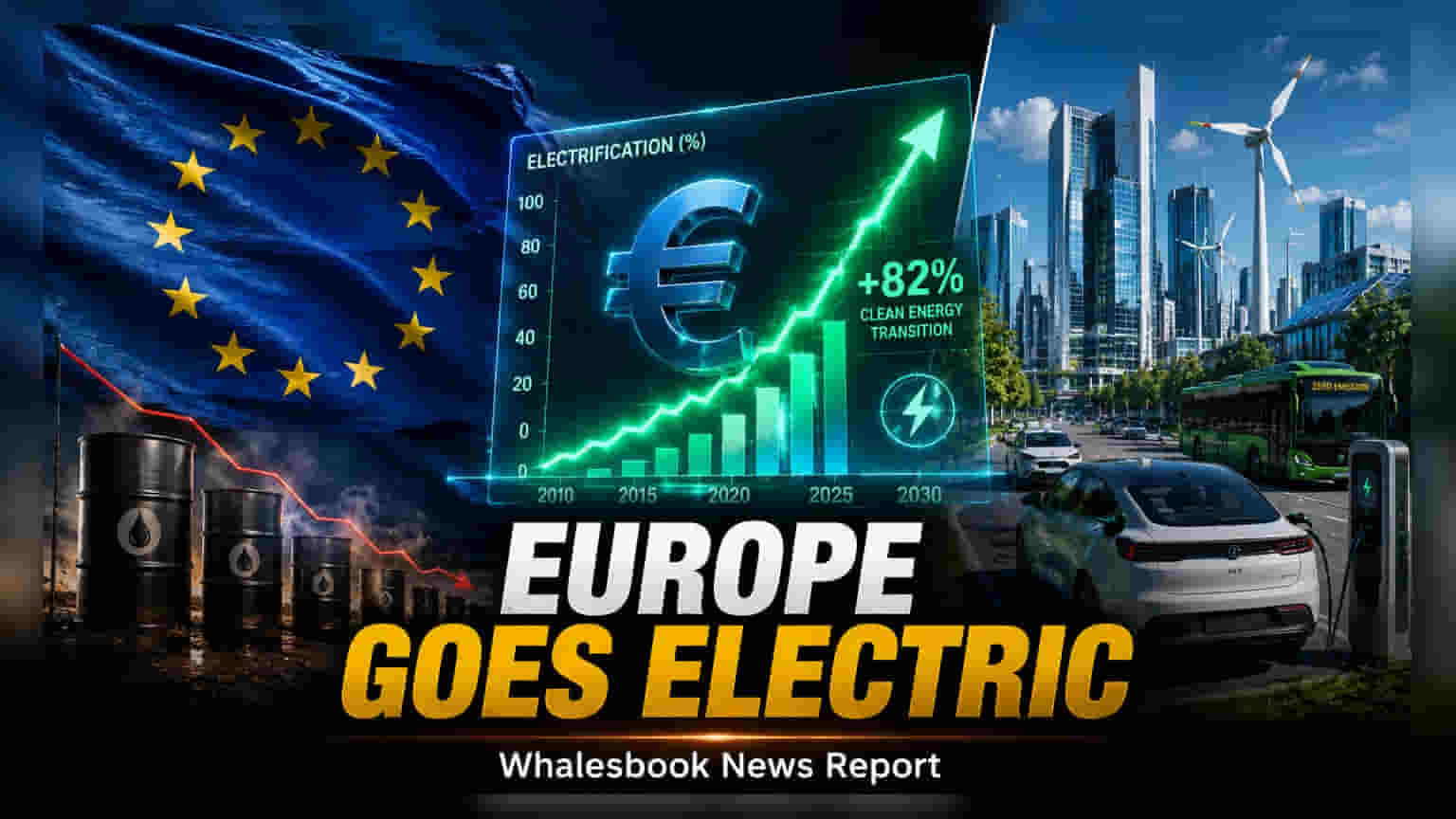
The European Commission has announced a new plan to reach 46% electrification by 2040, supported by over €100 billion in industrial funding. This strategy aims to reduce reliance on imported fossil fuels and lower energy costs by reforming carbon trading markets. For Indian companies with significant European exposure, this shift toward green energy and potential carbon credit adjustments will be a key factor to track.
The European Commission has introduced a major policy update to ramp up electrification across the bloc, aiming for a 46% share of final energy consumption by 2040. Currently, Europe's electrification level has remained stagnant at 23% for the last ten years, despite nearly 70% of electricity generation coming from clean sources. This new initiative seeks to bridge the gap between clean power generation and its actual use in industries, transportation, and buildings.
Overhauling Carbon Markets
A cornerstone of this strategy is the reform of the European Union Emissions Trading System (EU ETS), which has served as the primary carbon pricing mechanism since 2005. The proposed changes include adjusting the Linear Reduction Factor for emissions allowances to 3.7% for the 2031-2035 period and 1.7% from 2036-2040. Additionally, the revised framework will permit the use of international carbon credits starting in 2036 to help fund external decarbonisation projects. The commission also mandated that member states direct half of their national ETS revenues toward greening industrial sectors, representing over €100 billion in potential investment through 2030.
Funding Industrial Decarbonisation
To manage the transition, the commission is launching an Industrial Decarbonisation Bank, backed by a €100 billion fund. This institution is designed to provide the capital necessary for industries to upgrade their infrastructure and move away from traditional fuel sources. By encouraging the adoption of technologies like heat pumps and electric vehicles, the plan aims to significantly lower the annual fossil fuel import bill for the bloc, with estimates suggesting a potential reduction of €260 billion.
Addressing Cost and Grid Barriers
Despite the long-term benefits, the plan acknowledges significant hurdles. In many parts of Europe, electricity remains up to three times more expensive than natural gas, discouraging a switch to electric alternatives. To address this, the commission is proposing that member states be allowed to lower network charges and taxes for energy-intensive industries. Furthermore, the plan calls for a major acceleration in electricity grid expansion to ensure that infrastructure can handle the increased load.
For investors, the most critical monitorable will be how these policy changes influence operating costs for energy-intensive companies with operations in Europe. While subsidies and the new decarbonisation bank may lower capital spending burdens for firms transitioning to green energy, the effectiveness of these measures will depend on how quickly individual member states implement grid upgrades and tax adjustments. The next stage to watch is the formal adoption of these proposals as part of the broader post-2030 Energy Union package.