

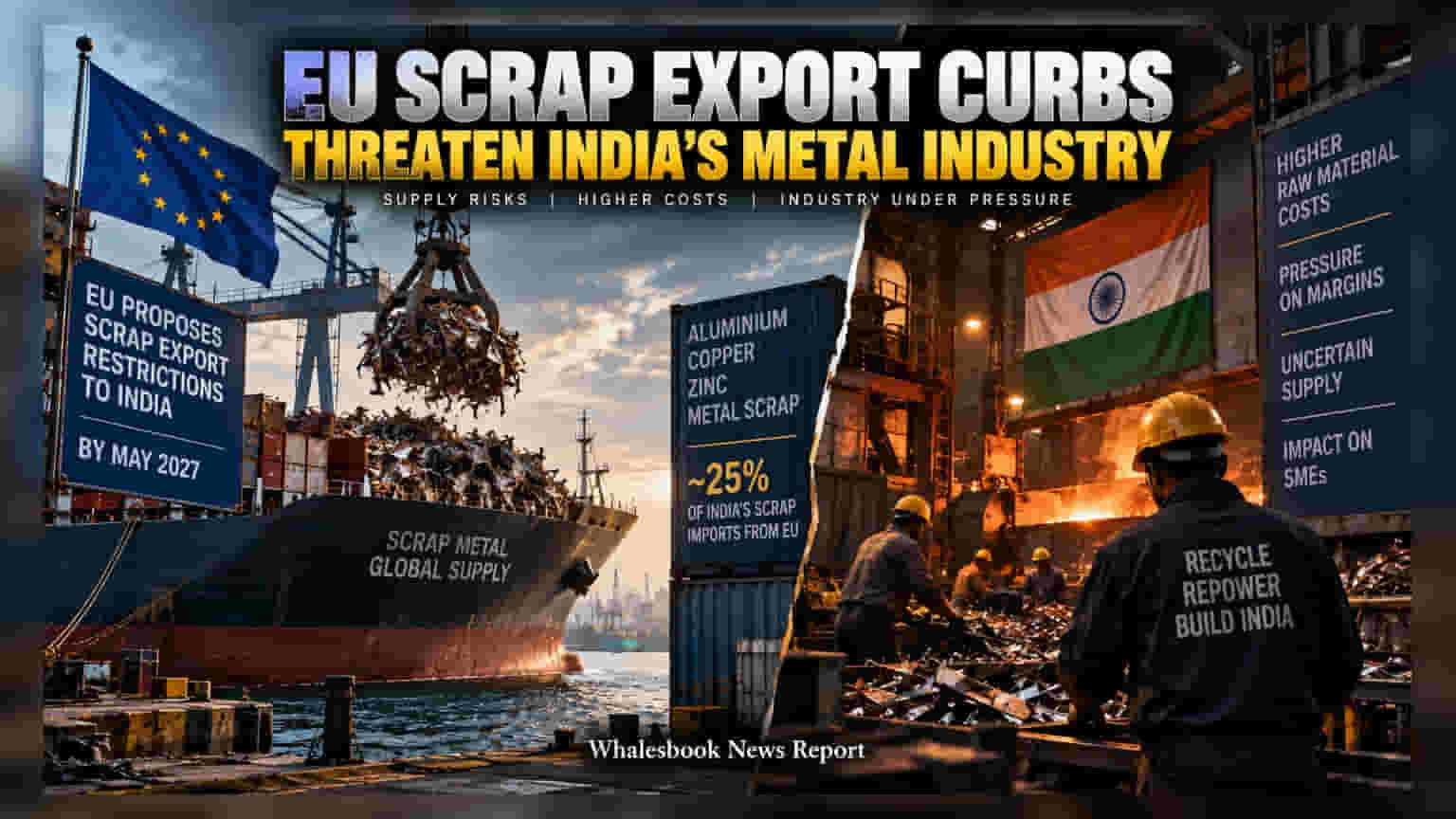
The European Union has proposed ending metal scrap exports to India by May 2027, citing environmental contamination concerns. This potential policy change threatens to cut off nearly a quarter of India’s metal scrap supply, likely increasing production costs for domestic secondary manufacturers who rely on these affordable raw materials.
The European Commission recently unveiled a plan to restrict metal scrap exports to India by May 2027. The proposal focuses on concerns regarding toxic contaminants in scrap shipments, which the EU claims need stricter regulation. For Indian metal recyclers and secondary manufacturers, this proposal creates significant uncertainty as they rely heavily on imported materials to run their furnaces and production lines.
India’s dependence on the European Union for scrap metal is substantial. Data indicates that roughly 25% of the total metal scrap coming into India originates from the EU. The reliance is even more pronounced for specific metals like aluminum, copper, and zinc, where imports from the region account for as much as 40% of the total supply.
For investors, the primary concern lies in the potential impact on operating margins for secondary metal manufacturers. These companies typically operate by melting down scrap, which is significantly cheaper and less energy-intensive than processing virgin metal ores. If the supply of imported scrap shrinks, manufacturers may be forced to switch to virgin metals. This transition would likely result in higher procurement costs, putting immediate pressure on profit margins for these firms. Small and medium enterprises are expected to face the highest risk, as they often lack the capital to absorb sudden spikes in raw material prices.
The Material Recycling Association of India has raised concerns, characterizing the proposal as a form of resource protectionism rather than a purely environmental measure. The association has formally asked the Indian Ministry of Commerce and Industry to engage in high-level diplomatic talks to prevent this restriction. They argue that India has its own regulatory framework for processing these materials and that the EU’s move might be intended to keep raw materials within its own borders to support its domestic metal industry.
The government has confirmed it is in talks with European counterparts to mitigate the situation. Investors should watch for updates on the ongoing broader trade negotiations between India and the EU, as these will likely serve as the main platform to discuss the zero-duty scrap import issue. The key monitorable for the industry is whether diplomatic efforts can secure an exemption or a smoother transition plan before the proposed 2027 deadline.