

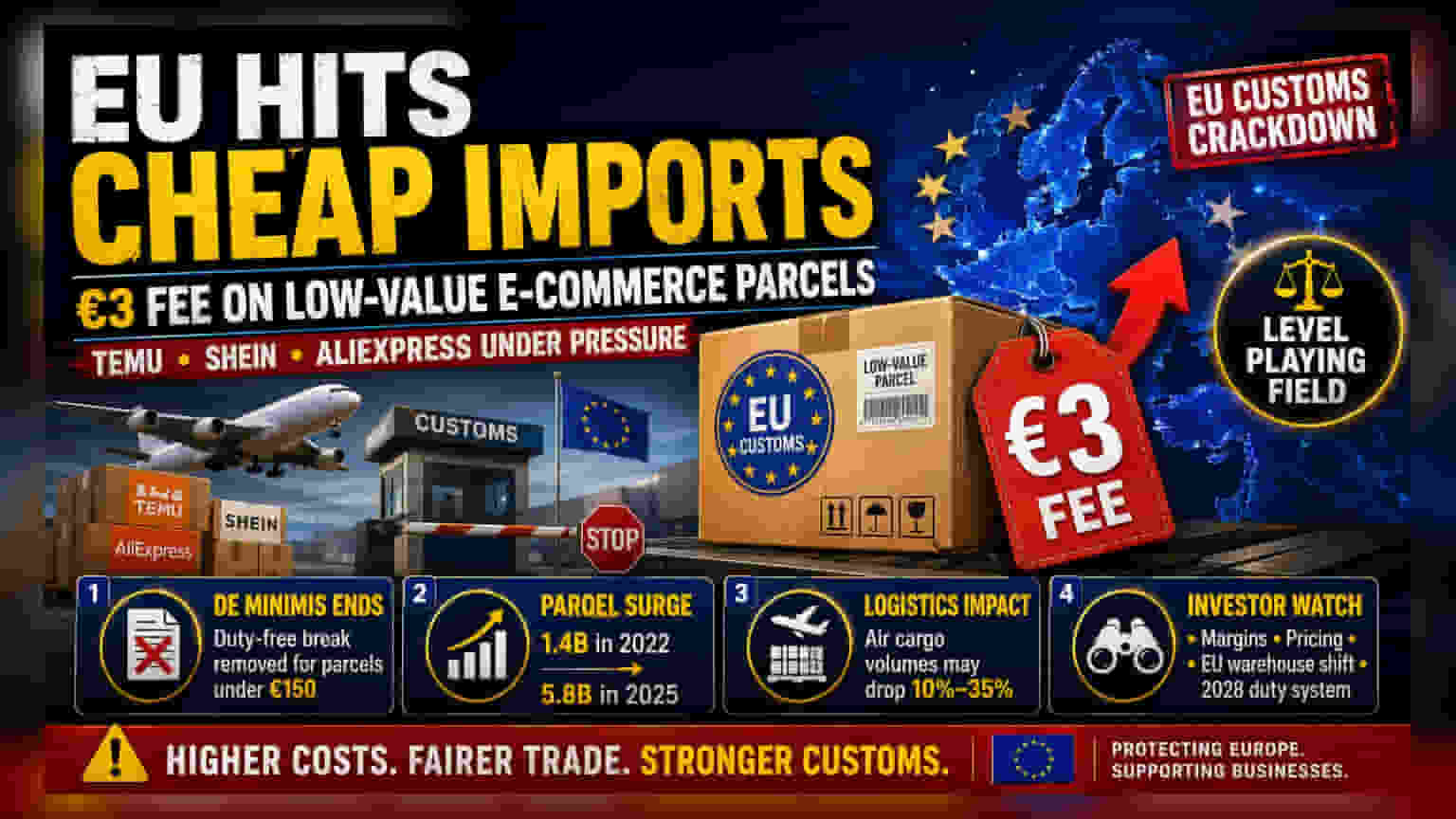
The European Union has introduced a €3 fee on low-value e-commerce imports, removing duty-free status for parcels under €150. This regulation targets platforms like Shein, Temu, and AliExpress to curb unfair competition and protect local retailers. Investors should monitor whether these platforms raise consumer prices or change logistics strategies, as air cargo volumes are expected to decline.
What Happened
The European Union has implemented a new €3 charge on low-value e-commerce shipments that were previously exempt from duties. This rule removes the long-standing "de minimis" exemption, which allowed goods valued under €150 to enter the EU without customs duties since 2008. The measure is designed to create a more level playing field for domestic businesses that have faced intense competition from global e-commerce platforms like Shein, Temu, and AliExpress.
The fee is applied based on the customs classification within a shipment. This means if a parcel contains different types of items, the cost can multiply, significantly increasing the overhead for cheap, high-volume imports.
Why The EU Is Charging This Fee
The policy shift follows a massive surge in the volume of small, low-value parcels entering the bloc. Official data shows that the number of parcels entering under the exemption jumped from 1.4 billion in 2022 to approximately 5.8 billion in 2025. European policymakers and local retailers have argued that this loophole was being used on an industrial scale to undercut local prices, creating an unfair competitive advantage for foreign platforms.
Impact On E-Commerce Business Models
This new cost structure challenges the business model of platforms that rely on ultra-low prices to drive sales. Analysts expect these companies may face a tough choice: either absorb the extra costs, which would squeeze profit margins, or pass the price increase to consumers, potentially hurting demand. Some platforms are reportedly taking proactive steps, such as increasing warehouse capacity within Europe to ship larger volumes directly from within the bloc, thereby avoiding these import-specific fees.
Air Cargo And Logistics Outlook
The logistics sector is bracing for a shift. Market experts forecast a potential drop of 10% to 35% in e-commerce air cargo shipments to the EU in the weeks following the rule change. This reduction could impact global air freight demand as platforms may need to rethink their shipping strategies. While the current €3 fee is a temporary step, it signals a trend toward stricter enforcement and eventual full-scale taxation for cross-border e-commerce.
What Investors Should Track
Investors should monitor how these e-commerce platforms navigate the increased regulatory pressure. A key date to watch is July 1, 2028, when the EU plans to replace this temporary fee with a structured duty system based on product categories, coinciding with the launch of the new EU Customs Authority. The ability of these platforms to maintain their competitive edge while adjusting to these costs and upcoming regulatory changes will be a major indicator of their long-term growth and stability.