

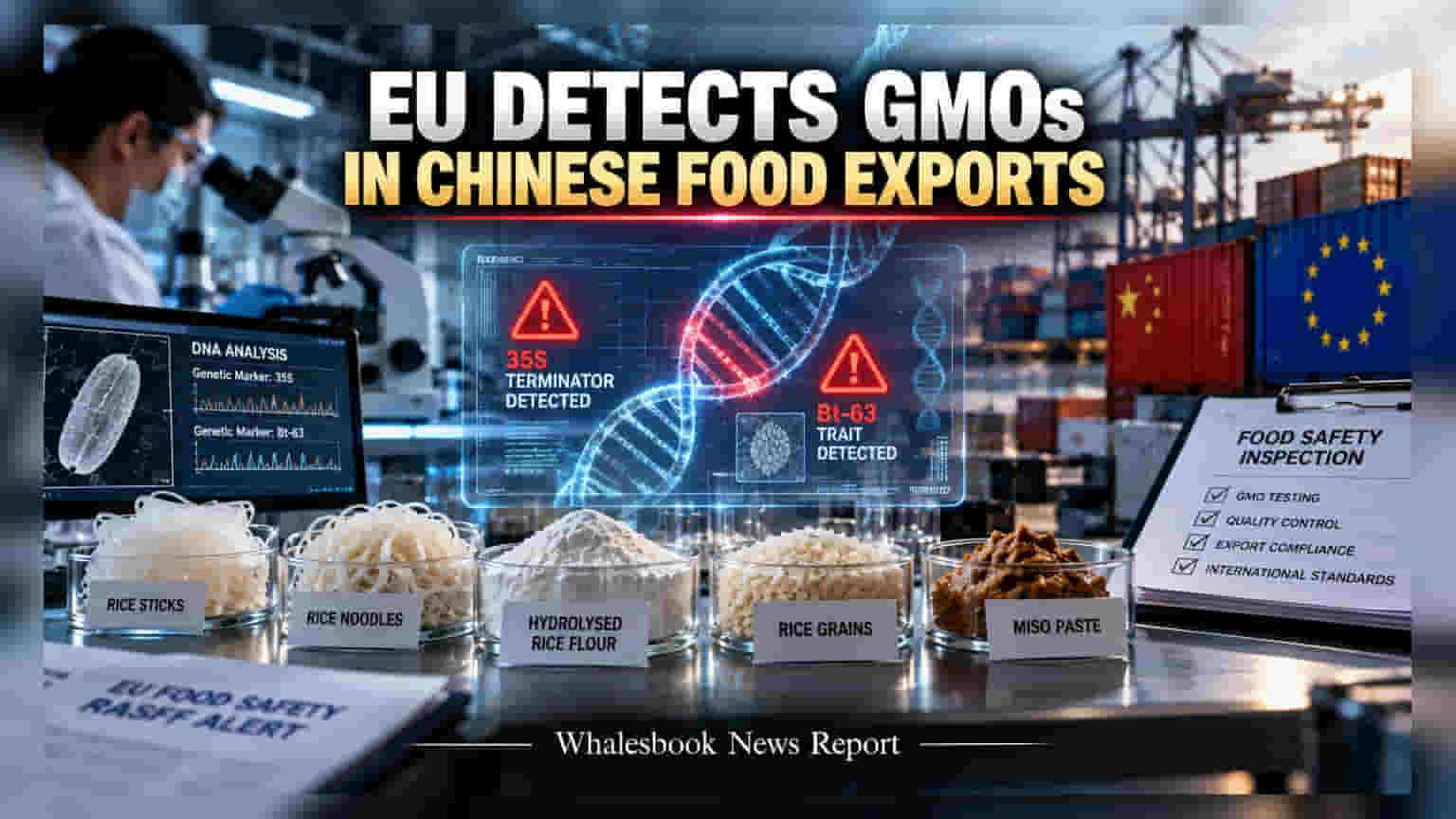
European regulators have blocked five shipments of Chinese rice and flour products this year due to the presence of unauthorized genetically modified organisms. This discovery highlights persistent issues in agricultural supply chains. Investors may track how this affects global food safety compliance and the scrutiny of agricultural exports from major producing nations, including India.
The European Union’s Rapid Alert System for Food and Feed (RASFF) has issued five separate notifications this year regarding unauthorized genetically modified organisms (GMOs) in food products exported from China. The flagged shipments included various rice-based goods such as rice sticks, noodles, and hydrolysed rice flour, as well as Miso paste. European food safety inspectors identified specific genetic markers, such as the 35S terminator DNA sequence and Bt-63 traits, which are generally used in scientific research but are not approved for the commercial food supply chain.
These detections point to a long-standing challenge involving the leakage of experimental crop strains into the commercial market. While China maintains an official policy against the commercial cultivation of genetically modified rice, researchers have noted that trace amounts of these strains can sometimes originate from scientific trial fields. This regulatory issue has persisted for years, with over 275 similar notifications recorded against Chinese food exports by the EU since 2002.
This development occurs amid a period of heightened friction in global agricultural trade. China has significantly increased its rejection of foreign food shipments throughout 2026, reporting 146 such instances in the first half of the year, compared to 38 during the same period in 2025. This trend has included the rejection of rice shipments from India and other major trading partners. The current situation suggests that food safety standards are being applied more rigorously across international borders, affecting major exporters in the Asian region.
For investors in the agricultural sector, the tightening of European safety norms carries significance. As regulatory bodies in Europe and other developed markets increase testing for GMOs and other contaminants, companies engaged in the export of rice and related products may face stricter compliance requirements. This can lead to increased costs for testing, quality control, and supply chain verification to ensure products meet stringent international standards. Indian rice exporters, who are major suppliers to the European market, may need to navigate a landscape of higher scrutiny. The key monitorable for the industry will be the impact of these evolving safety regulations on export volumes and the cost of maintaining market access, as global regulators look to prevent the cross-contamination of food supplies.