

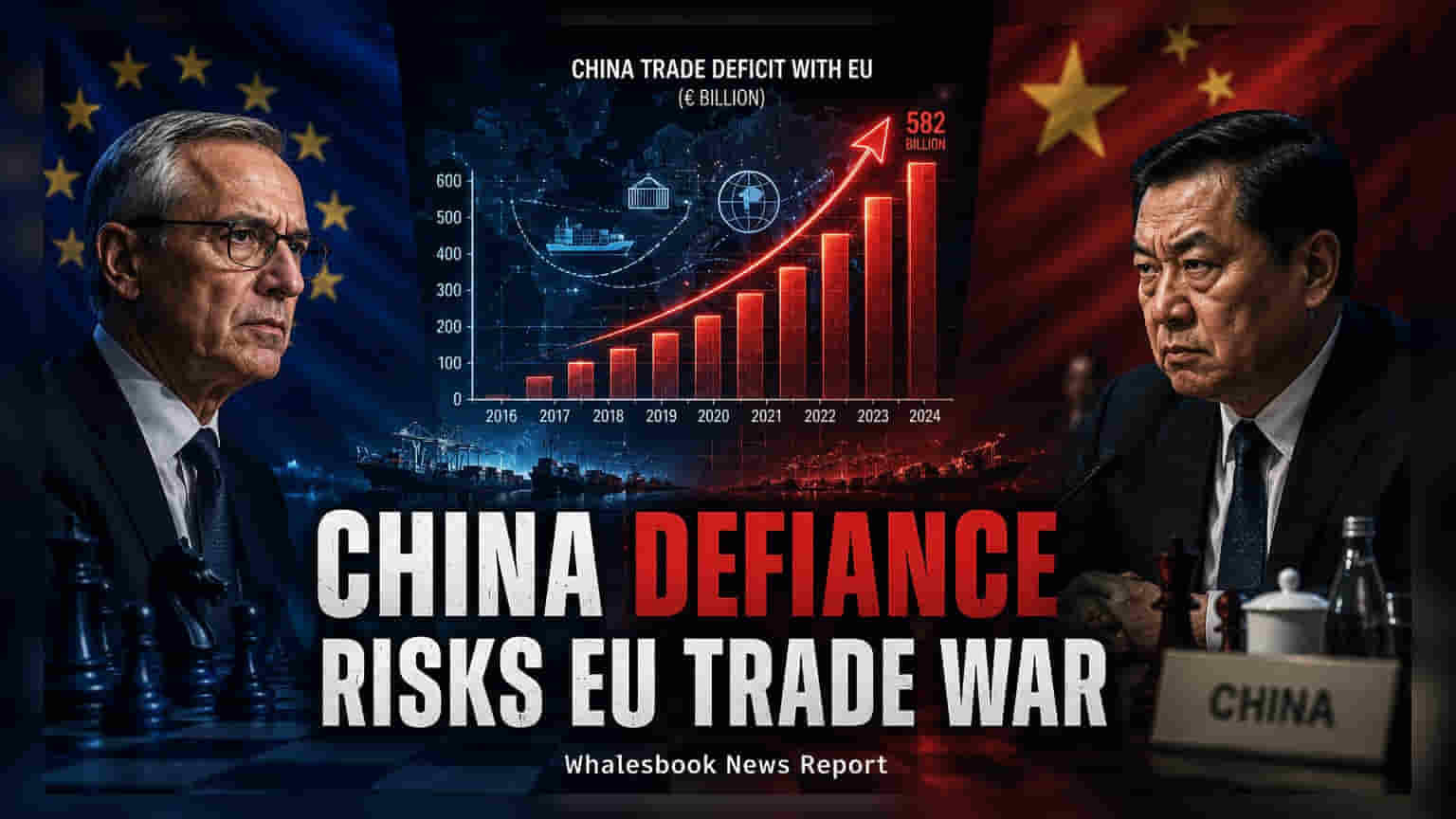
Trade tensions between the EU and China have reached a critical point, with the daily trade deficit exceeding €1 billion. Brussels has set an October 2026 deadline for Beijing to address concerns regarding industrial overcapacity and market access. For investors, this signals potential supply chain disruptions and increased volatility for global companies with heavy reliance on these markets.
The trade relationship between the European Union and China is entering a tense phase as the two sides clash over massive trade imbalances. With Europe’s trade deficit with China now surpassing €1 billion every single day, the EU is moving closer to implementing defensive measures. Brussels has established an October 2026 deadline for a resolution, creating a narrow window for both parties to prevent a broader trade conflict.
The Core Dispute: Industrial Overcapacity
At the heart of the standoff is a fundamental disagreement over industrial policy. Recent documents published by Beijing have dismissed European and Western concerns regarding "overcapacity." China argues that its massive output is a result of competitive industrial strength rather than state-subsidized surplus. However, European officials view this differently. They contend that the rapid influx of low-cost Chinese goods, particularly in sectors like electric vehicles, steel, and green technology, is damaging local manufacturing and threatening jobs.
For investors, the disagreement is significant because it suggests that the current trade friction is not a temporary blip but a deep-seated structural issue. While China is looking to export its way to growth to compensate for weak domestic consumer spending, European policymakers are under pressure to protect their own industrial base.
Potential Impact on Global Supply Chains
If these trade negotiations fail to yield results by the October deadline, the EU is expected to consider a range of defensive tools. These could include stricter rules on public procurement, mandates for technology transfers, and investigations into dumping practices.
This shift carries risks for companies with global footprints. If Chinese goods face restricted access to the European market, there is a risk that these products will be redirected to other global markets, potentially lowering prices and squeezing profit margins for local manufacturers in those regions. Additionally, any escalation in trade barriers could force European companies to rapidly restructure their supply chains, potentially increasing costs and reducing operational flexibility.
Monitoring the October Deadline
Investors may track the upcoming months as both sides engage in structured trade consultations. The key monitorable is whether Beijing makes any concessions—such as adjusting tax rebate policies that have historically supported its exporters—to satisfy European concerns. A lack of compromise could lead to retaliatory trade actions. This environment of regulatory uncertainty makes it important for investors to assess the exposure of their portfolios to companies heavily reliant on both the European and Chinese markets, as they are the most vulnerable to shifting trade policies and rising compliance costs.