

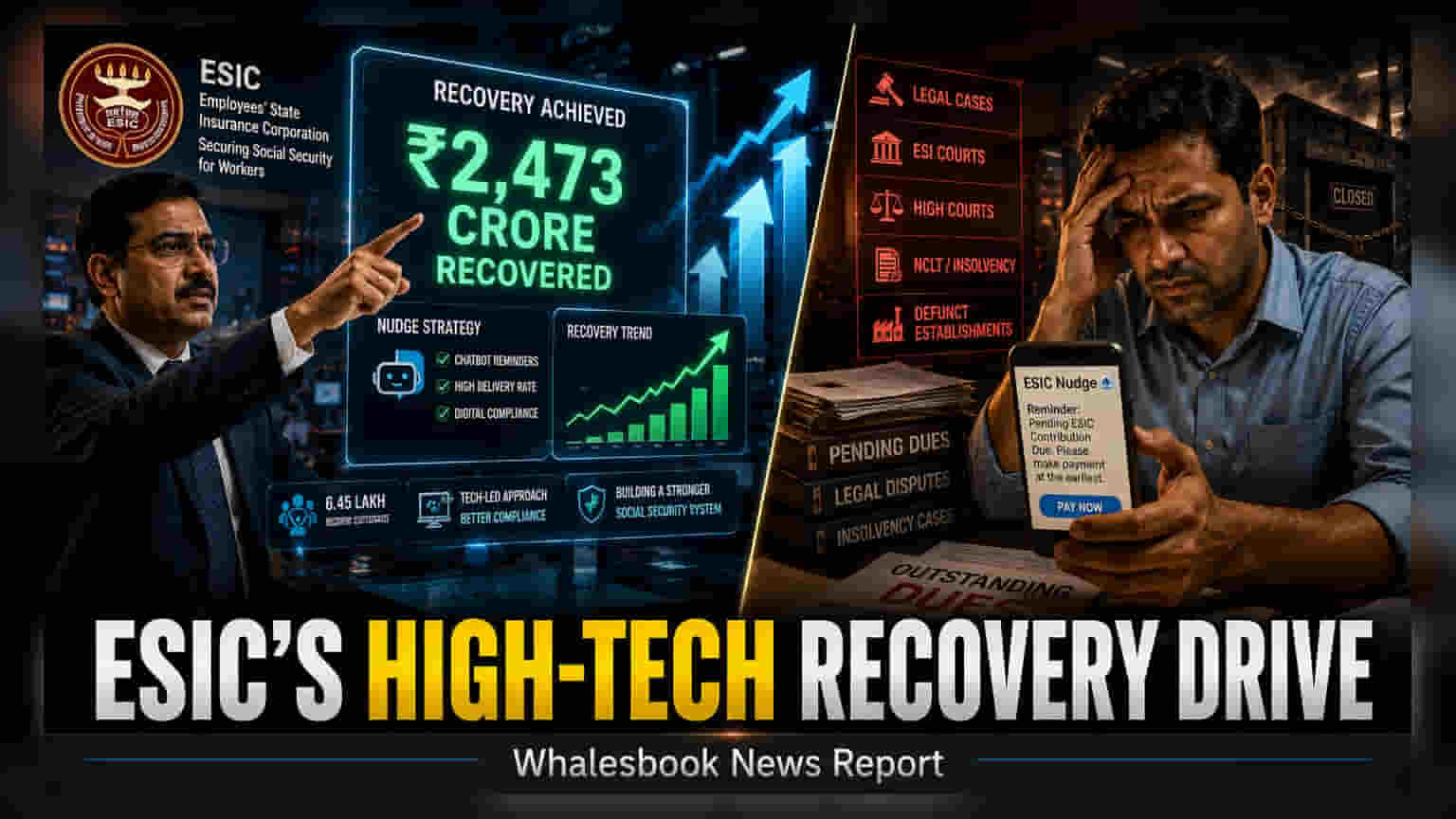
The Employees' State Insurance Corporation (ESIC) has recovered ₹2,473 crore in social security dues by using digital reminders instead of traditional legal force. This tech-driven approach aims to resolve years of pending payments. For Indian businesses, this signals a shift toward stricter, automated compliance in labor and welfare contribution management.
The Employees' State Insurance Corporation (ESIC) has successfully recovered ₹2,473 crore in unpaid social security contributions from employers. The organization, which manages health and welfare benefits for Indian workers, has achieved this by moving away from traditional, forceful collection methods like property attachment or arrests in favor of a technology-led 'nudge' strategy.
A Digital Shift in Compliance
Inspired by similar digital approaches used by the Income Tax Department, the ESIC began using chatbot-based communication to reach out to employers with outstanding dues. This method targets companies with valid contact details, sending automated reminders to prompt payments for pending recovery certificates.
This strategy has proven effective in smaller trials. For example, a pilot program in Haryana saw the corporation recover over ₹3 crore from companies with arrears of ₹5 lakh or more. The system relies on a high delivery and open rate of these digital messages, which has prompted many employers to clear dues without the need for prolonged legal action.
Challenges in Full Recovery
While this digital initiative has helped unlock a portion of the funds, the ESIC still faces significant hurdles in collecting the remainder of the pending certificates. A major portion of the 6.45 lakh recovery certificates remains stuck due to ongoing legal disputes. Many of these cases are currently tied up in ESI Courts or High Courts, while others involve companies that are undergoing insolvency proceedings at the National Company Law Tribunal (NCLT).
Additionally, the corporation faces the issue of defunct establishments. In many instances, businesses have ceased operations, filed for bankruptcy, or have promoters who are untraceable, leaving no assets that the authorities can easily attach for recovery.
Impact on Businesses
It is important for market participants to note that the ESIC is a government statutory body, not a publicly traded company. It does not have shares, a stock price, or market capitalization. However, this recovery drive is relevant for the broader Indian corporate landscape.
The initiative signals a wider shift in how the government manages labor compliance. By using data-driven tools to identify and prompt non-compliant employers, the ESIC is increasing the efficiency of its revenue collection. Businesses with labor-intensive operations or those with a history of pending statutory dues may find that the government is increasingly using technology to enforce compliance, reducing the time between the detection of a default and the demand for payment. Moving forward, companies should prepare for a more automated and persistent follow-up process from regulatory bodies, making strict adherence to labor contribution timelines a priority for operational stability.