

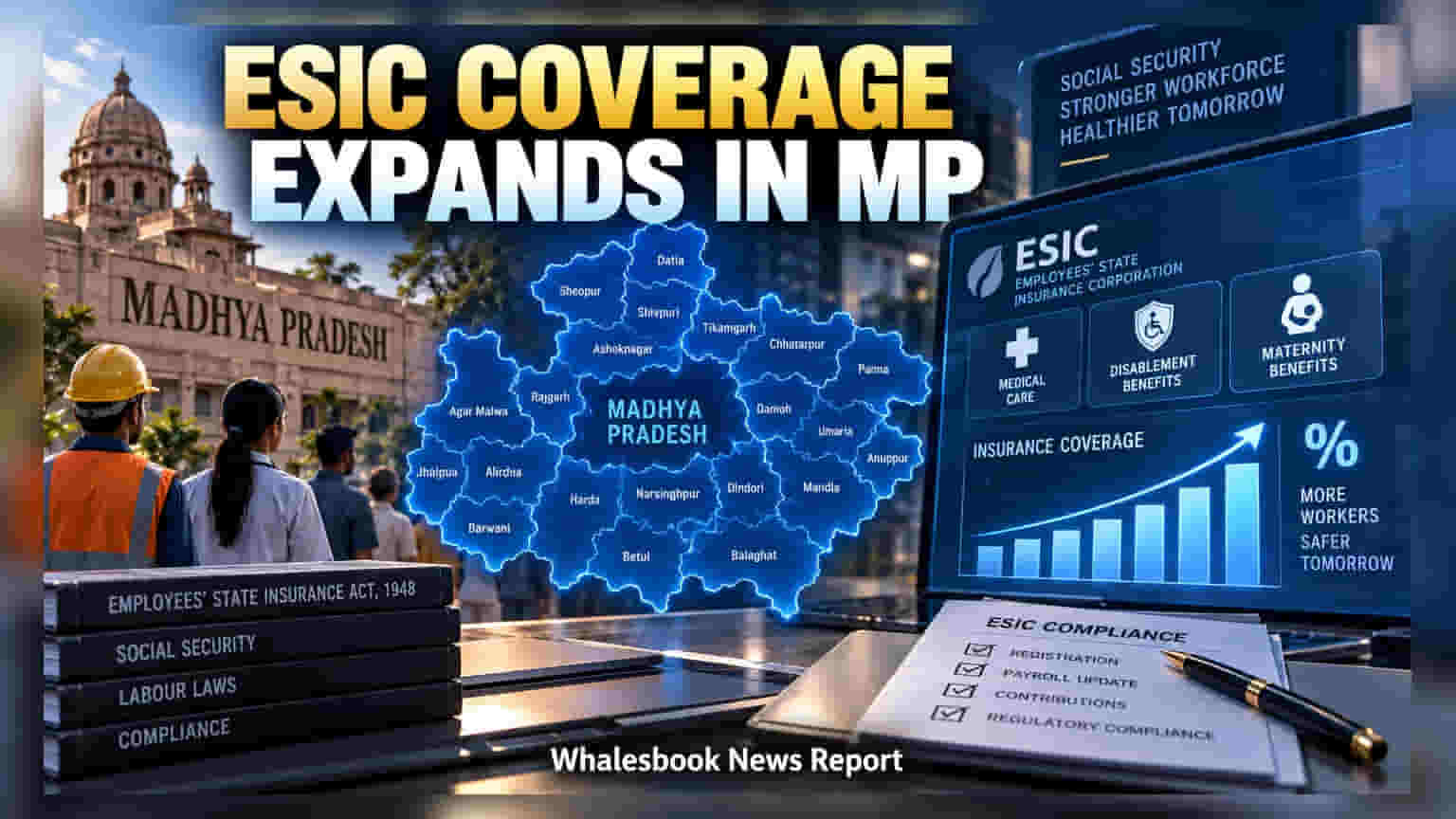
The Ministry of Labour and Employment has made ESIC contributions mandatory for establishments in 24 Madhya Pradesh districts starting October 1, 2026. This policy requires local businesses to register employees and contribute to the national social security fund. While the mandate secures medical and maternity benefits for workers, it also increases compliance and payroll costs for employers operating in these regions.
Effective October 1, 2026, the Ministry of Labour and Employment has extended mandatory Employees’ State Insurance Corporation (ESIC) coverage to 24 districts in Madhya Pradesh. Establishments operating in these regions are now required to comply with the Employees’ State Insurance Act of 1948. This administrative shift is part of the central government’s strategy to expand the national social security net into Tier-2 and Tier-3 areas, ensuring that employees in the organized sector receive standardized healthcare and insurance benefits regardless of their location.
For business owners and establishments in these areas, the update introduces new administrative and financial responsibilities. Companies must now register their payroll systems and begin remitting contributions as mandated by Section 29 of the Act. These contributions provide the workforce with access to Chapter IV benefits, which include medical care, disablement coverage, and maternity benefits. For employers, this means a direct increase in the cost of employment and the need to streamline internal payroll systems to meet federal regulatory standards.
The 24 districts covered by this notification are Agar Malwa, Alirajpur, Anuppur, Ashoknagar, Balaghat, Barwani, Betul, Chhatarpur, Damoh, Datia, Harda, Jhabua, Mandla, Narsinghpur, Panna, Rajgarh, Seoni, Sheopur, Shivpuri, Sidhi, Tikamgarh, Umaria, Vidisha, and Dindori. Furthermore, the district of Niwari has been brought under the provisions of the Code on Social Security, 2020. This move effectively integrates these previously partially covered regions into the formal social security framework.
The primary monitorable for businesses in these regions is the immediate need for compliance. Management teams must ensure that payroll processes are updated before the October deadline to avoid potential regulatory scrutiny or penalties. Investors and stakeholders in companies with significant operations in these districts should track how these added labor costs impact operational expenses and margins in the coming quarters. The government's push to formalize the labor force across these districts suggests a trend toward stricter enforcement of labor laws, which may require companies to allocate more resources toward regulatory compliance in the near future.