

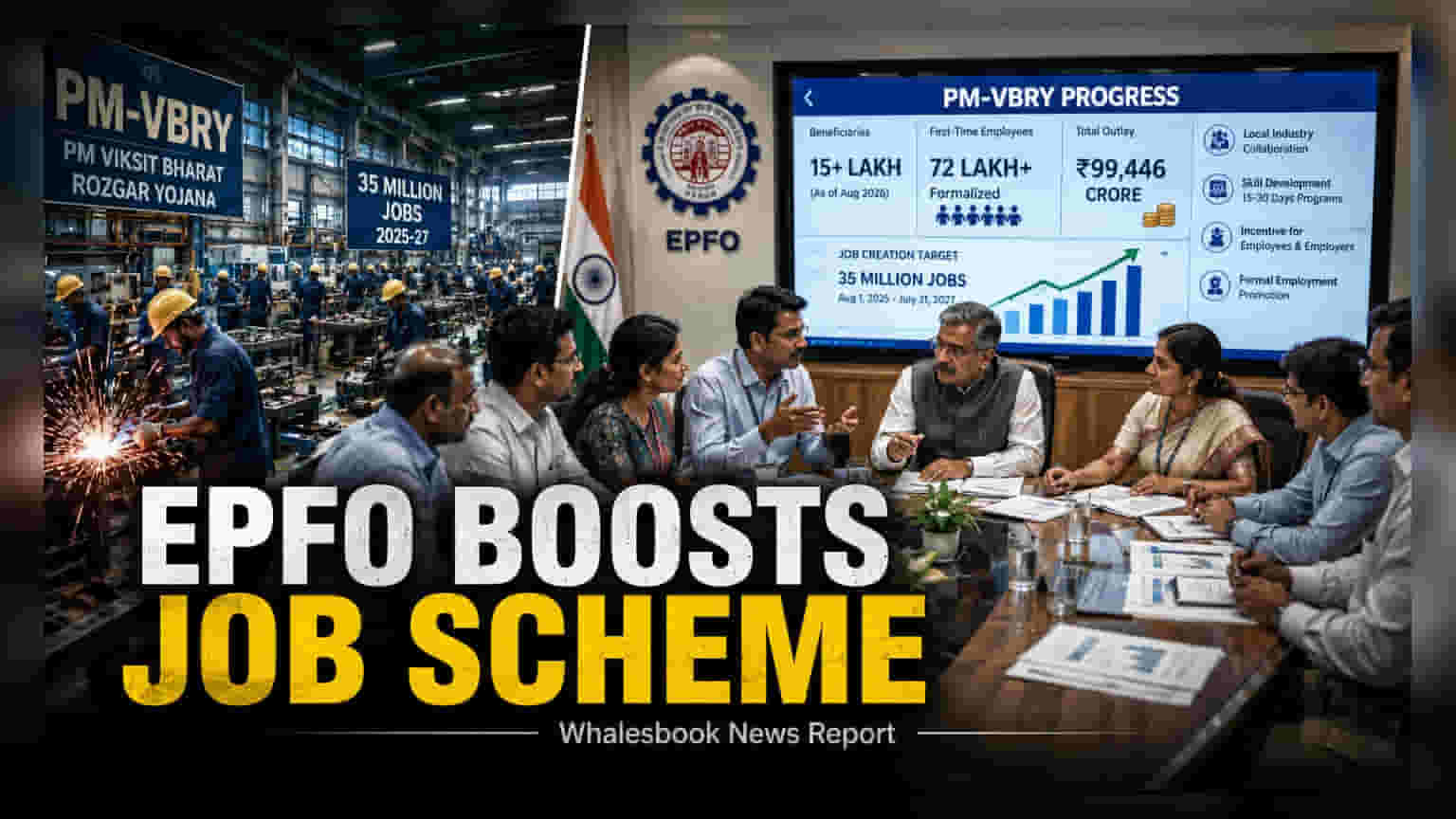
The EPFO is decentralizing the PM-VBRY scheme to improve district-level hiring and skill alignment. With a ₹99,446 crore outlay targeting 35 million jobs by 2027, the move addresses gaps in industrial employment. Investors may track how the government resolves compliance barriers for employers to boost participation rates.
The Employees' Provident Fund Organisation (EPFO) is shifting its strategy for the Pradhan Mantri Viksit Bharat Rozgar Yojana (PM-VBRY) to focus on localized implementation. The organization plans to work closely with district-level authorities and industry associations to align training programs with the actual needs of local industrial clusters.
This shift comes as the government aims to meet its ambitious target of generating 35 million jobs between August 1, 2025, and July 31, 2027. The scheme, which has an overall outlay of ₹99,446 crore, is designed to encourage formal employment. It provides a one-time incentive of up to ₹15,000 for first-time employees and monthly incentives of up to ₹3,000 for employers for every additional new worker hired.
Addressing Skill Gaps and Local Hiring
A core part of the new initiative involves industry-led skill development. By consulting with local industry associations, the EPFO aims to create short-term training programs lasting between 15 and 30 days. These courses are designed to make candidates immediately employable for specific roles needed in their regions. The goal is to bridge the gap between job seekers and the actual labor requirements of businesses.
Challenges in Scheme Adoption
While the scheme is designed to increase formal sector employment, it faces certain hurdles that may impact its overall reach. Critics and board members have pointed out a heavy focus on the manufacturing sector. This has raised concerns that other labor-intensive sectors, such as agriculture and construction, are not benefiting enough from the incentive structure.
Additionally, there is a compliance-related barrier. Currently, employers with pending provident fund dues are effectively blocked from claiming the scheme's incentives. Given that there are over 40,000 such cases, this policy significantly limits the potential pool of participating companies. Discussions within the Central Board of Trustees are now focused on creating a mechanism that allows these employers to settle or address these dues so they can participate in the hiring initiative.
Macro-Economic Context
Since PM-VBRY is a government employment scheme and not a listed entity, it does not have a direct stock price impact. However, the success of this program influences the pace of formalization in the Indian labor market. As of August 2026, the scheme has facilitated employment for over 15 lakh beneficiaries and supported the formalization of 72 lakh first-time employees. Investors and analysts often monitor these labor trends as they reflect the broader health of the industrial sector and the effectiveness of government efforts to reduce unemployment. The key update to track next will be any regulatory changes that allow employers with pending dues to access the scheme, which could lead to a sudden increase in reported formal hiring.