

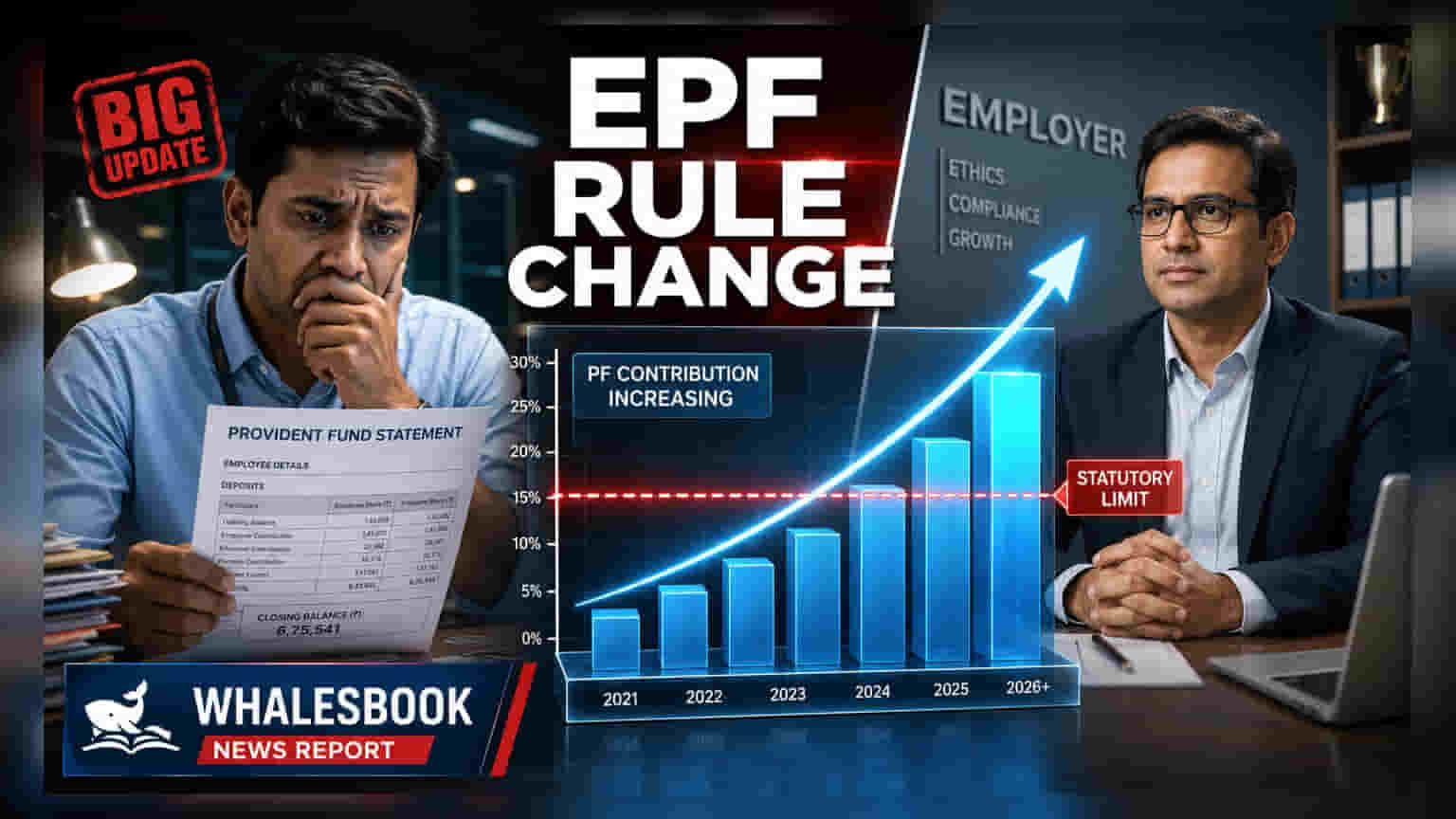
The new EPF Scheme 2026 clarifies that employers are only legally required to match employee Provident Fund contributions up to the statutory wage ceiling. While employees can still contribute more, any additional employer matching depends on individual company policies or employment contracts. This update helps remove uncertainty for both businesses and salaried workers regarding retirement savings obligations.
The Ministry of Labour and Employment has introduced the EPF Scheme 2026, bringing clarity to how employer contributions are calculated when employees choose to contribute more than the standard statutory wage ceiling. Under the current framework, the statutory wage ceiling serves as the base for mandatory Provident Fund contributions. The new rules specify that companies are only legally bound to match contributions up to this defined limit.
Voluntary Contributions and Legal Obligations
Many employees often opt for Voluntary Provident Fund contributions to increase their long-term savings. The 2026 update ensures there is no legal ambiguity regarding whether employers must match these extra amounts. The regulation states clearly that while employees are free to contribute beyond the mandatory limit, employers are not legally obligated to provide a matching contribution on that excess portion. Any employer who chooses to match contributions above the wage ceiling does so at their own discretion, provided it aligns with the company’s internal policy or the individual’s employment agreement.
Impact on Current Compensation Policies
For many professionals, especially those in the private sector, employer contributions are often calculated on the full basic salary rather than the statutory limit. The EPF Scheme 2026 does not force these organizations to cut back on their existing contribution structures. Companies that currently match contributions on the entire basic salary can continue to do so, as the new scheme does not prohibit the practice. Whether a company decides to re-evaluate its benefits structure or maintain the status quo depends entirely on its internal human resources policy and existing service terms. There is no immediate regulatory mandate for companies to change how they process these payments.
What Employees Should Monitor
Since the update clarifies the legal baseline rather than forcing a change in corporate practice, the primary impact for employees will be in how they manage their retirement portfolios. Investors and salaried individuals should review their specific employment contracts and company handbook to determine how their employer handles Provident Fund contributions. If a company chooses to align its policy strictly with the new statutory guidelines, it could result in lower employer matching for those who rely on full-salary contributions. The most important monitorable for employees in the coming months will be any direct communication from their human resources departments regarding potential adjustments to compensation structures or retirement benefit policies.