

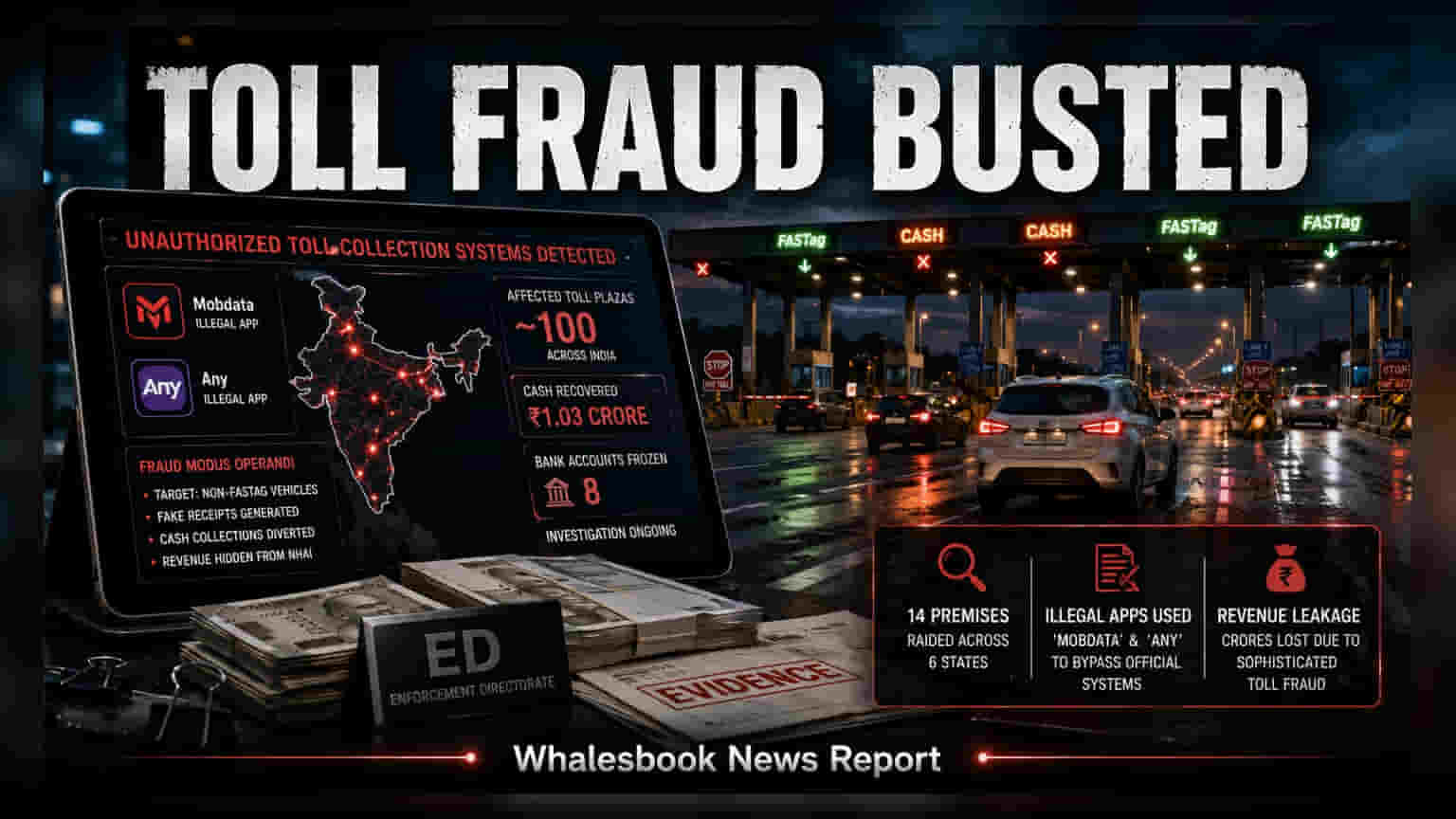
The Enforcement Directorate has launched a probe into a widespread toll collection fraud affecting 100 highway plazas across India. Investigators found that unauthorized mobile applications were used to siphon cash from non-FASTag vehicles, bypassing the National Highways Authority of India's official monitoring systems. This investigation highlights potential regulatory and compliance risks for toll infrastructure operators as the agency intensifies its oversight of highway revenue collection.
The Enforcement Directorate (ED) has initiated a nationwide crackdown on a sophisticated toll collection fraud, revealing that unauthorized digital systems were being used to bypass official reporting mechanisms at approximately 100 highway toll plazas. On September 2 and 3, 2026, investigators executed coordinated raids across 14 premises in states including Uttar Pradesh, Rajasthan, Madhya Pradesh, Jammu and Kashmir, West Bengal, and Maharashtra. The operation resulted in the recovery of ₹1.03 crore in unaccounted cash and the freezing of eight bank accounts linked to the suspect entities.
The investigation centers on the use of two illicit mobile applications, identified as 'Mobdata' and 'Any'. According to official findings, these applications were deployed specifically to target vehicles passing through toll plazas without FASTag stickers. By funneling transactions through these unofficial digital channels, operators could generate fake receipts and siphon cash collections, effectively hiding revenue from the centralized accounting framework of the National Highways Authority of India (NHAI).
This money laundering investigation is the result of an ongoing probe that began with a January 2025 FIR filed by the Mirzapur district police in Uttar Pradesh. The initial complaint identified financial irregularities at the Atraila Shiv Gulam toll plaza, which led authorities to uncover a much broader, organized network of revenue leakage. The ED is now tracing the financial trail and investigating the collusion between various intermediaries and toll collection agencies to determine the total extent of the loss to the exchequer.
For investors in the infrastructure and road logistics sector, this event underscores the growing importance of digital compliance and revenue assurance. While this specific case involves unauthorized applications, it draws attention to the integrity of automated toll collection systems. Companies operating toll infrastructure are generally expected to maintain transparent audit trails to ensure compliance with NHAI standards. Increased scrutiny from regulatory agencies into toll plaza revenue management could lead to stricter audits or mandates for enhanced digital security protocols across the industry.
The ongoing investigation may result in significant changes to how toll collections are verified and monitored by the government. As the ED continues its probe to identify further beneficiaries and participants in this scheme, the market and industry participants will be closely watching for any regulatory directives or systemic policy changes regarding toll operations. Investors tracking companies with large exposure to highway operations may monitor whether this investigation leads to operational disruptions, increased compliance costs, or the need for upgrades in toll management technology.