

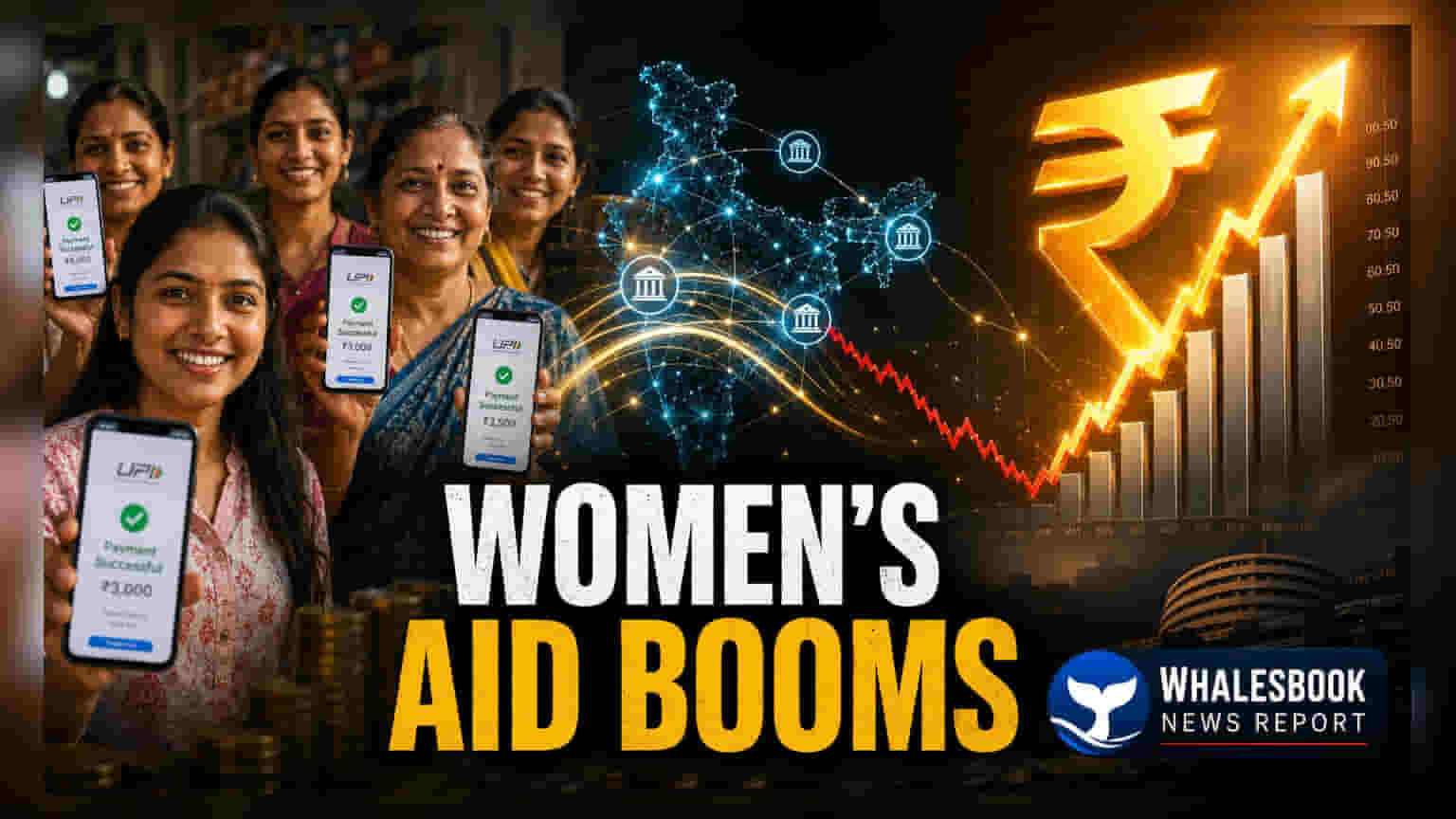
A new EAC-PM working paper finds that women-targeted cash transfer schemes in India, such as those in Maharashtra and Odisha, significantly outperform gender-neutral programs. By leveraging India's digital payment infrastructure, these transfers have boosted account balances and household spending on education and healthcare, prompting recommendations for a 'cash-plus' model.
A working paper released by the Economic Advisory Council to the Prime Minister (EAC-PM) has highlighted the effectiveness of women-targeted cash transfer schemes in driving economic activity at the household level. The study, authored by Soumya Kanti Ghosh and Shagishna K, examined the impact of state-led initiatives like Maharashtra’s Mukhyamantri Majhi Ladki Bahin Yojana and Odisha’s Subhadra Yojana. The findings suggest that these targeted programs deliver stronger developmental outcomes compared to gender-neutral cash transfers.
Financial data from the study reveals a notable change in the behavior of beneficiaries. In Maharashtra, the program providing ₹1,500 monthly saw an 84% increase in month-end account balances and a 46% rise in consumer spending. Similarly, the Odisha scheme, which offers ₹10,000 annually, resulted in a 45% boost to account balances and a 28% increase in spending. The research noted a high marginal propensity to consume of approximately 0.90, indicating that these funds are vital for easing liquidity constraints for the targeted demographic.
Beyond the primary beneficiaries, the paper documented positive spillover effects within households. In Maharashtra, the financial support led to a 23% rise in the month-end balances of relatives and a significant 49% reduction in their expenditure. This suggests that direct financial support to women acts as a buffer for the entire household, potentially reducing the need for other family members to draw down their own savings or borrow money.
Digital Payments Driving Impact
India's digital payment infrastructure, particularly the Unified Payments Interface (UPI), has played a central role in the success of these programs. The transition from physical cash to digital transfers has been accompanied by a shift in how beneficiaries allocate their funds. Spending data indicates that households are increasingly prioritizing higher-value areas such as healthcare, education, and lifestyle improvements. In Maharashtra, for instance, UPI transactions for lifestyle-related spending grew from 37% to 42%, while medical expenses saw a rise from 8% to 10%.
Moving Toward a Cash-Plus Model
The report advocates for an evolution toward a 'cash-plus' model, which would integrate direct financial aid with additional support services. Recommended additions include outcome-linked incentives, such as linking benefits to improvements in child nutrition, and programs focused on digital literacy and Self-Help Group (SHG) linkages. The authors suggest that policymakers should periodically review transfer amounts to ensure they remain adequate against inflation. The focus going forward is expected to remain on using multidimensional verification frameworks to improve beneficiary targeting and ensuring that efficiency gains from digital adoption are reinvested into these complementary empowerment services.