

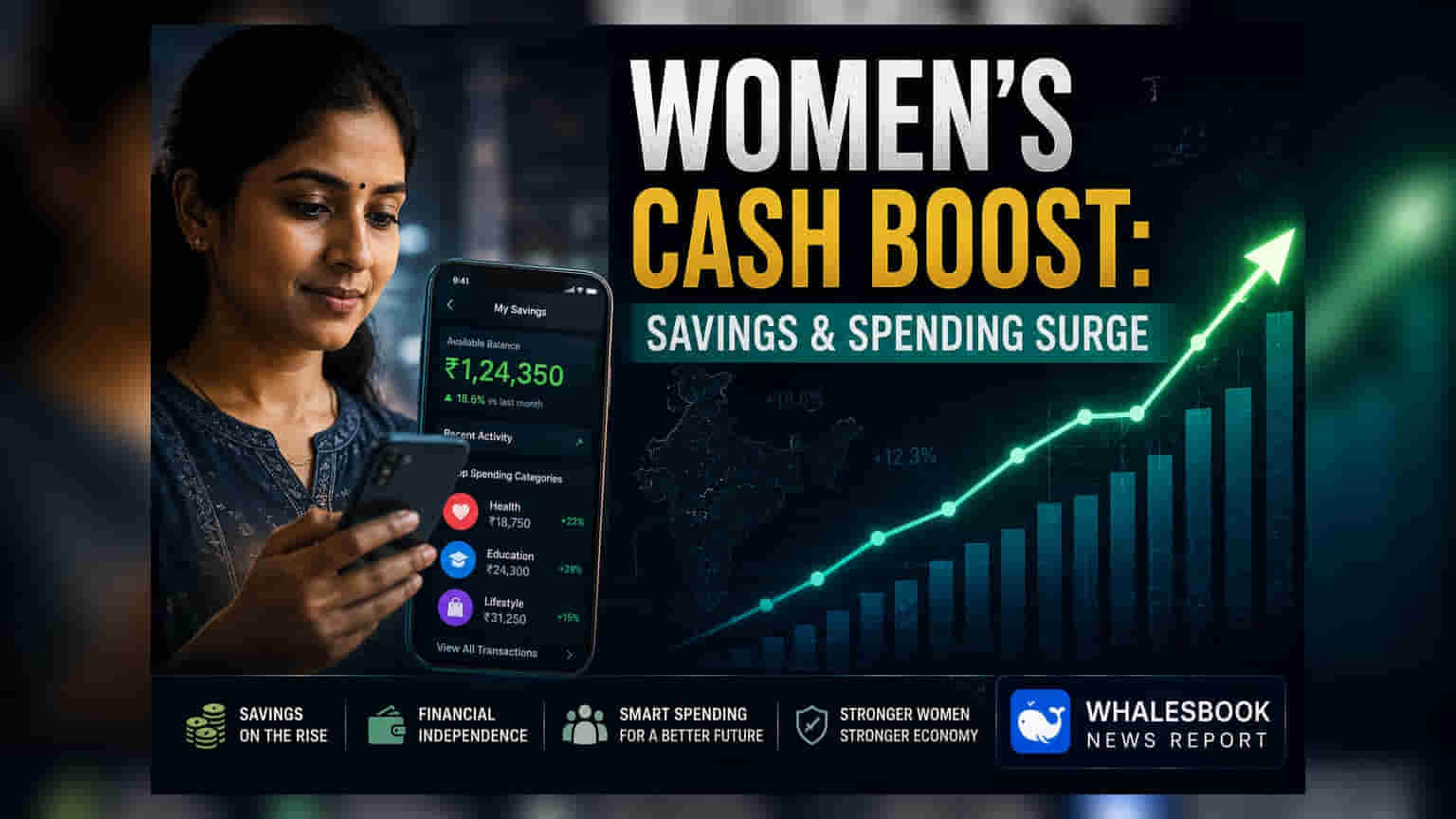
A recent EAC-PM working paper shows that cash transfer schemes in Maharashtra and Odisha have significantly boosted women's bank balances and household spending. Data indicates that these programs have increased expenditure on health and education while reducing financial pressure on family members.
A new working paper from the Economic Advisory Council to the Prime Minister (EAC-PM) highlights the economic impact of women-centric cash transfer initiatives in Maharashtra and Odisha. The study evaluates the effectiveness of Maharashtra’s 'Mukhyamantri Majhi Ladki Bahin Yojana' and Odisha’s 'Subhadra Yojana' in improving the financial stability of beneficiaries.
Financial Impact of State Schemes
Under the Mukhyamantri Majhi Ladki Bahin Yojana in Maharashtra, eligible women receive Rs 1,500 monthly, totaling Rs 18,000 annually. The EAC-PM report indicates that this direct support led to an 84% increase in the month-end bank balances of beneficiaries, representing an average rise of Rs 6,884. Concurrently, their monthly consumption expenditure grew by 46%, or Rs 1,349 per person.
Odisha’s Subhadra Yojana, which provides Rs 10,000 annually in two installments, also showed positive results. Beneficiaries in the state experienced a 45% increase in their month-end account balances, amounting to approximately Rs 6,887, while their monthly spending rose by 28%, or Rs 1,920.
Shifts in Household Spending
Beyond just increasing savings, these programs have influenced how households allocate their income. In Maharashtra, the data reflects a shift toward essential services. Transaction analysis shows that education-related spending rose from 18% to 24%, while medical expenses increased from 8% to 10% of total transactions. Lifestyle-related spending, measured through UPI transaction data, also saw an increase from 37% to 42%.
An important observation from the study is the positive spillover effect on the broader household. In Maharashtra, relatives linked to the beneficiaries saw their own month-end bank balances rise by 23%, moving from Rs 8,234 to Rs 10,144. Their spending concurrently decreased by 49%, indicating that the financial aid received by women helped alleviate the overall economic burden on their family members, such as husbands and sons. Odisha reported similar trends, where a 10% rise in a beneficiary's bank balance was linked to a 1.9% reduction in the spending of their relatives.
Demographic Reach and Future Indicators
The study noted that the impact was most pronounced among women with lower levels of formal education, suggesting that these transfers provide vital liquidity to financially constrained households. Investors and policy analysts tracking these trends will likely observe how such direct benefit transfers influence long-term consumption patterns in the rural and semi-urban economy. Future updates to monitor include further data on the sustainability of these spending shifts and whether similar transfer models are expanded to other states or integrated into broader national welfare strategies.