

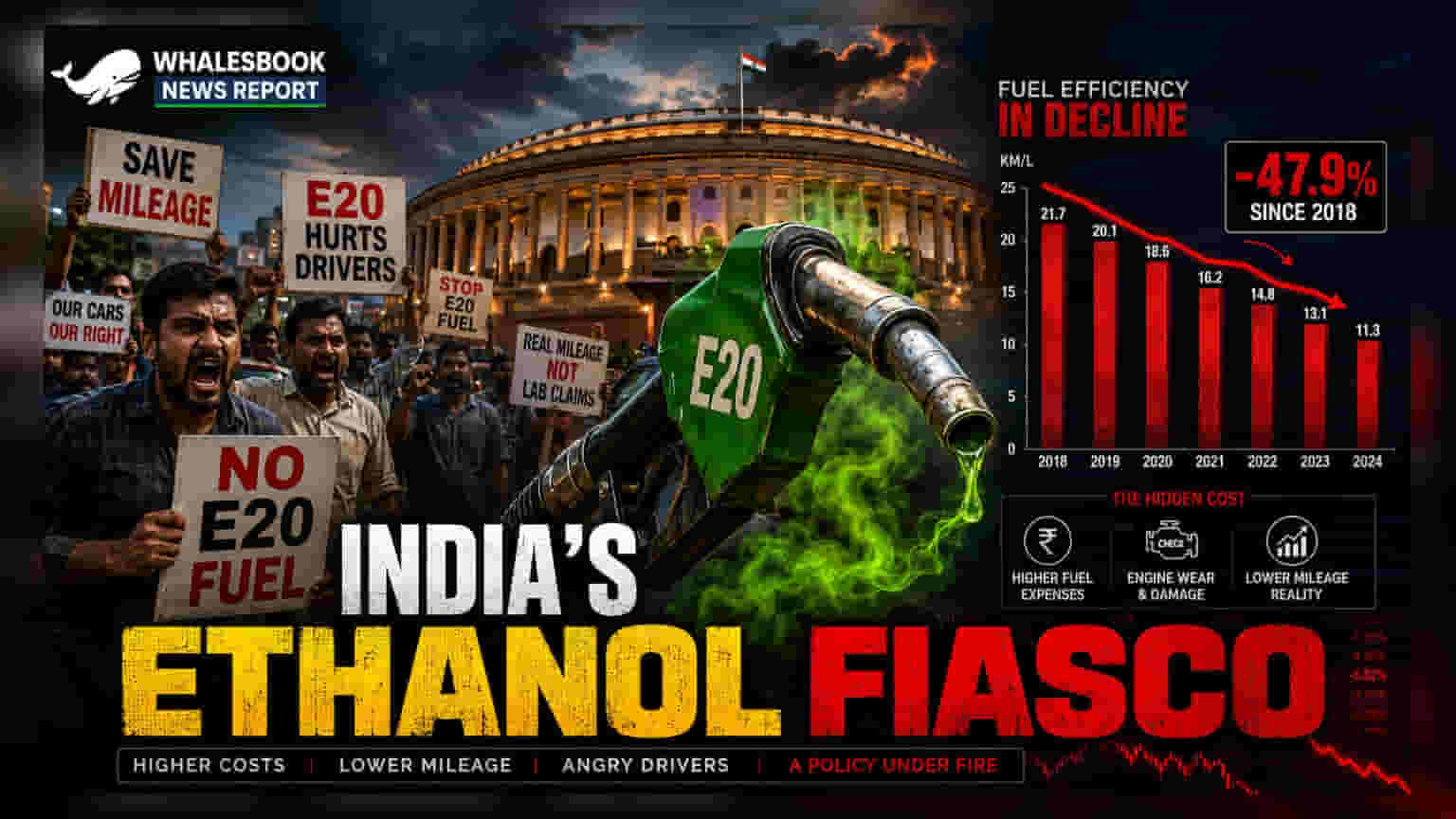
India's 20% ethanol-blended petrol (E20) mandate is facing public and political criticism over concerns regarding vehicle efficiency and engine maintenance. While the government defends the policy for its environmental and economic benefits, motorists have raised issues about fuel performance and repair costs.
What Happened
Public and political criticism is rising against the Indian government’s mandate for 20% ethanol-blended petrol (E20). The policy, aimed at increasing the use of biofuels, has triggered protests from vehicle owners who report lower fuel efficiency and potential engine damage. The situation intensified following a recent court hearing where comments regarding the status of the fuel program were interpreted by some as labeling the transition an "experiment." Although government officials have since clarified these remarks and reaffirmed the stability of the program, the incident has highlighted growing consumer anxiety regarding the long-term impact of E20 on vehicle performance.
Why The Policy Exists
The government introduced the E20 mandate as a strategic measure to achieve several national objectives. By increasing the ethanol content in petrol, the administration aims to reduce the country's dependence on crude oil imports, which is expected to save significant foreign exchange reserves. Additionally, the policy is designed to boost rural incomes by creating a steady demand for agricultural crops like sugarcane and surplus grains used to produce ethanol. From an environmental standpoint, the government asserts that higher ethanol blends help lower carbon emissions, aligning with India's broader sustainability goals.
Consumer Concerns And Technical Reality
For many vehicle owners, the transition has been difficult. Motorists have reported a noticeable decline in fuel mileage and have expressed concerns about the wear and tear of engine components. While the government notes that E20 is widely used in other parts of the world, consumers argue that the lack of clear labeling at many fuel stations restricts their ability to choose the type of fuel used in their vehicles. The government has attempted to address these fears, with Petroleum Minister Hardeep Singh Puri explaining that while some adjustments in fuel usage and engine performance are expected, the fuel is safe for compatible vehicles.
The Business And Economic Context
The E20 mandate has direct implications for the automotive and sugar sectors. Automotive companies have been required to adapt engine technology to handle higher ethanol blends, which involves engineering changes to fuel systems. Meanwhile, the sugar and distillery industries have benefited from increased demand for ethanol, leading to capital investments in new production facilities. However, if the current backlash forces a slowdown in policy implementation or leads to stricter regulatory scrutiny, it could affect the utilization rates of these new distilleries and influence the pricing dynamics of the ethanol market.
What Investors Should Track
Investors may monitor several key areas as the situation develops. First, any official updates on fuel station infrastructure and labeling requirements will be important, as better transparency could ease consumer friction. Second, the government's response to demands for more comprehensive data on vehicle engine health will be a monitorable to see if it impacts automotive maintenance costs. Finally, keep an eye on industry data regarding ethanol procurement and refinery production volumes to assess whether the government remains committed to its original E20 roadmap despite the current political and public pressure.