

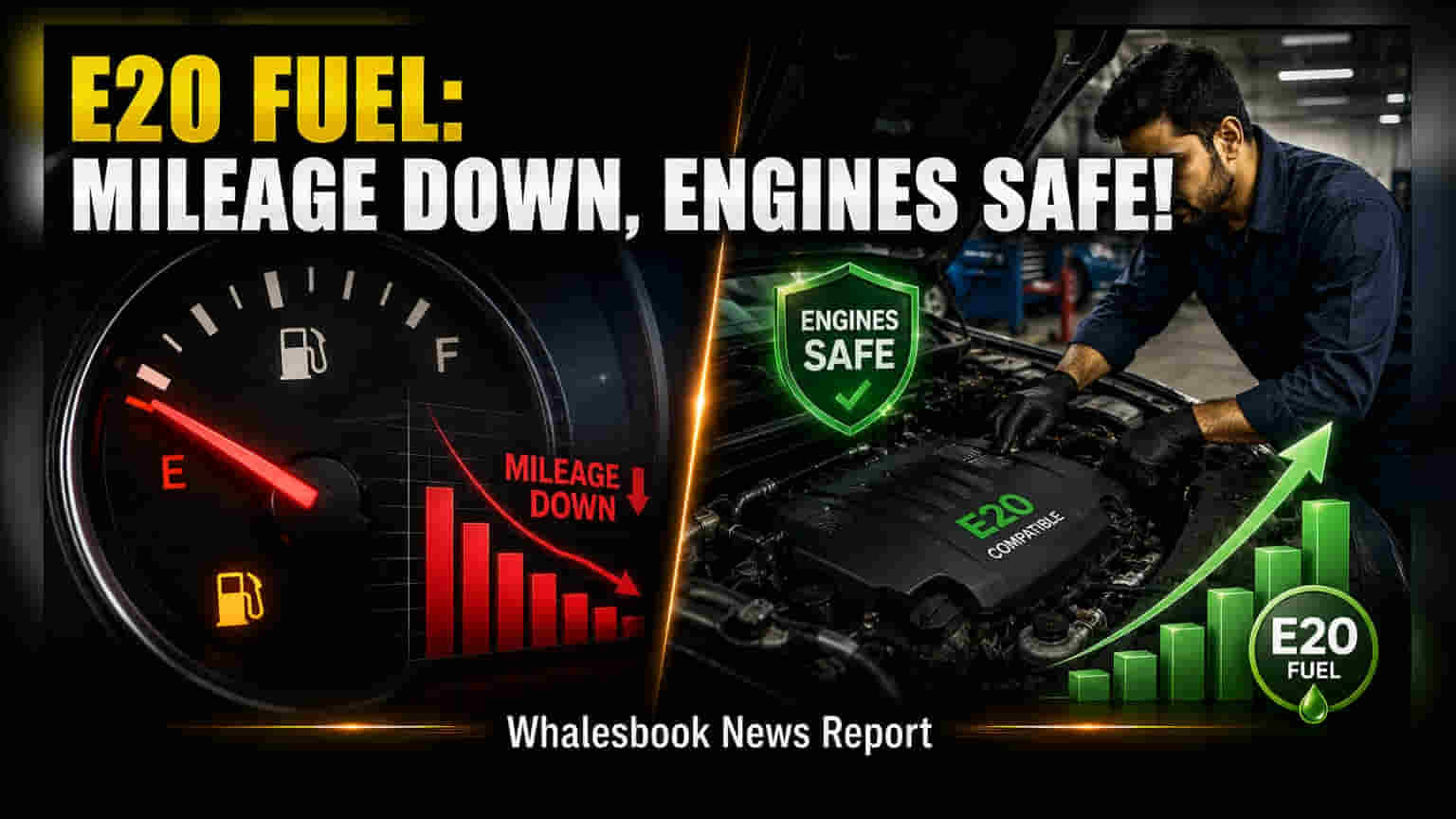
Union Minister Nitin Gadkari confirmed E20 petrol can lower fuel efficiency by up to 6% but causes no engine failures. The government's testing shows that while minor parts in older vehicles may need replacement, modern cars remain unaffected.
Union Minister for Road Transport and Highways, Nitin Gadkari, has provided clarity on the national rollout of E20 fuel, which contains 20% ethanol blended with petrol. In recent parliamentary updates, the minister confirmed that while vehicle owners might notice a 2% to 6% decrease in fuel efficiency, rigorous testing indicates that this fuel blend does not cause engine failures in either legacy or modern vehicles.
Impact on Vehicle Maintenance
For most vehicle owners, the transition to E20 fuel is expected to be seamless. The minister noted that vehicles compliant with BS-IV and BS-VI standards are fully compatible with the fuel. However, owners of older BS-III vehicles manufactured prior to 2016 may need to replace specific components, such as rubber seals or gaskets, during their regular maintenance intervals. These adjustments are framed as standard service tasks rather than complex engine overhauls. Importantly, automobile manufacturers have indicated that they continue to uphold vehicle warranties even when E20 fuel is used, addressing concerns regarding long-term damage.
Testing and Safety Protocols
To ensure public safety and vehicle longevity, the Automotive Research Association of India, along with the Society of Indian Automobile Manufacturers and Indian Oil Corporation, conducted joint studies on various engine types. These evaluations included custom protocols to measure drivability, material compatibility, and corrosion risks. The findings revealed that E20 fuel does not negatively impact engine lifespan or startability. Furthermore, the use of ethanol-blended petrol is a key component of India’s strategy to lower carbon emissions, with E20 fuel estimated to reduce emissions by approximately 30% compared to traditional E10 blends.
Implementation and Future Outlook
The shift toward higher ethanol blending is part of the government’s Ethanol Blended Petrol Programme, which has been operational in stages since 2006. The current targets are outlined in the official 'Roadmap for Ethanol Blending in India 2020-25.' As the government moves forward with this phased implementation, the primary monitorables for investors and consumers will be the availability of E20 across retail outlets and the ongoing service requirements for older vehicle models. While mileage reduction may be a minor concern for daily commuters, the absence of widespread engine mechanical issues suggests that the transition is unlikely to disrupt the broader automotive sector or lead to significant spikes in warranty-related costs for manufacturers.