

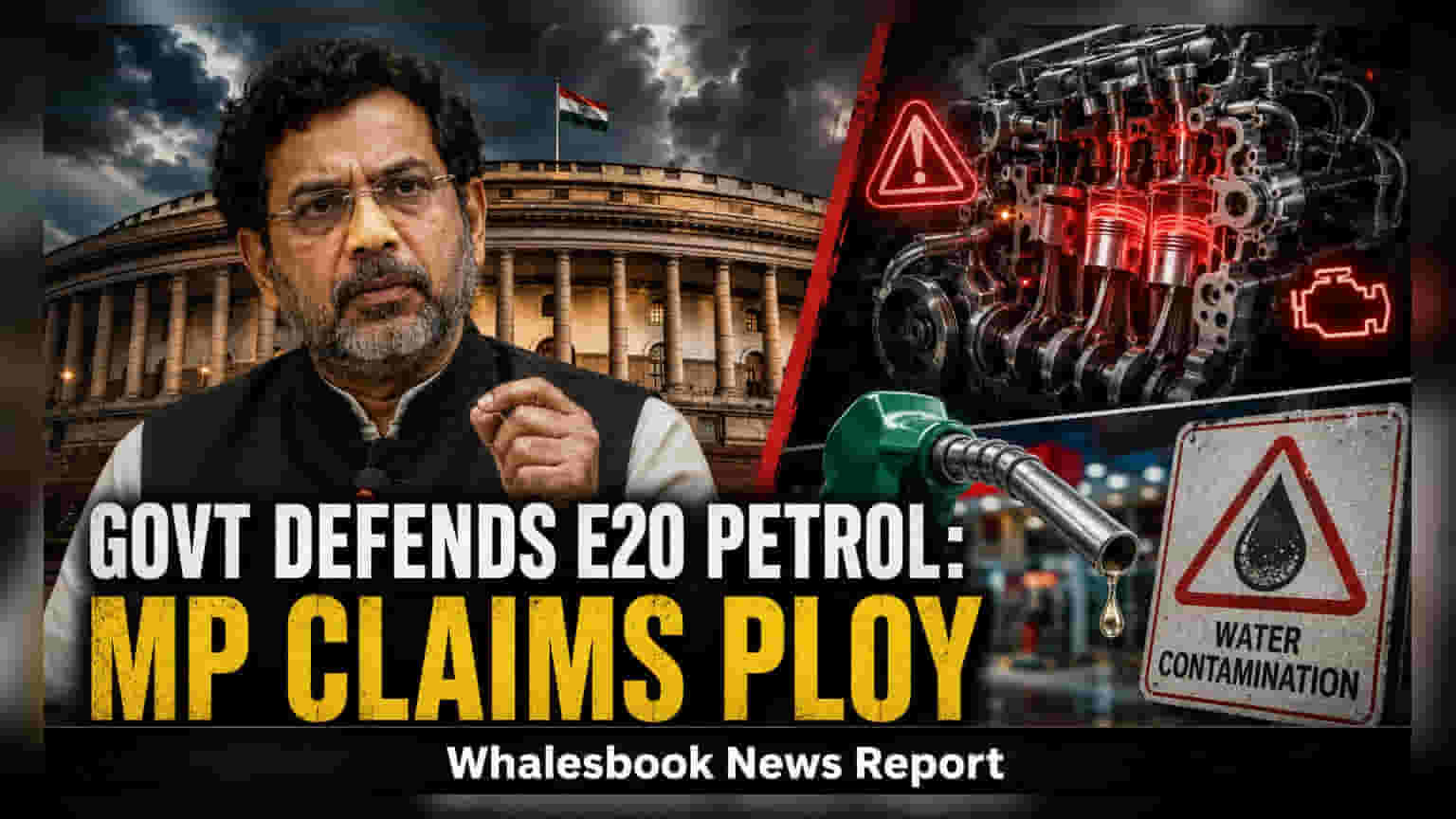
Member of Parliament John Brittas has questioned the government's claim that there is no 'widespread' engine damage from E20 ethanol-blended petrol. He argues that using the term 'widespread' ignores potential individual cases of fuel-related performance issues. For investors, the debate highlights ongoing consumer concerns over fuel efficiency and vehicle compatibility with ethanol-blended fuels.
Detailed Coverage
The debate surrounding ethanol-blended petrol, specifically E20 fuel, has moved into the parliamentary spotlight following accusations by Member of Parliament John Brittas. The core of the dispute lies in the government's recent response regarding vehicle performance. The Union petroleum ministry stated in a parliamentary submission that there is no verified evidence of widespread engine damage caused by ethanol blending. This response was provided after inquiries were made into potential mechanical issues, including fuel pump failure, corrosion, and engine performance degradation.
The Meaning of Widespread in Official Replies
MP Brittas has challenged the government’s use of the word widespread, suggesting it is a strategy to avoid confirming whether any engine damage has occurred at all. He pointed out a potential inconsistency in how data is tracked, noting that while the ministry claimed complaint numbers were nil, it also admitted that no state-wise record of such complaints is maintained. According to Brittas, the absence of widespread failures does not necessarily mean that individual cases of vehicle performance issues do not exist. This distinction is significant as it shifts the focus from the total number of incidents to the potential for technical problems on a smaller, individual scale.
Consumer Concerns and Fuel Efficiency
Beyond engine damage, the introduction of E20 fuel has raised questions about fuel efficiency. Because ethanol contains less energy per unit compared to pure petrol, many consumers have reported lower mileage, a concern that has been documented in various real-world usage scenarios. Additionally, there has been confusion regarding official advisories found at petrol stations operated by major oil marketing companies, including Indian Oil, Bharat Petroleum, and Hindustan Petroleum. These notices have previously cautioned motorists about the risk of water absorption in E15-E20 petrol and have sometimes included disclaimers regarding potential consequential damage. While the ministry has denied responsibility for these notices in its parliamentary replies, the existence of such warnings continues to contribute to public skepticism.
Investor Monitorables for the Auto and Oil Sectors
For investors, the long-term implications of this debate center on the automotive and fuel retail sectors. Automotive manufacturers have had to adapt vehicle engineering to handle higher ethanol blends, which involves ensuring that fuel systems are compatible with the corrosive nature of ethanol. Any verified spike in warranty claims or performance complaints related to fuel systems could potentially impact the operational costs for automakers. Meanwhile, for state-owned oil marketing companies, the focus remains on the government’s mandate to increase ethanol blending to reduce import dependence. Investors may continue to track future parliamentary updates, any changes in technical standards for vehicle fuel systems, and official data on fuel efficiency impacts as the country moves toward higher ethanol blending targets.