

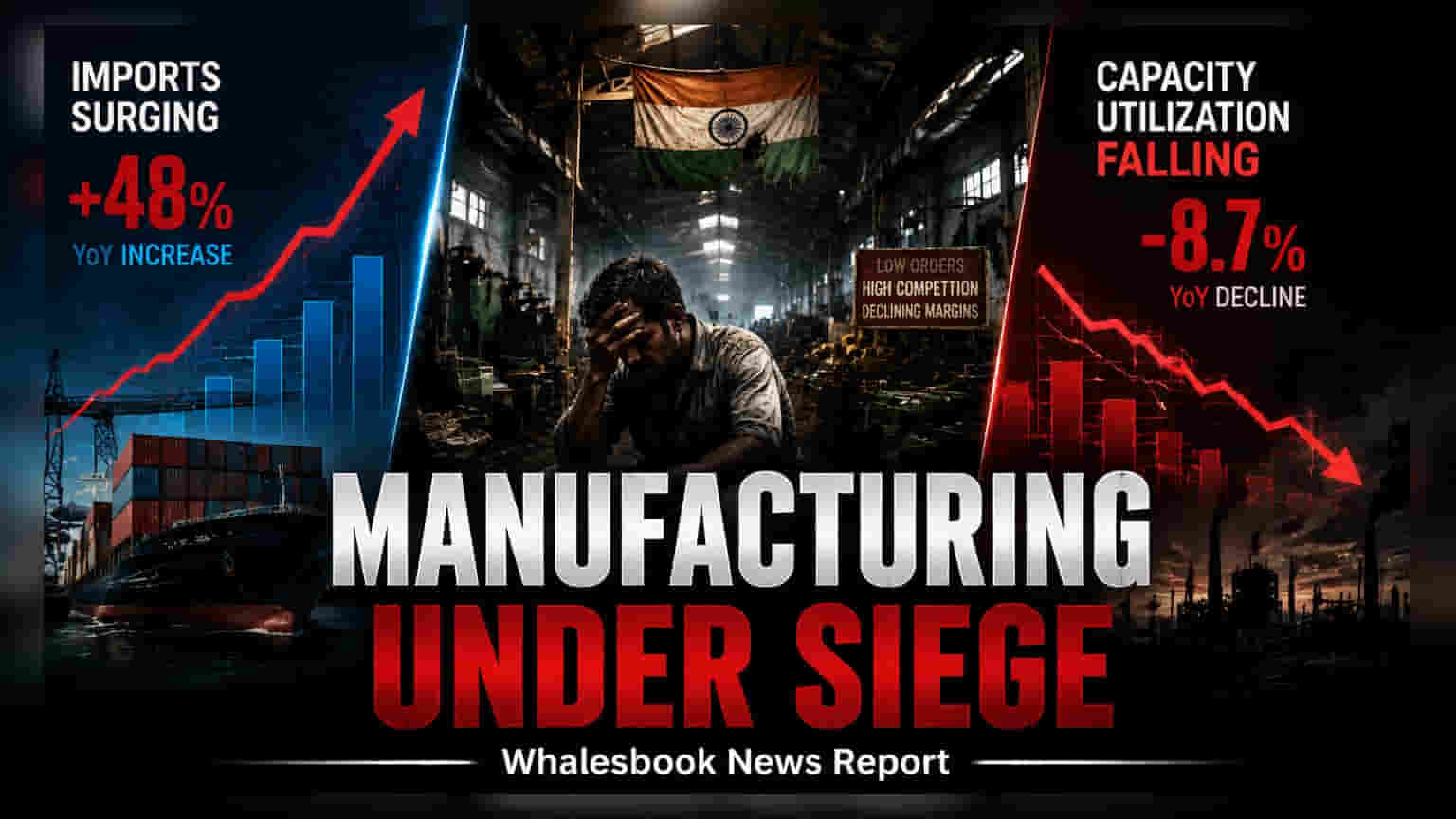
New industry reports warn that high import volumes and inverted duty structures are hitting sectors like PET Resin, Nylon Filament Yarn, and Optical Fibre. These challenges threaten domestic capacity utilization and raise risks for companies relying on local supply chains for critical raw materials.
A series of new reports released by C-DEP Research and the Centre for WTO Studies has highlighted significant structural hurdles facing India's manufacturing sector. The research identifies that aggressive import dumping and complex tax duty structures are undermining the growth of domestic production in several essential industries, potentially threatening the viability of local operations and long-term investment.
Impact on Nylon Filament and PET Resin
The report on the Nylon Filament Yarn (NFY) sector points to a challenging environment where dumping from countries like China and Vietnam has already led to the closure of ten domestic manufacturing units. With dumping margins reported as high as 150% for some imports, the sector's capacity utilization is forecasted to drop toward 45% by FY28 unless trade remedies are strengthened. Similarly, the PET Resin industry is witnessing a massive influx of imports from China, which grew by over 760% between FY22 and FY25. This surge, partly attributed to the circumvention of existing trade barriers, poses a risk to the domestic packaging supply chain for food, beverages, and pharmaceuticals.
Duty Structures and Material Dependence
The study also highlights an inverted duty structure in the Viscose Staple Fibre (VSF) segment, which places domestic players at a 7-8% cost disadvantage against international competitors. Because Indian manufacturers pay import duties on rayon-grade wood pulp while finished fibre enters duty-free from certain regions, their competitive edge is eroded. Furthermore, the Optical Fibre Cable (OFC) industry, despite having a production capacity of 100 million fibre-km, remains heavily dependent on imports for critical raw materials such as UV resins, helium, and specialized silicon compounds. This upstream dependence poses a logistical and cost risk for large-scale digital infrastructure projects like 5G rollouts and the BharatNet initiative.
Investor Monitorables
The findings suggest that for investors, the resilience of these sectors will depend heavily on upcoming policy adjustments. The reports strongly recommend the enforcement of stricter Quality Control Orders and the potential implementation of anti-dumping duties to level the playing field. Investors should track whether the government moves to rectify the inverted duty structures and GST anomalies mentioned in the research, as these changes could directly impact the profit margins and long-term capacity utilization of domestic manufacturers. Future updates on trade policy, anti-dumping investigations, and government-led local sourcing mandates for critical projects will be key indicators for assessing the health of these industries.