

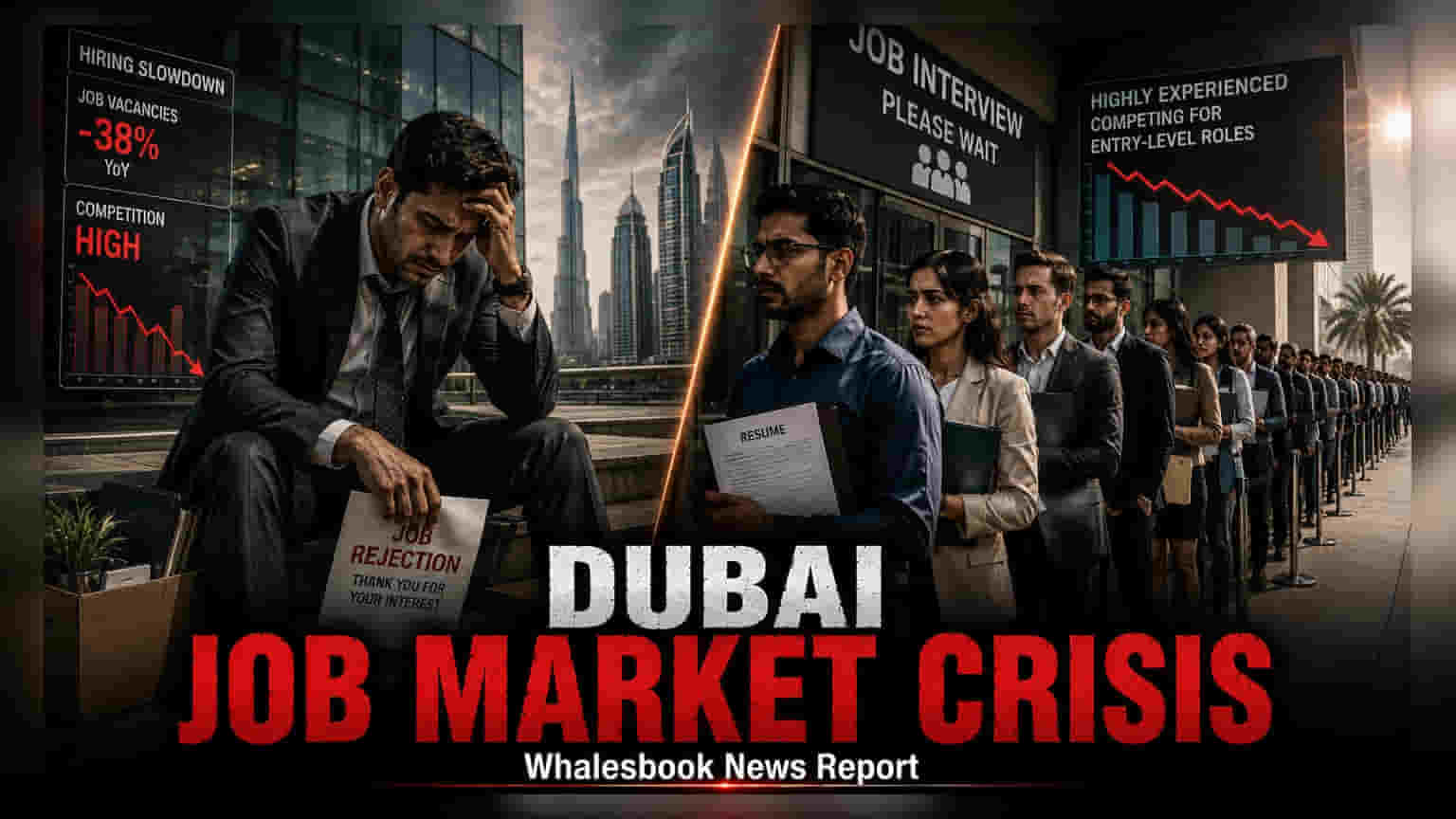
A noticeable hiring slowdown in Dubai is pushing highly experienced professionals to apply for entry-level jobs. This trend reflects a shift toward employer selectivity and efficiency-driven hiring. For the many professionals in or considering the UAE, this highlights the importance of job security and specialized skill sets in a competitive environment.
The Dubai job market is witnessing a significant shift as highly experienced professionals, including those with managerial backgrounds, increasingly compete for entry-level roles. This trend, highlighted by industry experts and HR managers operating in the region, underscores a broader hiring slowdown where the number of available vacancies does not match the depth of the talent pool. For Indian professionals, who represent a major part of the UAE's workforce, this development serves as a critical indicator of the current labor market health in the Middle East.
A Shift in Labor Dynamics
Recent labor market data from the region suggests that the current hiring landscape is exceptionally tight. While this does not indicate an economic collapse, it does point to a period of rebalancing. Employers are becoming far more selective, extending the duration of hiring processes and placing a premium on candidates who can deliver immediate efficiency. Consequently, positions that were previously occupied by early-career professionals are now seeing applications from senior staff, which intensifies competition and makes it harder for genuine entry-level candidates to break into the market.
Why Employers are Changing Tactics
This trend is largely driven by a pivot toward high-impact roles rather than sheer headcount expansion. Businesses are prioritizing investments in artificial intelligence, specialized technical skills, and roles that directly contribute to immediate bottom-line growth. Meanwhile, many traditional administrative and routine data-processing functions are increasingly being handled by automation technologies. This structural change means that simply having a general degree or standard experience is no longer sufficient to secure a role. The demand is now heavily skewed toward niche expertise that can navigate this more automated and efficiency-focused business environment.
Navigating the Current Climate
For those currently employed, experts advise against making impulsive career changes or resignations without a confirmed offer in hand. In this climate, job stability is being viewed as a significant advantage. Even when facing workplace dissatisfaction, professionals are encouraged to view their current employment as a necessary safety net until a new, secure role is clearly identified. The risks for job seekers include longer wait times for employment and the potential for a mismatch between their experience level and the roles they are forced to accept to stay employed.
The most important factor for professionals to track in the coming months will be the evolution of sector-specific demand. As the UAE economy continues to rebalance, the recovery of hiring will likely be uneven, favoring sectors like technology, healthcare, and specialized financial services. Those with adaptable skill sets that complement, rather than compete with, new automation trends will likely find better long-term stability.