

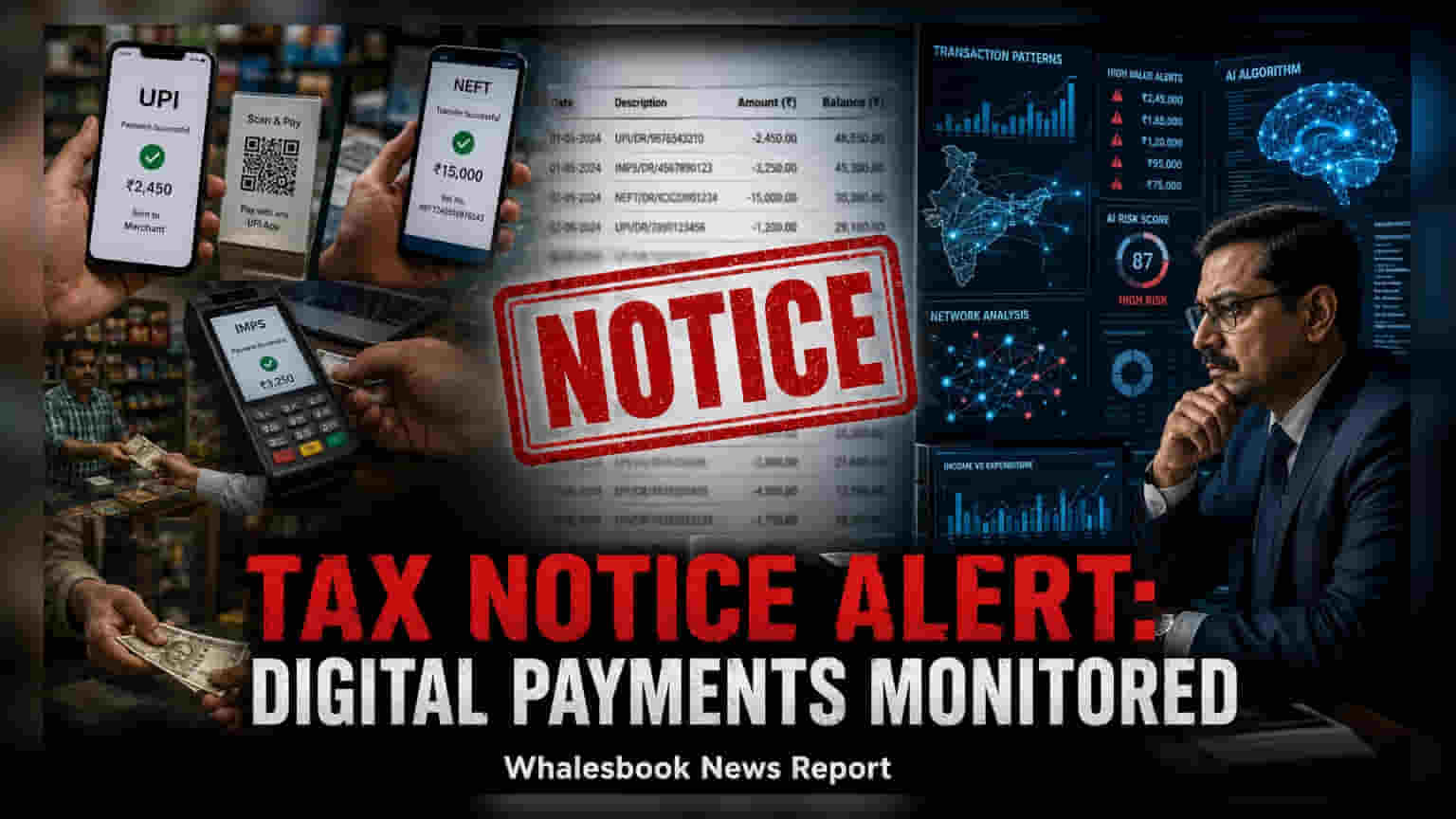
Routine digital transactions like UPI do not trigger tax notices, but high-value activities flagged in the Statement of Financial Transactions (SFT) are monitored. Discrepancies between these transactions and declared income in your tax return can lead to scrutiny.
With digital payments becoming the backbone of the Indian economy, many taxpayers are concerned about whether their daily transactions via UPI, NEFT, or IMPS could attract attention from the Income Tax Department. The reality is that the tax authorities do not scrutinize every small or routine transaction. Instead, they rely on a structured reporting framework to identify potential tax evasion through data analysis.
How Transactions Are Tracked
Financial institutions such as banks, mutual funds, and credit card issuers are required to submit a Statement of Financial Transactions (SFT) to the government. This report captures transactions that cross specific monetary thresholds, which are then integrated into a taxpayer's Annual Information Statement (AIS). Key triggers for reporting include cash deposits of ₹10 lakh or more in savings accounts, annual credit card payments of ₹10 lakh or higher, and investments in financial instruments like shares or mutual funds exceeding ₹10 lakh in a financial year. Property transactions above ₹30 lakh and significant foreign currency spending are also reported under these norms.
AI and Data Matching
Through advanced technological initiatives like Project Insight, the Income Tax Department uses artificial intelligence to compare transaction data against the income disclosed in a taxpayer's return. The system looks for patterns that indicate income mismatch, such as large digital credits that do not align with the professional or business income declared. If the department identifies a significant gap during this matching process, the taxpayer may receive a notice seeking clarification on the source of funds.
Risks of Discrepancy
If the source of a high-value transaction cannot be explained or justified with valid documentation, the tax department may treat the amount as undisclosed income. This can result in significant financial consequences, including tax liability and penalties that could reach approximately 78% of the unexplained amount in severe cases. Furthermore, authorities hold the power to reopen tax assessments for up to six years if they find credible evidence of income that was not previously reported.
Best Practices for Taxpayers
To avoid unnecessary scrutiny, taxpayers should ensure their digital footprint consistently matches their declared income. It is advisable to keep personal and business expenses separate to prevent commingling of funds, which can complicate tax filings. Before finalizing and submitting an Income Tax Return (ITR), individuals should download and carefully review their AIS and Form 26AS. If there is a mismatch or an incorrect entry in the system, taxpayers can use the feedback functionality on the official income tax portal to report the error and provide a correct explanation.